What it means
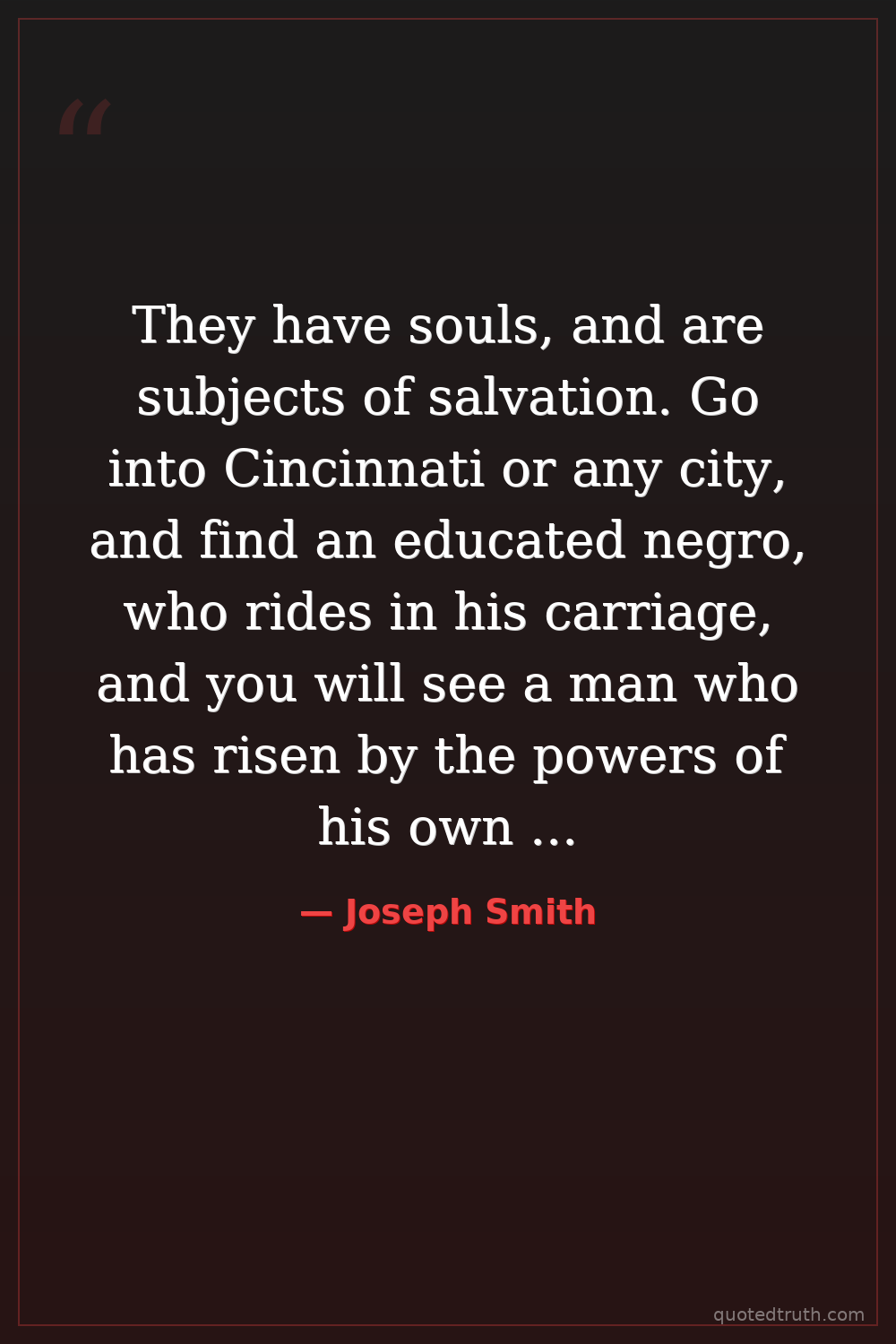
Black people possess souls and are worthy of salvation—equal in spiritual standing to anyone. Smith points to prosperous, educated Black professionals in Northern cities as living proof that intelligence and determination can elevate a person regardless of race, directly challenging the dehumanizing logic used to justify slavery in his time.
Relevance to Joseph Smith
In 1844, Smith ran for U.S. President advocating gradual emancipation—radical for a frontier religious leader. As a prophet claiming divine revelation on human worth, his assertion that Black people have souls and can achieve greatness aligned with his expansive theology of human potential, though his church simultaneously maintained a priesthood restriction for Black members.
The era
Spoken in the 1840s during peak antebellum tension, when pro-slavery ideology depended on denying Black humanity and intellect. Free Black communities in Cincinnati and other Northern cities visibly contradicted those claims. Abolitionists frequently cited such examples; Smith invoking them placed him—however inconsistently—among voices challenging the foundational premise of American racial slavery.
AI-generated insights based on extensive research and information for context. Factual errors? Email [email protected].