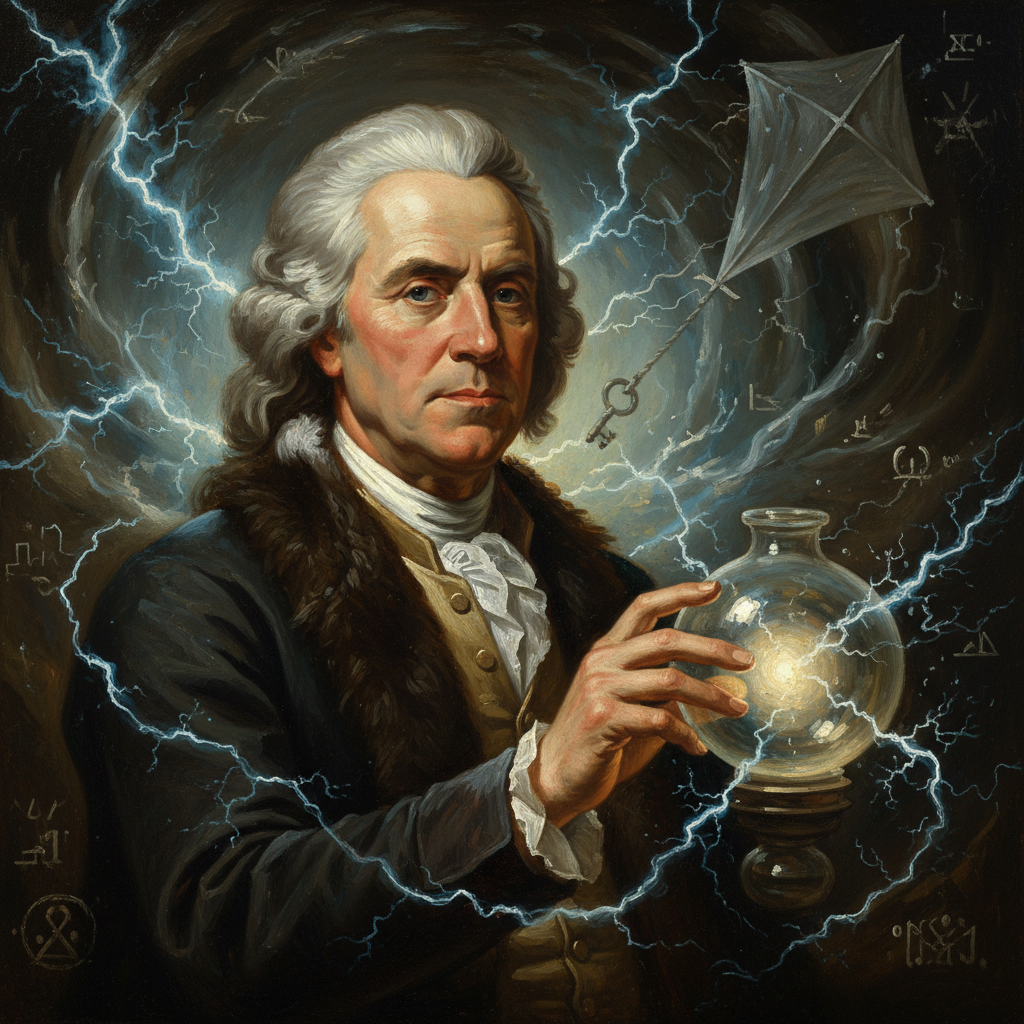
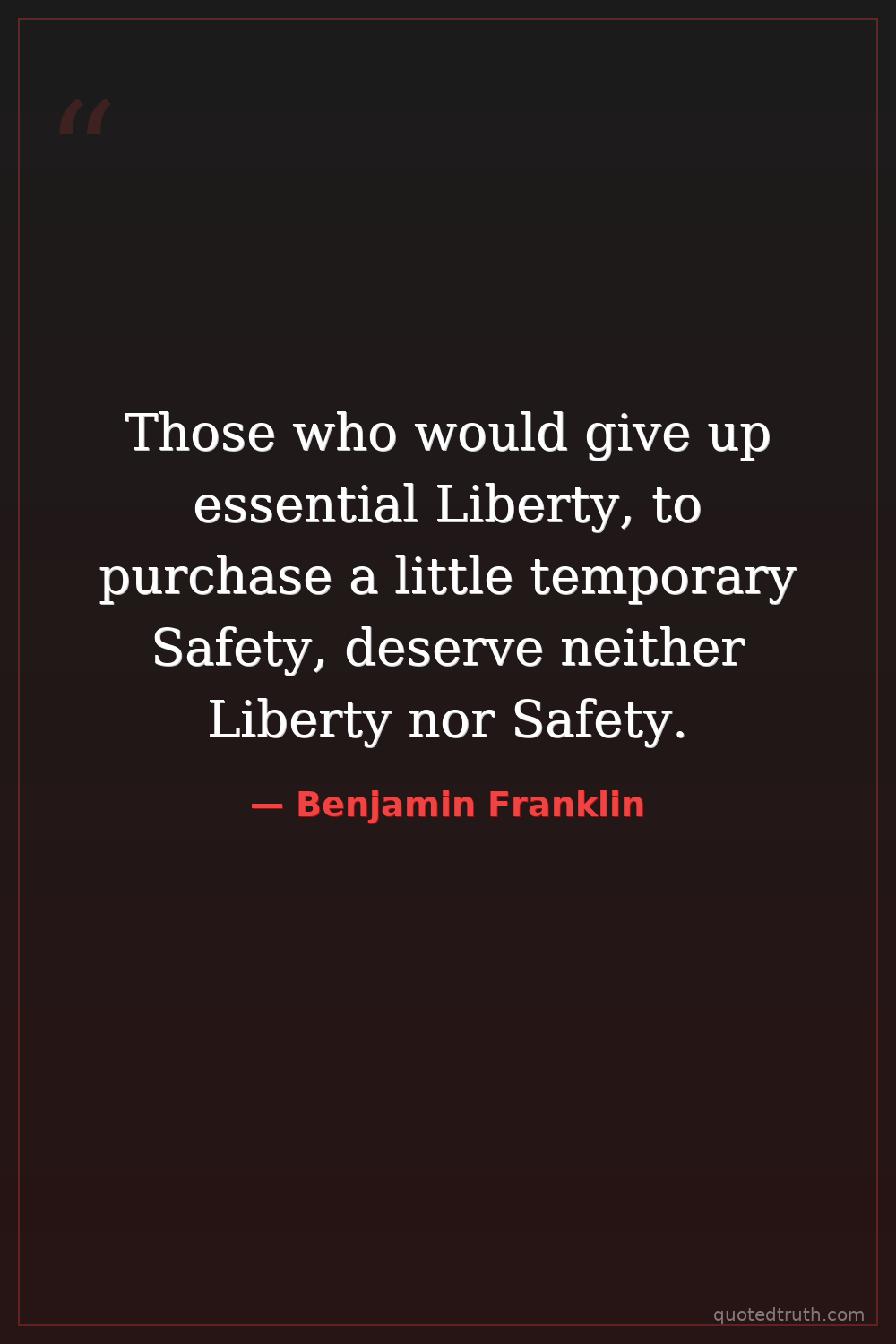
Benjamin Franklin — "Those who would give up essential Liberty, to purchase a little temporary Safety…"
Those who would give up essential Liberty, to purchase a little temporary Safety, deserve neither Liberty nor Safety.
Those who would give up essential Liberty, to purchase a little temporary Safety, deserve neither Liberty nor Safety.
Click any product to generate a realistic preview. Up to 3 at a time.
* Initial load can take up to 90 seconds — revising the preview in another color is nearly instant.
"Happiness consists more in small conveniences or pleasures that occur every day, than in great pieces of good fortune that happen but seldom to a man in the course of his life."
"He that best understands the world, best understands his own business."
"Early to bed and early to rise makes a man healthy, wealthy, and wise."
"Never confuse motion with action."
"Beware of the flattery of a woman, and the treachery of a man."
Polymath Founding Father, diplomat, and Poor Richard's Almanack author who helped draft the Declaration of Independence and the Constitution. Closely associated with John Adams (fellow Founder, Massachusetts statesman) and Thomas Jefferson (fellow Declaration drafter). For an intellectual contrast, see Thomas Hutchinson, last royal governor of colonial Massachusetts — Franklin leaked Hutchinson's loyalist correspondence to Boston in 1772 to inflame revolutionary sentiment — Hutchinson represented the colonial-aristocrat crown-loyalty that Franklin's revolution was organized to dismantle.
Found in 2 providers: deepseek,gemini
2 sources checked
Surrendering fundamental freedoms for short-term security is a losing bargain — you end up with neither. True liberty requires accepting some risk. Governments that exploit fear to strip rights don't actually deliver safety; they deliver control. Once you trade freedom for protection, the authority doing the protecting has no incentive to keep either promise. People who accept that bargain don't deserve what they surrendered or what they hoped to gain.
Franklin wrote this in 1755 in a letter to Pennsylvania's governor, arguing the colonial Assembly shouldn't surrender its taxing authority to fund frontier defense. As a printer, scientist, diplomat, and Founding Father who helped draft the Constitution and Declaration of Independence, Franklin believed self-governance was the bedrock of a free society — any power yielded to authority, even for protection, set a precedent that corrupted liberty permanently.
In 1755, the French and Indian War was ravaging Pennsylvania's frontier. Colonial assemblies faced pressure to cede political powers to royal governors in exchange for military funding. Simultaneously, Enlightenment thinkers — Locke, Montesquieu — were reshaping Western thought: government derived legitimacy from protecting natural rights, not from power. The tension between colonial self-rule and British imperial control was building toward the revolution that would erupt two decades later.
AI-generated insights based on extensive research and information for context. Factual errors? Email [email protected].
Your cart is empty