Laozi — "To attain knowledge, add things everyday. To attain wisdom, remove things every …"
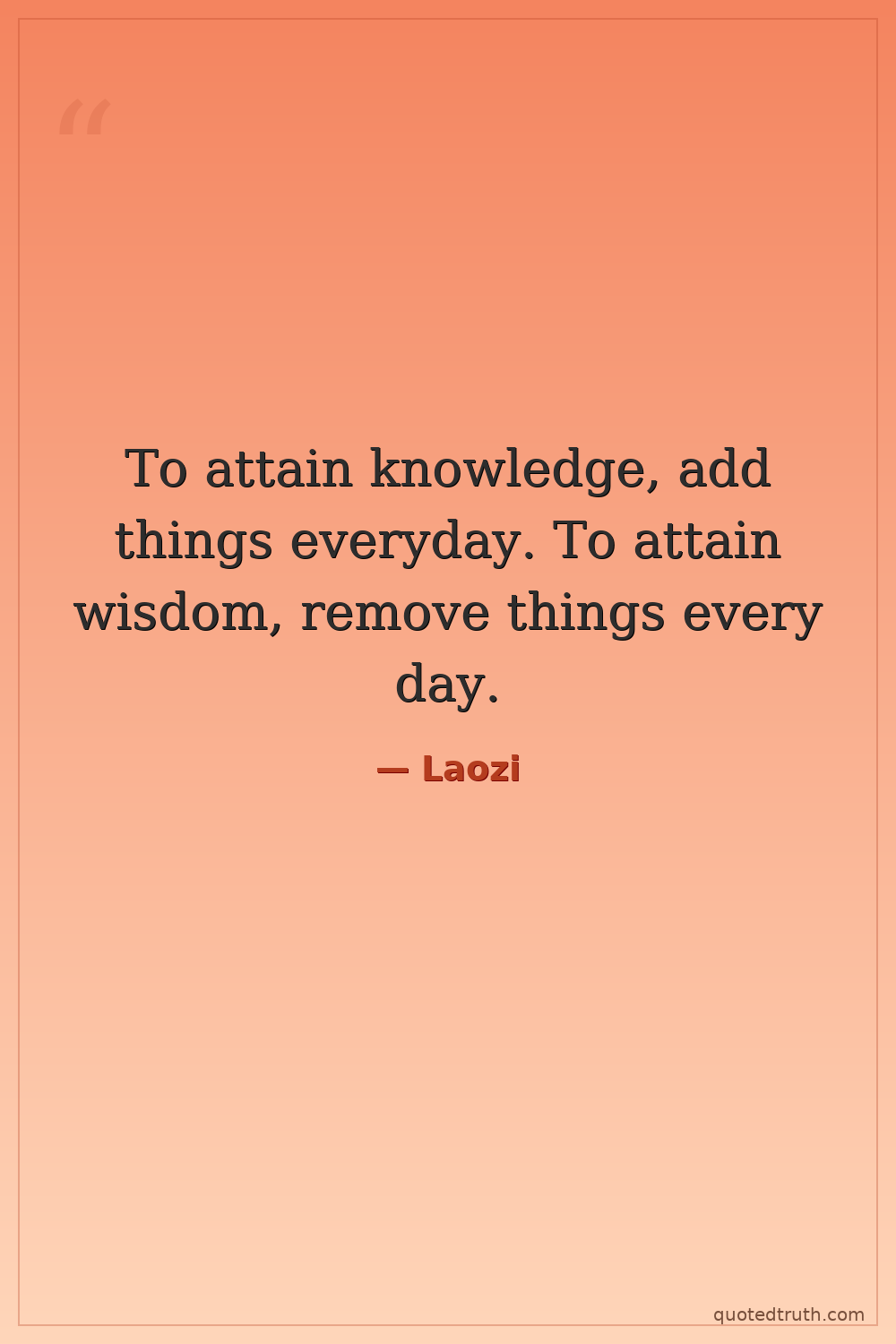
To attain knowledge, add things everyday. To attain wisdom, remove things every day.
To attain knowledge, add things everyday. To attain wisdom, remove things every day.
Click any product to generate a realistic preview. Up to 3 at a time.
* Initial load can take up to 90 seconds — revising the preview in another color is nearly instant.
"Although he travels all day, the sage never loses sight of his luggage carts."
"By letting it go it all gets done. The world is won by those who let it go. But when you try and try. The world is beyond the winning."
"Those who know do not talk. Those who talk do not know."
"The Way is ever without action, yet nothing is left undone."
"The soft and the weak overcome the hard and the strong."
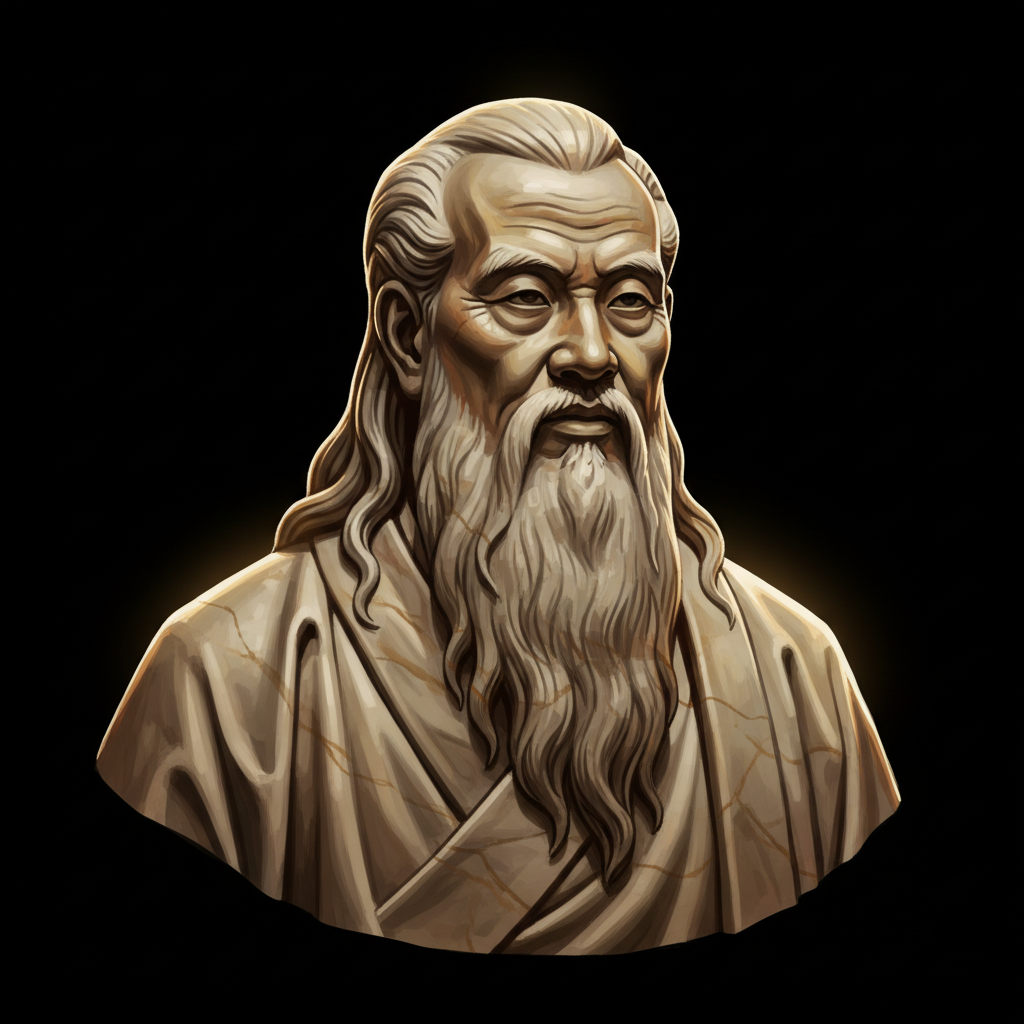
Reputed founder of Taoism and author of the Tao Te Ching, whose wu wei (effortless action) shaped East Asian philosophy. Closely associated with Zhuangzi (later Taoist who extended Laozi's framework). For an intellectual contrast, see Confucius, near-contemporary Chinese sage of social ritual and duty — Confucius systematized social order through ritual and hierarchy; Laozi argued that all such systems were the disease, not the cure — the two founding poles of Chinese moral philosophy.
Found in 1 providers: gemini
1 source checked
Gaining knowledge means accumulating facts, skills, and information piece by piece. Wisdom works the opposite way. It comes from stripping away assumptions, biases, distractions, and unnecessary complications until what remains is clear and essential. Knowing more and understanding deeply are different pursuits. One expands outward through addition; the other deepens inward through subtraction. Real insight often requires unlearning rather than learning, letting go of clutter so the simple truth underneath can finally show itself.
Laozi founded Taoism, a philosophy built around wu wei, or effortless action, and the value of emptiness, simplicity, and yielding. Legend casts him as a quiet archivist at the Zhou court who grew disillusioned with rigid convention and left civilization behind. The Tao Te Ching he reportedly wrote repeatedly praises the uncarved block, the empty vessel, and the sage who does less yet accomplishes more, making subtraction a central spiritual discipline rather than a clever paradox.
Laozi lived during China's late Zhou dynasty, roughly the sixth century BCE, as centralized authority crumbled and the Warring States era approached. Competing schools scrambled to prescribe elaborate rituals, hierarchies, and Confucian codes to restore order. Against this backdrop of ever more rules, titles, and scholarly accumulation, Taoism offered a radical counterargument. Shedding artificial structures and returning to natural simplicity, Laozi argued, would heal a society suffocating under its own cleverness, bureaucracy, and anxious striving for more.
AI-generated insights based on extensive research and information for context. Factual errors? Email [email protected].
Your cart is empty