Laozi — "By letting it go it all gets done. The world is won by those who let it go. But …"
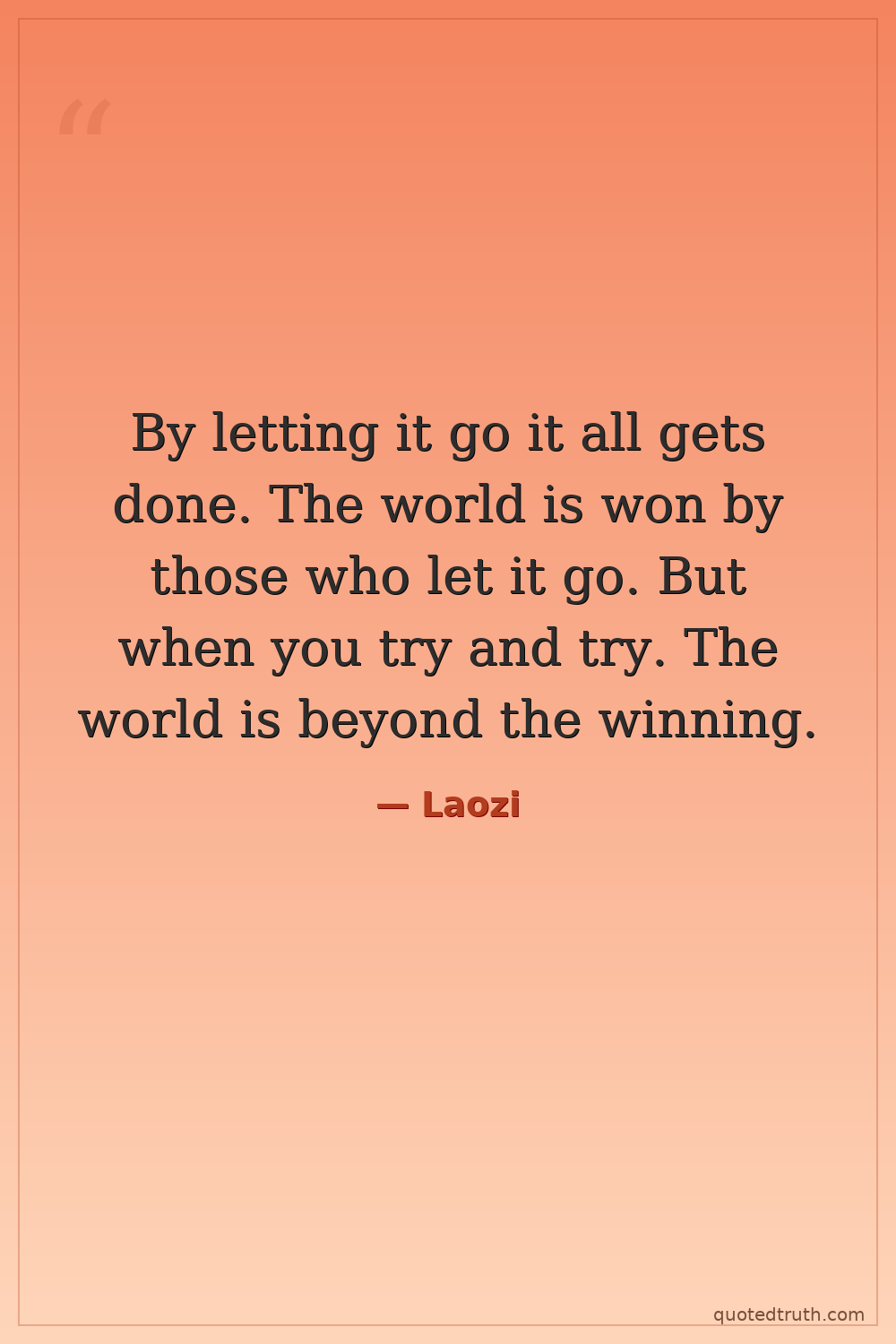
By letting it go it all gets done. The world is won by those who let it go. But when you try and try. The world is beyond the winning.
By letting it go it all gets done. The world is won by those who let it go. But when you try and try. The world is beyond the winning.
Click any product to generate a realistic preview. Up to 3 at a time.
* Initial load can take up to 90 seconds — revising the preview in another color is nearly instant.
"The higher the sun rises, the less shadow it casts."
"He who knows that enough is enough will always have enough."
"Difficult things in the world must needs have their beginnings in the easy; Big things must needs have their beginnings in the small."
"The Way is ever without action, yet nothing is left undone."
"To yield is to be preserved whole. To be bent is to be straightened. To be empty is to be filled. To be worn out is to be renewed. To have little is to gain. To have plenty is to be perplexed."
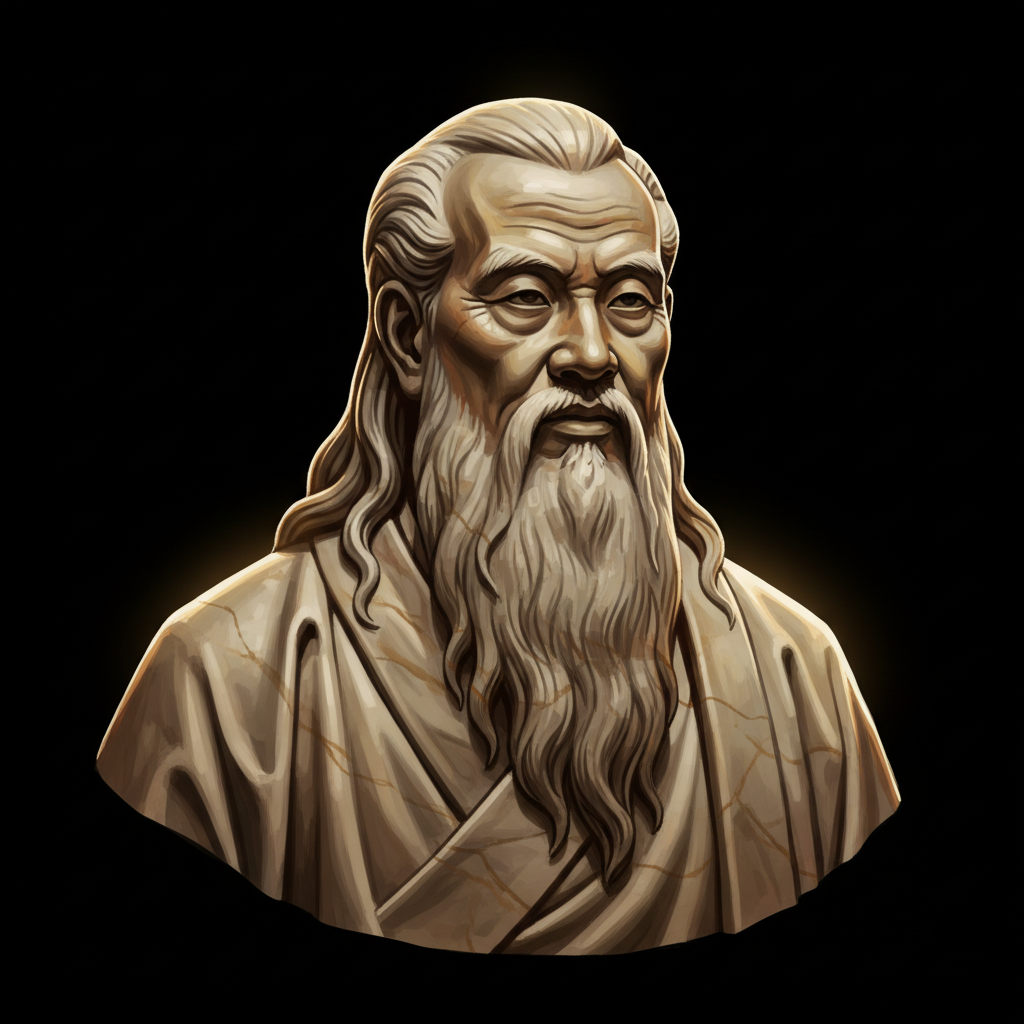
Reputed founder of Taoism and author of the Tao Te Ching, whose wu wei (effortless action) shaped East Asian philosophy. Closely associated with Zhuangzi (later Taoist who extended Laozi's framework). For an intellectual contrast, see Confucius, near-contemporary Chinese sage of social ritual and duty — Confucius systematized social order through ritual and hierarchy; Laozi argued that all such systems were the disease, not the cure — the two founding poles of Chinese moral philosophy.
Found in 1 providers: grok
1 source checked
Trying to force outcomes usually backfires. When you stop gripping so tightly, stop manipulating people and circumstances, things tend to fall into place naturally. Real success comes to people who release their need to control every detail. The harder you push and strain, the more the result slips away. Loosen your grip, let situations unfold, and you accomplish more than you ever could by relentless effort.
Laozi built Taoism around wu wei, or effortless action, the exact principle this saying captures. Tradition holds he served as a court archivist who grew disillusioned with political striving and withdrew westward, reportedly leaving the Tao Te Ching at a border guard's request. That walk-away gesture mirrors the verse: he stopped contending for influence and, paradoxically, became one of history's most quoted teachers, shaping Chinese thought for 2,500 years.
Laozi lived during the Spring and Autumn period, an era of constant warfare among Chinese states, ambitious lords, and rival philosophies competing for rulers' ears. Confucians urged active moral engagement and rigid social roles; Legalists pushed harsh control. Against that anxious striving, Laozi's call to release, yield, and trust the natural flow was radical. It offered exhausted officials and peasants alike permission to stop grasping in a world consumed by ambition, conquest, and political maneuvering.
AI-generated insights based on extensive research and information for context. Factual errors? Email [email protected].
Your cart is empty