What it means
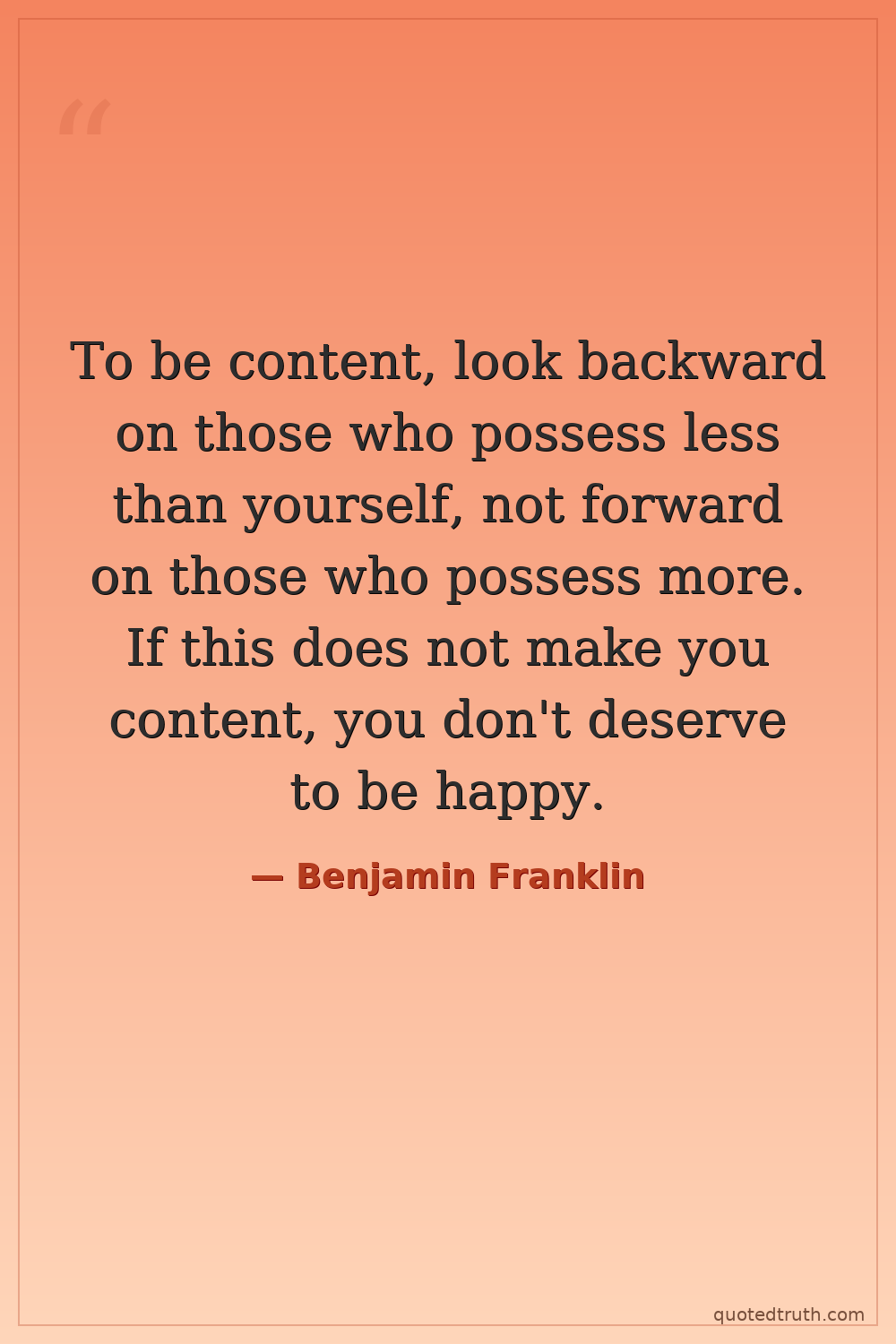
Contentment requires a deliberate downward gaze — acknowledging those who have less rather than fixating on those who have more. The quote reframes envy as a choice: you can always find someone richer, so that comparison guarantees misery. The sharp final sentence turns this into a moral test — if gratitude for real advantages still fails to satisfy you, the problem is ingratitude itself, not circumstance.
Relevance to Benjamin Franklin
Franklin rose from humble origins — one of seventeen children, a runaway apprentice who built wealth through industry and frugality. His Poor Richard's Almanack preached practical virtue over aspiration. Having known poverty personally while later moving among European aristocracy, he understood both ends of the wealth spectrum. This quote embodies his core creed: virtue and self-discipline produce happiness, while perpetual wanting is a moral failing, not a social condition.
The era
In colonial America, extreme wealth gaps existed between merchants, planters, and laborers, yet the Enlightenment promoted rational self-improvement as the path to a good life. Franklin wrote for the aspiring middling sort — artisans and tradespeople who could see both poverty below and gentry above. Before consumer culture normalized endless desire, contentment was considered a civic and Christian virtue, making gratitude over envy both moral philosophy and practical social counsel.
AI-generated insights based on extensive research and information for context. Factual errors? Email [email protected].