Siddhartha Gautama (Buddha) — "To keep the body in good health is a duty... otherwise we shall not be able to k…"
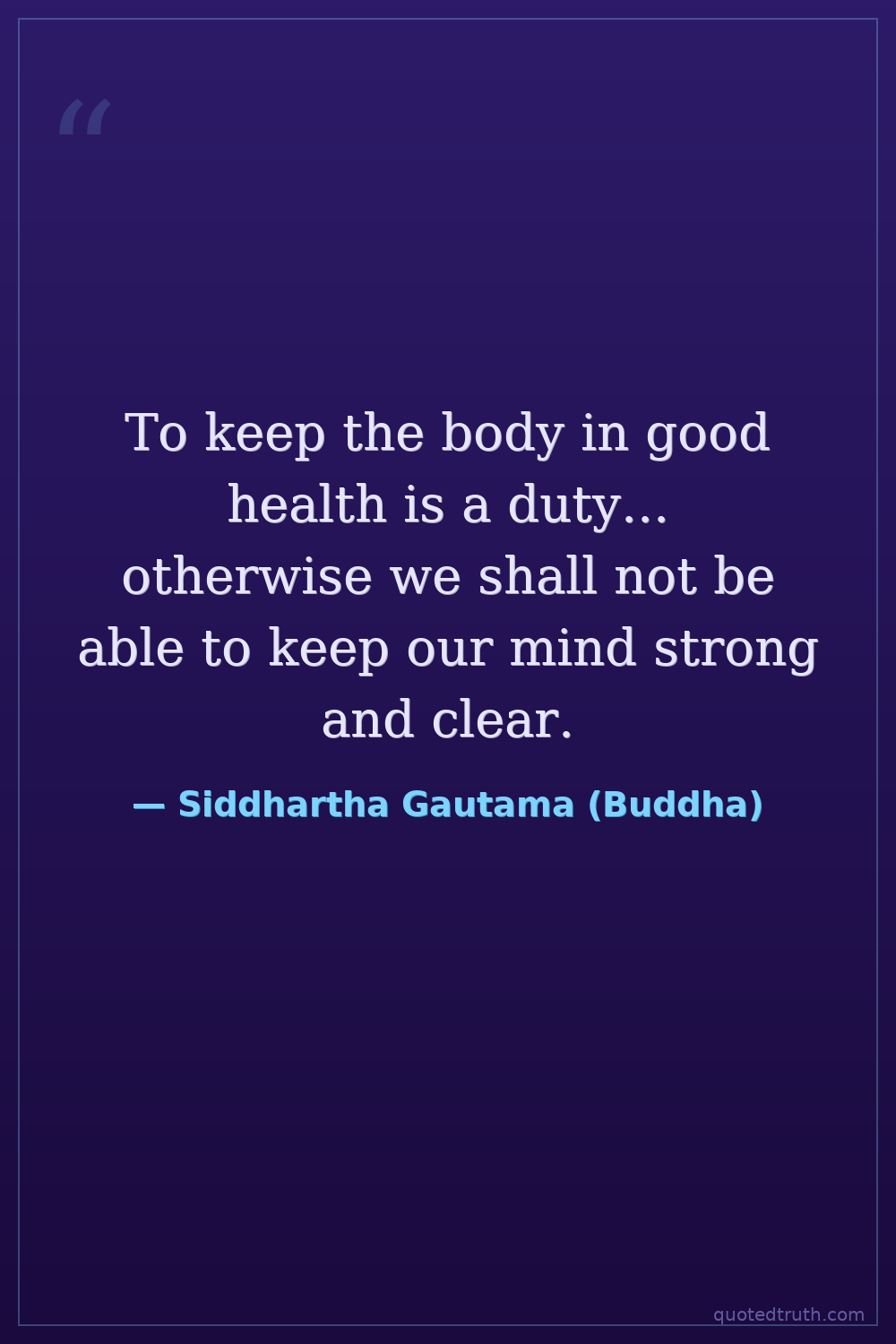
To keep the body in good health is a duty... otherwise we shall not be able to keep our mind strong and clear.
To keep the body in good health is a duty... otherwise we shall not be able to keep our mind strong and clear.
Click any product to generate a realistic preview. Up to 3 at a time.
* Initial load can take up to 90 seconds — revising the preview in another color is nearly instant.
"When the mind is pure, joy follows like a shadow that never leaves."
"The greatest gift is to give people your enlightenment, to share it. It has to be the greatest."
"Wear your ego like a loose garment."
"The secret of health for both mind and body is not to mourn for the past, nor to worry about the future, but to live the present moment wisely and earnestly."
"Perform those actions you will never regret: actions that will ripen into future joy and delight."
Attributed, often cited in various Buddhist texts and teachings.
Date: c. 5th century BCE
Power & LeadershipFound in 1 providers: grok
1 source checked
Taking care of your physical health is not optional or vain, it is a responsibility. A neglected body drags the mind down with it, making focus, discipline, and clear thinking impossible. If you let yourself become weak, sick, or exhausted through carelessness, you lose the mental sharpness needed to function well, make good decisions, and pursue anything meaningful. Physical upkeep is the foundation that mental capacity rests on.
The Buddha taught the Middle Way after rejecting extreme asceticism, where he nearly starved to death and found his weakened body could not sustain meditation. He accepted milk-rice from Sujata, regained strength, and only then attained enlightenment under the Bodhi tree. This quote reflects his hard-won conviction that punishing the body sabotages spiritual work. Mindfulness of the body became a core practice in his teachings.
In 5th-century BCE India, extreme ascetic movements like the Jains and forest renunciants pursued enlightenment through severe fasting, self-mortification, and bodily neglect, believing the flesh was an obstacle to liberation. The Buddha lived through this culture and practiced it for six years before rejecting it. His endorsement of bodily health was a direct counter to the dominant spiritual fashion, positioning disciplined care as compatible with, not opposed to, awakening.
AI-generated insights based on extensive research and information for context. Factual errors? Email [email protected].
Your cart is empty