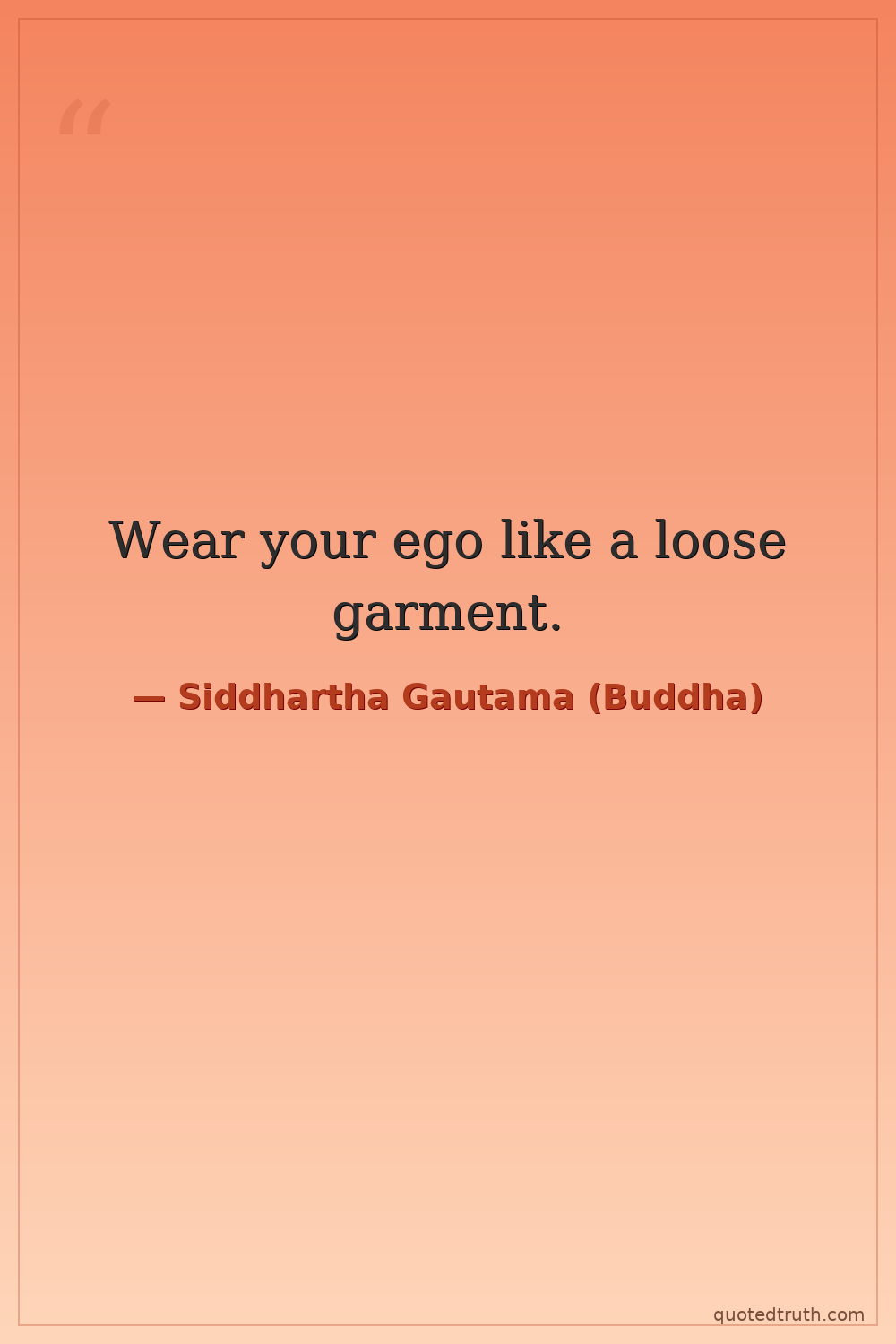
Siddhartha Gautama (Buddha) — "Wear your ego like a loose garment."
Wear your ego like a loose garment.
Wear your ego like a loose garment.
Click any product to generate a realistic preview. Up to 3 at a time.
* Initial load can take up to 90 seconds — revising the preview in another color is nearly instant.
"Even as a solid rock is not shaken by the wind, so are the wise unshaken by praise or blame."
"May all beings be happy and safe, and may their hearts be filled with joy."
"The secret of health for both mind and body is not to mourn for the past, nor to worry about the future, but to live the present moment wisely and earnestly."
"A mind unruffled by the vagaries of fortune, from sorrow freed, from defilements cleansed, from fear liberated — this is the greatest blessing."
"Do not overrate what you have received, nor envy others. He who envies others does not obtain peace of mind."
A common modern interpretation of Buddhist teachings on ego, not a direct quote.
Date: c. 5th century BCE
GeneralFound in 1 providers: grok
1 source checked
Hold your sense of self lightly rather than letting it define or constrict you. Don't clutch tightly to pride, identity, or reputation, because rigid self-importance causes suffering when reality challenges it. A loose garment can be adjusted, removed, or shed without pain. Treat your ego the same way: present when useful, easily set aside when it would otherwise trap you in defensiveness, arrogance, or bruised feelings.
Siddhartha Gautama abandoned royal status, wealth, and princely identity at twenty-nine to seek liberation, literally shedding the garments of his former self. Central to his teaching is anatta, the doctrine that the fixed self is an illusion and the root of suffering. He taught that clinging to identity produces craving and pain, while loosening attachment leads to awakening. The loose-garment image matches his lived renunciation and his instruction to hold the self lightly.
In sixth-century BCE northern India, identity was rigidly fixed by the Vedic caste system, where birth determined occupation, worth, and spiritual access. Brahmin priests guarded ritual authority while warriors and merchants defended inherited status. Against this backdrop, shramana movements, including the Buddha's sangha, rejected caste identity and welcomed outcasts, women, and former criminals. Teaching that ego itself was a loose, shedable garment directly subverted a society built on locked-in social selves and hereditary pride.
AI-generated insights based on extensive research and information for context. Factual errors? Email [email protected].
Your cart is empty