What it means
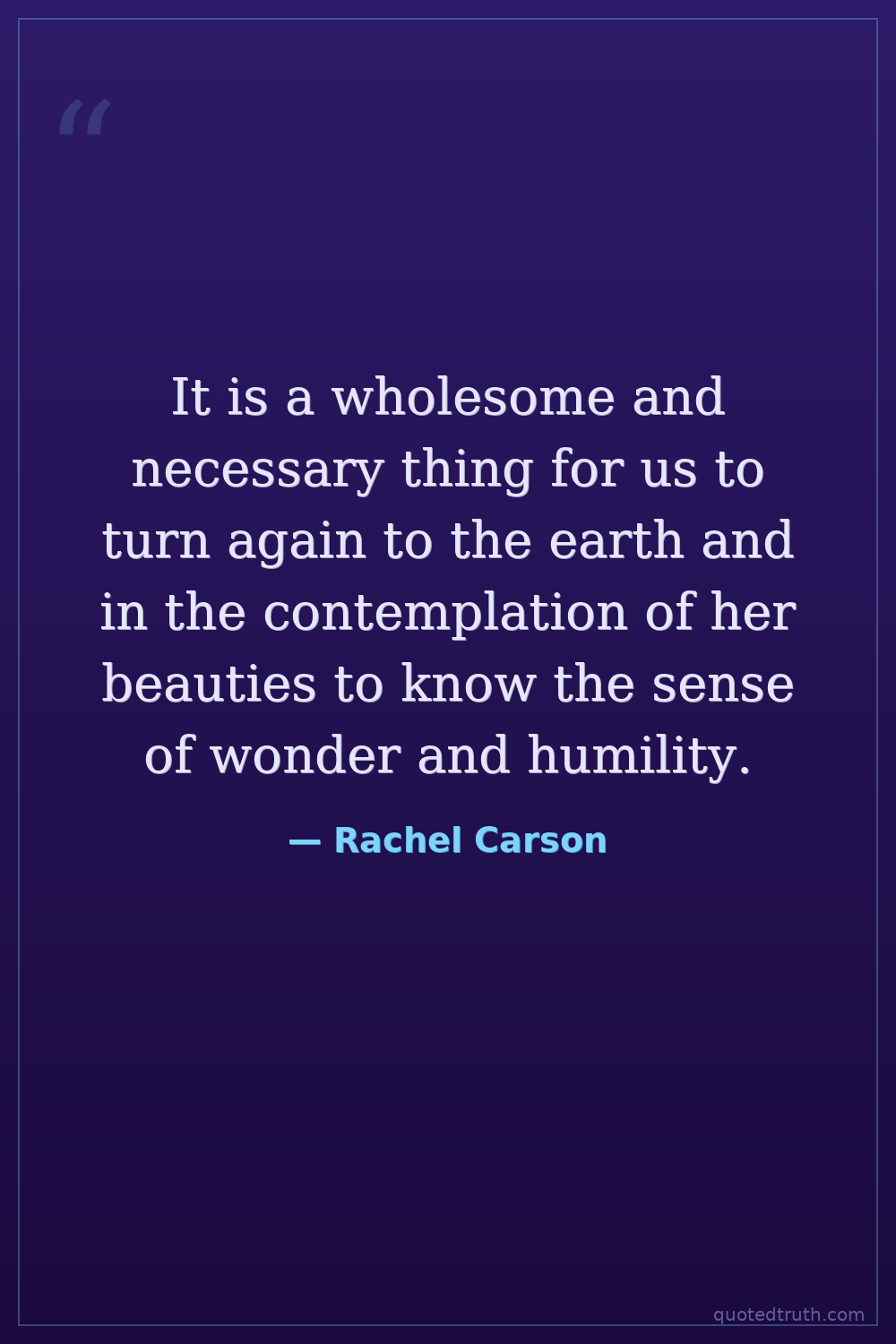
Reconnecting with the natural world is not a luxury but a human necessity. Observing nature's beauty — a shoreline, a forest, seasonal change — restores two things modern life erodes: wonder (the capacity for awe at something larger than ourselves) and humility (recognition that we are not the center of existence). This isn't passive appreciation; Carson frames it as a practice that grounds moral and emotional health.
Relevance to Rachel Carson
Carson spent her career as a marine biologist and nature writer translating scientific observation into emotional understanding. She grew up studying nature in rural Pennsylvania, worked for the U.S. Fish and Wildlife Service, and wrote lyrical works like The Sea Around Us. She later wrote The Sense of Wonder, a direct expression of this belief. For Carson, awe was not sentimental — it was the foundation for environmental stewardship and the motivation behind Silent Spring.
The era
Carson wrote this in the mid-twentieth century, when postwar America was embracing industrialization, suburban development, and chemical-based agriculture with uncritical enthusiasm. DDT was being sprayed widely; wetlands were being drained; the natural world was viewed as a resource to be managed or conquered. Urban migration was accelerating, disconnecting millions from the land. In this context, Carson's call to turn again to the earth was a deliberate counter-cultural act, not nostalgia.
AI-generated insights based on extensive research and information for context. Factual errors? Email [email protected].