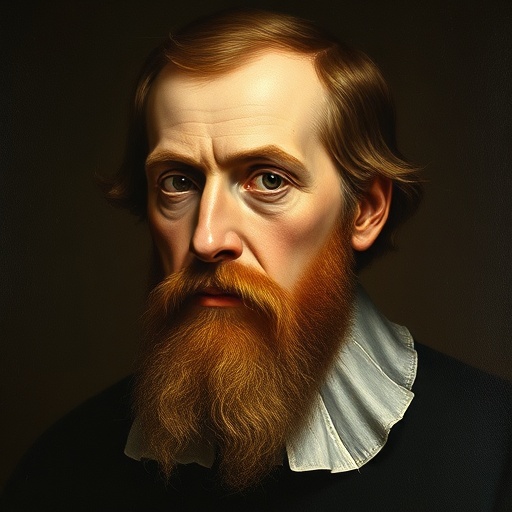
John Calvin — "We are not our own; we are God's."
We are not our own; we are God's.
We are not our own; we are God's.
Click any product to generate a realistic preview. Up to 3 at a time.
* Initial load can take up to 90 seconds — revising the preview in another color is nearly instant.
"All events are governed by God's secret plan."
"The reprobate are not able to believe, because God does not give them the gift of faith."
"The elect alone receive through regeneration [grace]. For I stay not to consider the extravagance of those who say that grace is offered equally and promiscuously to all."
"Therefore, the bondage of the will to sin remains and yet such slavery is a voluntary and willful captivity."
"The reprobate are often endued with excellent gifts, but these are given them, not for their salvation, but for their condemnation."
French theologian whose Institutes of the Christian Religion (1536) systematized Protestant Reformed doctrine, including predestination. Closely associated with Martin Luther (Reformation founder, Calvin's predecessor). For an intellectual contrast, see Jacobus Arminius, Dutch Reformed theologian (1560-1609) — Arminius's rejection of strict double-predestination founded Arminianism — the theological tradition modern Methodism, most evangelicalism, and Pentecostalism descend from. The Calvinist-Arminian debate has divided Protestantism for 400 years.
Found in 1 providers: grok
1 source checked
The quote asserts that humans don't belong to themselves — their lives, choices, and purposes aren't self-determined. Instead, every person exists as God's possession and servant, not as a self-ruling agent. Self-interest and personal ambition must yield completely to divine will. It's a call to radical surrender: your body, mind, time, and talents belong to God, not you. Genuine freedom paradoxically comes from accepting this ownership rather than resisting it.
Calvin's theology was built entirely on God's absolute sovereignty. As the architect of Reformed Christianity in Geneva, he restructured an entire city-state around divine governance — church discipline, civic law, and education. He abandoned a legal career, fled Catholic France, and endured constant political opposition, all in submission to what he believed was God's call. His doctrines of predestination and total depravity taught that humans are entirely God-dependent — this quote is the distilled core of his life's work.
Calvin wrote during the Protestant Reformation of the 1500s, when Europe was fracturing from Rome's authority over salvation and church governance. Simultaneously, Renaissance humanism was elevating individual reason and self-determination. Calvin pushed back sharply: against Catholic clerical hierarchy claiming earthly authority, and against humanist confidence in human autonomy. Religious wars, Anabaptist movements, and the Council of Trent all competed for theological dominance. His declaration that humans belong to God challenged every competing claim on human loyalty.
AI-generated insights based on extensive research and information for context. Factual errors? Email [email protected].
Your cart is empty