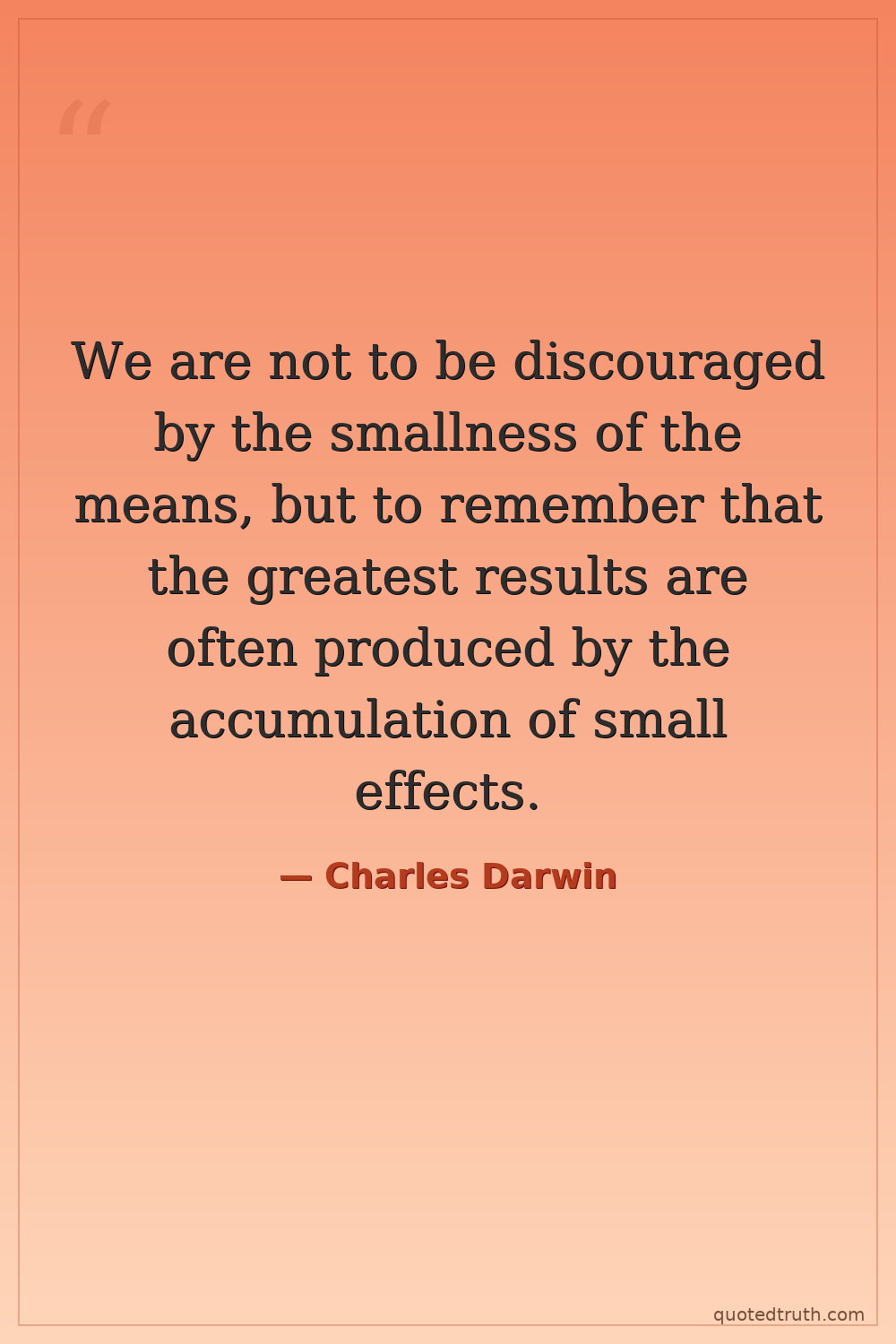
Charles Darwin — "We are not to be discouraged by the smallness of the means, but to remember that…"

We are not to be discouraged by the smallness of the means, but to remember that the greatest results are often produced by the accumulation of small effects.
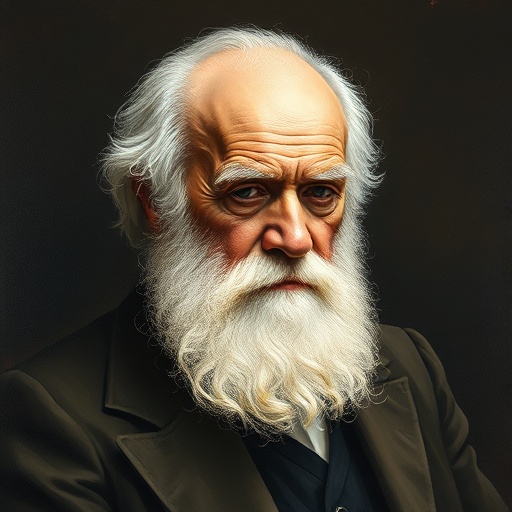
Charles Darwin — Charles Darwin Modern · Theory of evolution

Get This Quote & Author's Image Illustrated On:

Click any product to generate a realistic preview. Up to 3 at a time.
* Initial load can take up to 90 seconds — revising the preview in another color is nearly instant.

Kitchen

Apparel

Other

About Charles Darwin (1809-1882)

British naturalist whose On the Origin of Species (1859) established evolution by natural selection — the unifying theory of modern biology. Closely associated with Thomas Henry Huxley (his 'bulldog' public defender) and Alfred Russel Wallace (independent co-discoverer of natural selection). For an intellectual contrast, see William Paley, Anglican theologian and Natural Theology author (1743-1805) — Origin of Species is structurally a 400-page reply to Paley — Darwin admired Paley's watchmaker-argument as an undergraduate at Cambridge and then spent 20 years building the empirical machinery to displace him. The cleanest 'design argument vs natural selection' founding rebuttal in science.

The standard scholarly entry points to Charles Darwin's work: Janet Browne (Harvard, history of science) — Charles Darwin: Voyaging (1995) and The Power of Place (2002); Adrian Desmond (UCL, biographer) — Darwin: The Life of a Tormented Evolutionist (1991, with James Moore). These are the works graduate seminars cite when teaching Charles Darwin.

Details

Reflecting on the power of gradual processes, applicable to both science and life.

Date: c. 1850s

Food & Drink

Verification

Unverifiable

Found in 1 providers: grok

1 source checked

Understanding this quote

What it means

Small efforts and forces, taken alone, seem trivial — but compounded over time they generate transformative outcomes. The quote urges patience over impatience: resist dismissing incremental progress as meaningless. Whether in nature, business, or personal growth, consistent small actions accumulate into results that no single dramatic act could produce. It reframes persistence as the actual engine of greatness, not grand gestures.

Relevance to Charles Darwin

Darwin's theory of natural selection is built entirely on this principle — tiny random variations, filtered by environment across millions of generations, produce entirely new species. He spent over two decades methodically accumulating evidence before publishing On the Origin of Species in 1859. His barnacle studies alone took eight years. Darwin knew firsthand that patience and incremental observation, not sudden revelation, produced his life's greatest achievement.

The era

Darwin published in an era dominated by belief that Earth's features and species arose through sudden catastrophic events — floods, divine acts. Geologist Charles Lyell's uniformitarianism was overturning that view, arguing slow gradual forces shaped everything. Darwin extended this logic to life itself. Victorian industrialism celebrated dramatic invention, making Darwin's insistence on imperceptible accumulation genuinely radical — a direct intellectual challenge to the era's love of sudden transformation.

AI-generated insights based on extensive research and information for context. Factual errors? Email [email protected].
Your Cart

Your cart is empty