What it means
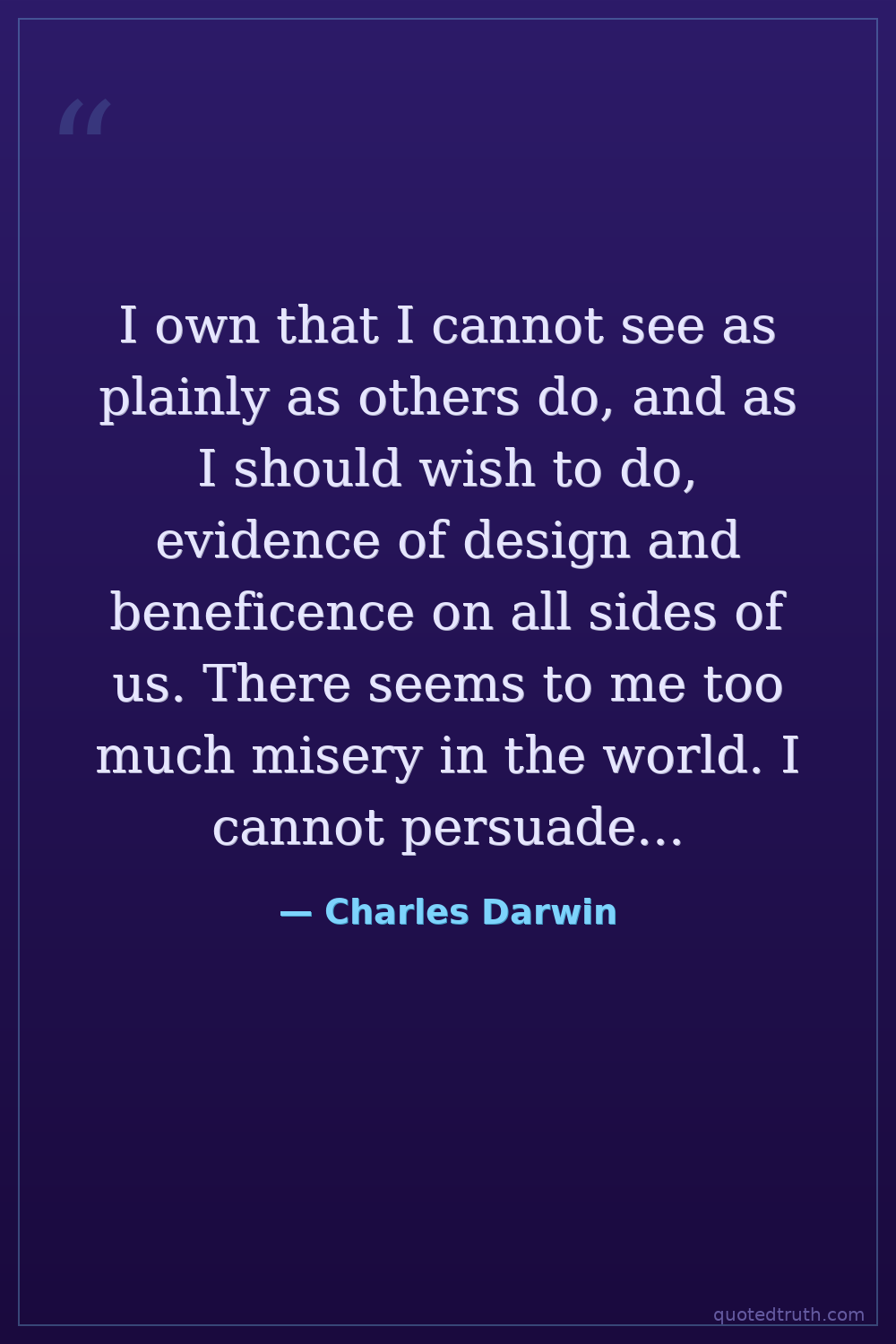
Darwin admits he cannot see evidence of a wise, caring God in the natural world. Nature's cruelty—parasitic wasps that eat living caterpillars from the inside, cats toying with mice—strikes him as incompatible with a benevolent, all-powerful creator. Rather than forcing a conclusion, he steps back: these questions about God, design, and suffering run too deep for human minds to confidently resolve.
Relevance to Charles Darwin
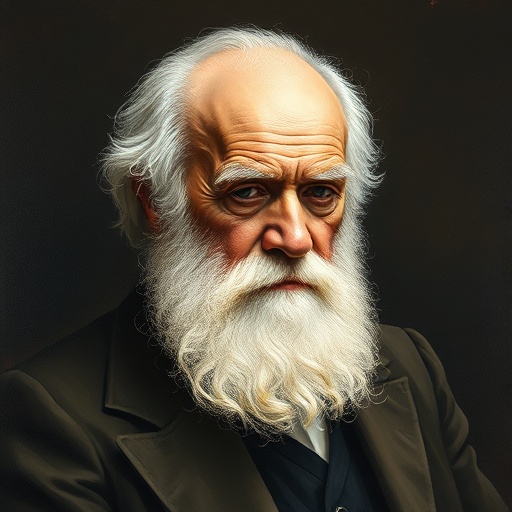
Darwin trained for the clergy at Cambridge before his Beagle voyage transformed him into a naturalist. By 1860, his theory of natural selection—a process driven by suffering, competition, and death—had quietly dismantled his Christian faith. The death of his daughter Annie in 1851 sharpened his grief into doubt. He wrote this in a letter to botanist Asa Gray, wrestling openly with theodicy while evolution made God's alleged benevolence harder to defend.
The era
Written in 1860, one year after Origin of Species detonated a theological crisis in Victorian Britain. Natural theology—the argument that nature's complexity proved God's design—was the era's dominant framework, championed by William Paley. Darwin's evolution replaced design with blind selection. Victorian society was deeply Anglican, and figures like Bishop Samuel Wilberforce openly attacked Darwin's ideas, making his private wrestling with God's existence culturally explosive.
AI-generated insights based on extensive research and information for context. Factual errors? Email [email protected].