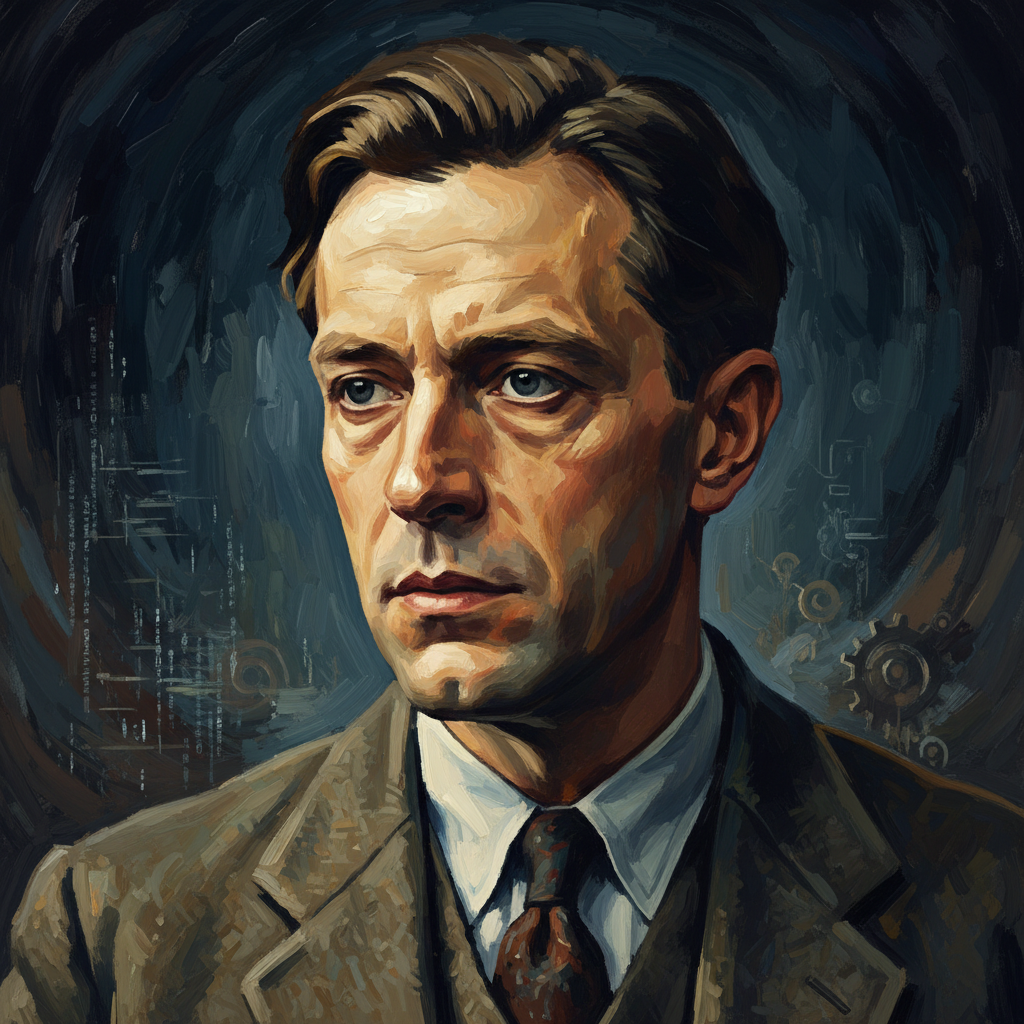
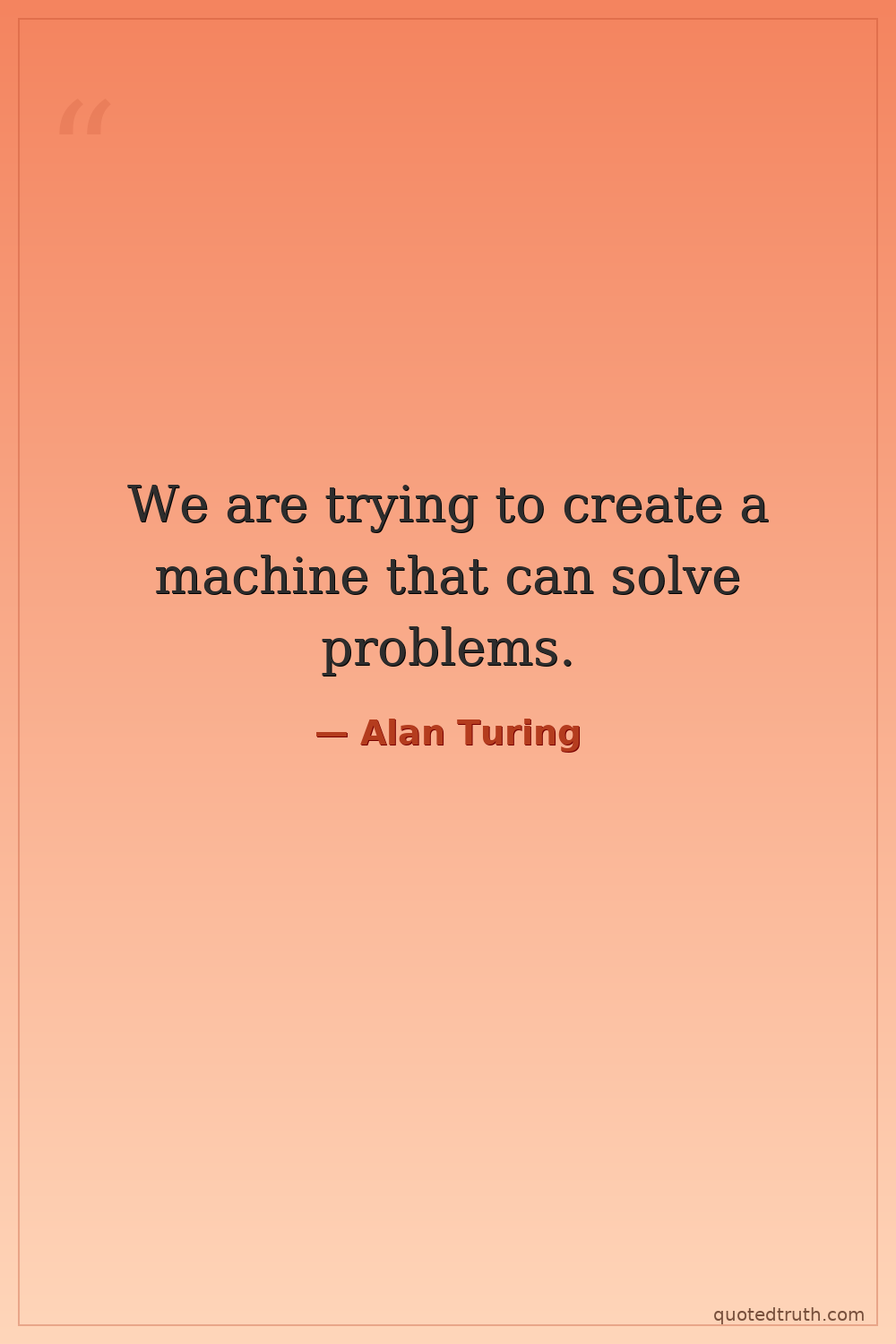
Alan Turing — "We are trying to create a machine that can solve problems."
We are trying to create a machine that can solve problems.
We are trying to create a machine that can solve problems.
Click any product to generate a realistic preview. Up to 3 at a time.
* Initial load can take up to 90 seconds — revising the preview in another color is nearly instant.
"The machine should be able to make mistakes."
"The future of computing is in artificial intelligence."
"The human mind is a parallel processor."
"I am enough of an artist to draw freely upon my imagination."
"It is not easy to devise a game which is fair in this respect between the machine and the man."
Found in 1 providers: grok
1 source checked
The quote captures the core ambition of computing: building systems that process complex challenges automatically, without human intervention at every step. It describes the foundational goal of both computer science and artificial intelligence — machines that don't merely calculate but reason, analyze, and arrive at solutions. This single aspiration underpins everything from early logic engines to modern AI, framing problem-solving as something transferable from human minds to engineered systems.
Turing's entire career embodied this goal. At Bletchley Park he built the Bombe, a literal problem-solving machine that cracked Nazi Enigma codes. His 1936 paper introduced the Turing Machine, proving any computable problem could be solved algorithmically. His 1950 paper 'Computing Machinery and Intelligence' pushed further, asking whether machines could think — treating reasoning itself as a problem engineering could solve. The quote is essentially his life's mission condensed.
Turing worked in the 1930s–1950s, when 'computing' meant rooms of human clerks doing arithmetic by hand. World War II made automated problem-solving urgent — Enigma required billions of decryption attempts impossible manually. Post-war, the nuclear age and Cold War demanded machines handling ballistics, cryptography, and logistics at inhuman speed. The claim that machines could solve problems was not obvious then — it was radical, philosophically contested, and ultimately reshaped civilization.
AI-generated insights based on extensive research and information for context. Factual errors? Email [email protected].
Your cart is empty