What it means
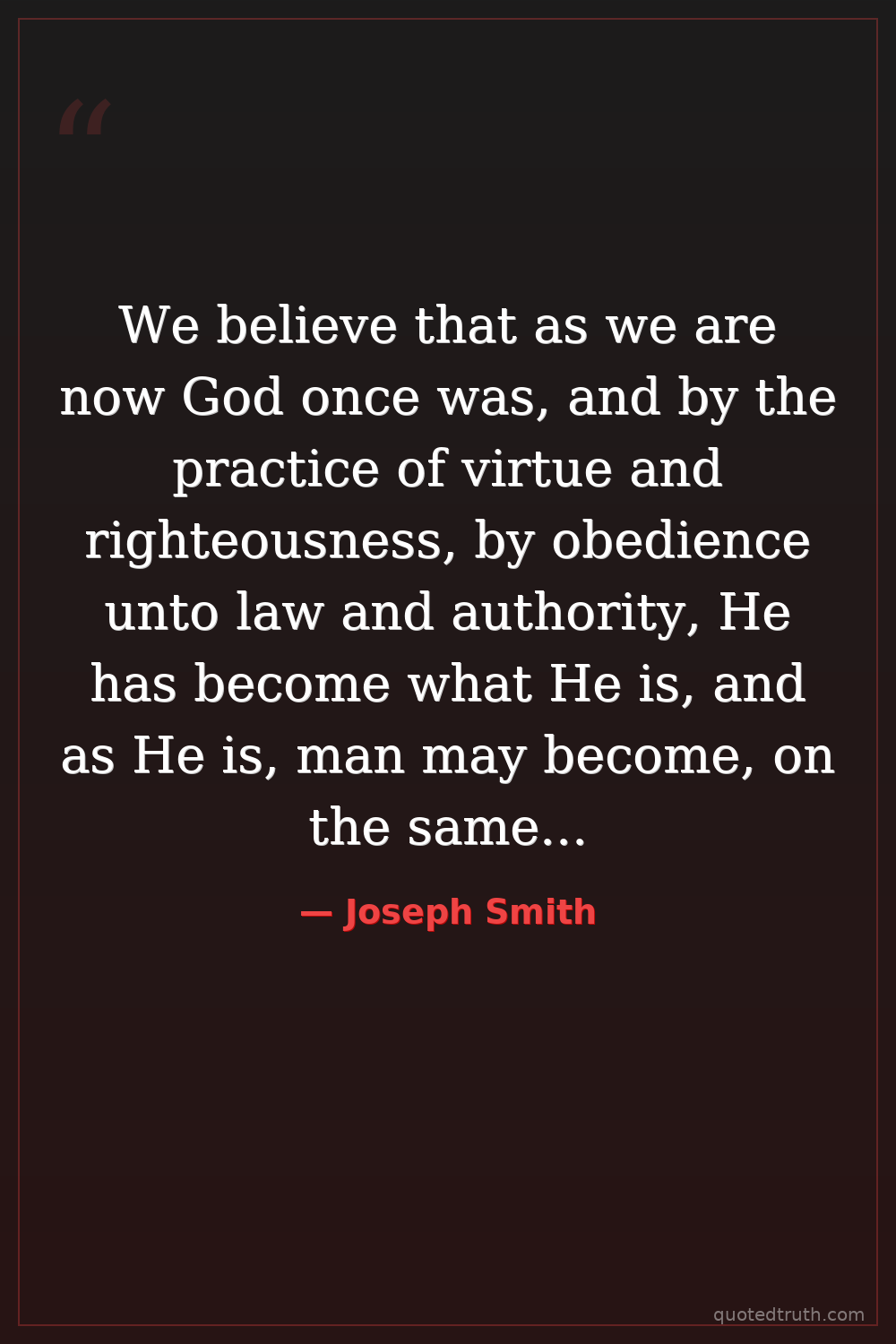
This quote teaches that God was once a being at a human-like stage of existence, and progressed to His current divine state through virtue, righteousness, and obedience to eternal law. Humans, following that same path, can likewise ascend to godhood. It makes divinity achievable rather than categorically separate from humanity, offering an optimistic, merit-based framework for spiritual development where the gap between mortals and God is one of progress, not kind.
Relevance to Joseph Smith
This reflects Smith's most radical theological claim, articulated in his 1844 King Follett discourse delivered months before his death. As a self-declared prophet who received direct divine revelations, Smith consistently elevated human potential and divine accessibility. Believing he held restored priesthood authority from God, he saw the human-divine boundary as permeable. This doctrine challenged orthodox Christianity's absolute Creator-creation divide and gave his followers not just salvation but an aspirational cosmic destiny rooted in his own sense of prophetic calling.
The era
The 1840s American frontier was a hotbed of religious innovation during the Second Great Awakening. Traditional Calvinist predestination was yielding to human-agency-centered faiths in upstate New York's 'burned-over district,' where new denominations proliferated rapidly. Smith's teaching offered something distinctly American — a meritocratic, optimistic path to divinity rejecting fixed theological hierarchies. This democratization of godhood resonated with frontier egalitarianism and the era's broader cultural belief in unlimited human progress through individual effort and moral self-improvement.
AI-generated insights based on extensive research and information for context. Factual errors? Email [email protected].