Wright Brothers (Orville & Wilbur) — "We have been able to keep the machine in the air for longer periods than ever be…"
We have been able to keep the machine in the air for longer periods than ever before.
We have been able to keep the machine in the air for longer periods than ever before.
Click any product to generate a realistic preview. Up to 3 at a time.
* Initial load can take up to 90 seconds — revising the preview in another color is nearly instant.
"The only difference between us and others is that we have made a more thorough study of the problem."
"The greatest pleasure in life is to do what people say you cannot do."
"We did not have a university education, but we had a good deal of common sense."
"No one can appreciate the work and worry it cost us to build our first machine."
"We have been trying to make a machine that will fly, and we have succeeded."
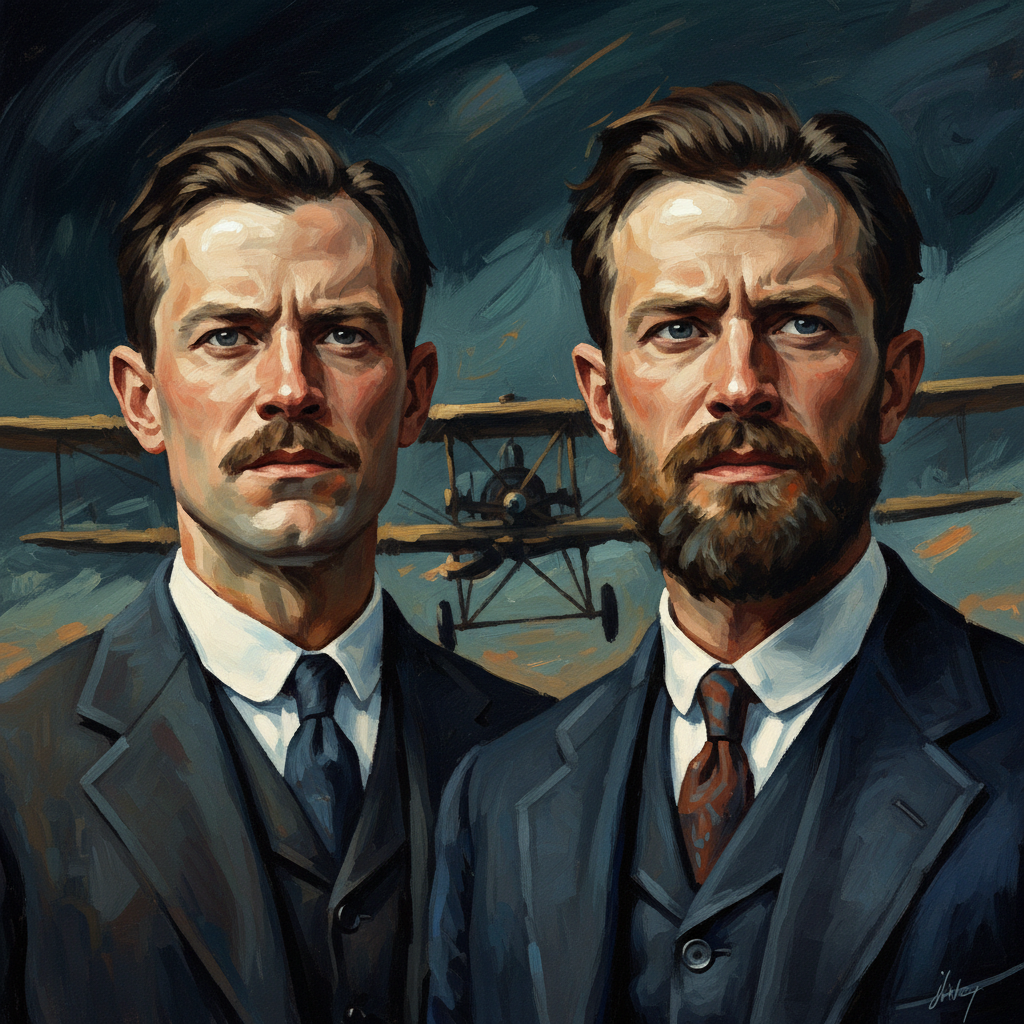
American aviation pioneers who achieved the first sustained powered controlled airplane flight at Kitty Hawk, NC, on December 17, 1903. Closely associated with Octave Chanute (their gliding mentor and aeronautical correspondent). For an intellectual contrast, see Samuel Pierpont Langley, Smithsonian Institution Secretary and government-funded aviation researcher — Langley's Aerodrome crashed twice into the Potomac in October-December 1903 with $50,000 of War Department funding; the Wright Brothers' bicycle-shop empiricism beat Langley's institutional Big Science by 9 days. The most-cited example in engineering history of empirical-tinkerer beating institution-funded credentialism.
Found in 1 providers: grok
1 source checked
Progress is measured in time aloft. Each flight that outlasts the previous one proves the design works and the approach is sound. This is the language of incremental achievement — not a grand declaration, but a quiet record of beating your own benchmark. Sustained performance, not a single lucky moment, is the real proof that something works. The goal is not to fly once but to fly longer.
Orville and Wilbur Wright were bicycle mechanics who applied rigorous, iterative testing to heavier-than-air flight. Their December 17, 1903 flights at Kitty Hawk progressed from Orville's 12-second first hop to Wilbur's 59-second, 852-foot fourth flight that same day. They kept meticulous logs. This quote reflects their engineering identity exactly — not poets of the sky, but methodical men measuring seconds and feet, improving each run over the last.
In 1903, powered flight was considered impossible by most scientists. Samuel Langley's government-funded Aerodrome had crashed into the Potomac just weeks before Kitty Hawk. No infrastructure, no aviation industry, no precedent existed. Each additional second in the air was a direct rebuttal to skeptics. Duration mattered because it proved control, not just lift — and controlled, sustained flight was the entire unsolved problem of the age.
AI-generated insights based on extensive research and information for context. Factual errors? Email [email protected].
Your cart is empty