What it means
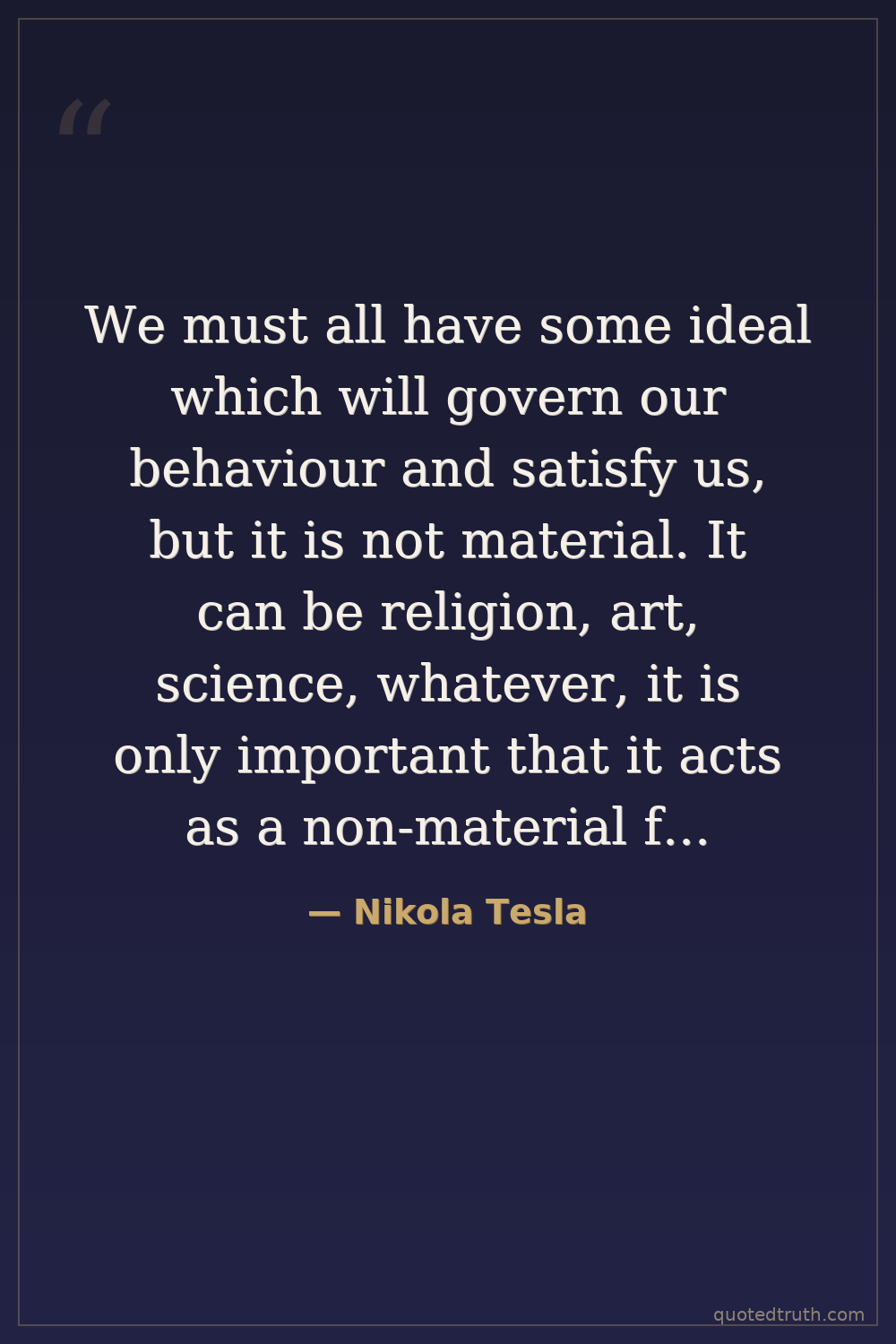
Every person needs a guiding ideal beyond money or physical comfort — something that gives life direction and meaning. That ideal could be faith, beauty, discovery, or any devotion that isn't reducible to wealth or possessions. What matters is that it operates as an invisible but real force shaping decisions, priorities, and character from the inside out.
Relevance to Nikola Tesla
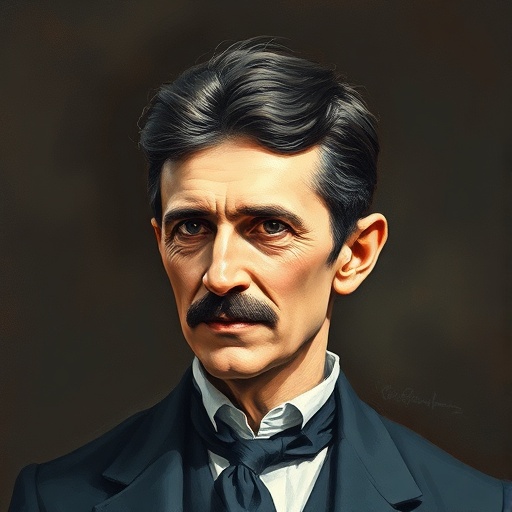
Tesla lived this principle literally. He died nearly penniless despite holding hundreds of patents worth fortunes. He consistently rejected lucrative deals — famously tearing up his royalty contract with Westinghouse to save the company — because his driving ideal was advancing human civilization through science, not accumulating wealth. His obsession with wireless energy transmission consumed his later decades with zero commercial payoff.
The era
Tesla spoke during the Gilded Age and early Industrial Revolution, when robber barons defined success purely through material accumulation. Carnegie, Rockefeller, and Morgan built empires measured in dollars. Against this backdrop, Tesla's insistence on non-material ideals as civilization's true engine was a direct philosophical counter-argument to the era's dominant worship of wealth and industrial power.
AI-generated insights based on extensive research and information for context. Factual errors? Email [email protected].