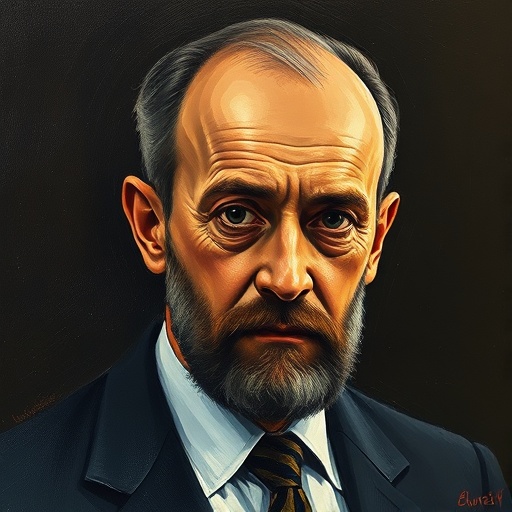
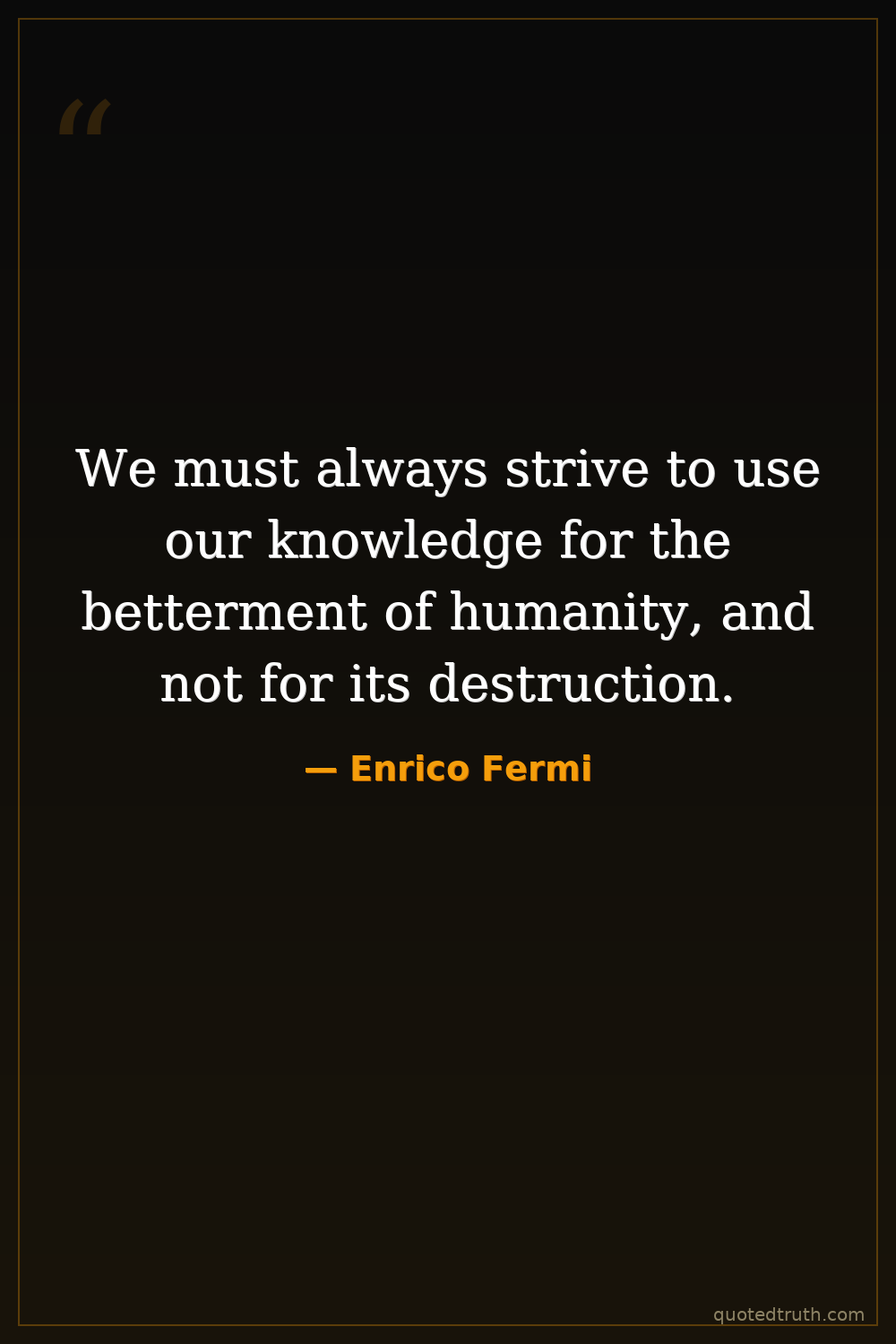
Enrico Fermi — "We must always strive to use our knowledge for the betterment of humanity, and n…"
We must always strive to use our knowledge for the betterment of humanity, and not for its destruction.
We must always strive to use our knowledge for the betterment of humanity, and not for its destruction.
Click any product to generate a realistic preview. Up to 3 at a time.
* Initial load can take up to 90 seconds — revising the preview in another color is nearly instant.
"The world has been changed, for good or ill."
"Don't ever do a calculation without knowing the answer."
"The only trouble is that the damn stuff is radioactive."
"There are two possible outcomes: if the result confirms the hypothesis, then you've made a measurement. If the result is contrary to the hypothesis, then you've made a discovery."
"The atomic bomb is a terrible weapon, but it is also a powerful tool for peace."
Found in 1 providers: grok
1 source checked
Knowledge carries moral weight — those who possess it bear responsibility for how it's used. This quote argues that advancing science or technology obligates the holder to actively direct that power toward helping people, not harming them. It rejects neutrality: you can't simply discover or build without considering consequences. The ethical burden falls on the scientist themselves, not just on governments or institutions to decide.
Fermi built Chicago Pile-1 in 1942 — the world's first self-sustaining nuclear reactor — and later contributed to the Manhattan Project. He understood better than almost anyone that splitting the atom could either power cities or level them. Having witnessed Hiroshima's aftermath and the emerging Cold War arms race, Fermi publicly advocated for international arms control and opposed the hydrogen bomb, embodying the very tension this quote names.
Fermi worked during the 1930s–1950s, when nuclear physics transformed from theoretical curiosity to civilization-scale weapon in under a decade. The Manhattan Project produced atomic bombs that destroyed Hiroshima and Nagasaki in 1945, immediately followed by a US-Soviet arms race. Scientists who had built these weapons faced public reckoning: had they served humanity or endangered it? This was the defining ethical crisis of 20th-century science.
AI-generated insights based on extensive research and information for context. Factual errors? Email [email protected].
Your cart is empty