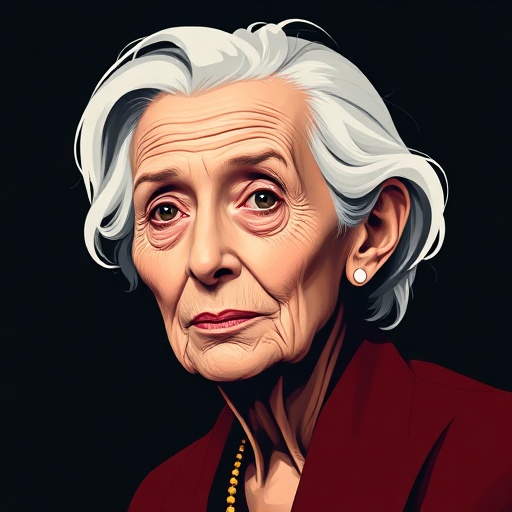
Jane Goodall — "We need to remember that we are part of the animal kingdom, and we have a respon…"
We need to remember that we are part of the animal kingdom, and we have a responsibility to protect it.
We need to remember that we are part of the animal kingdom, and we have a responsibility to protect it.
Click any product to generate a realistic preview. Up to 3 at a time.
* Initial load can take up to 90 seconds — revising the preview in another color is nearly instant.
"The future of the planet depends on us, and we need to take that responsibility seriously."
"We cannot live in a world where we're constantly taking, taking, taking, and not giving anything back."
"We must never give up hope. We must continue to fight for what is right."
"I believe that love is the most powerful force in the universe."
"We need to educate the next generation about the importance of protecting the environment."
British primatologist who in 1960 began the longest-running wild primate study at Gombe Stream, transforming our understanding of chimpanzees. Closely associated with Dian Fossey (mountain-gorilla researcher) and Birutė Galdikas (orangutan researcher; together with Goodall and Fossey one of Louis Leakey's 'Trimates'). For an intellectual contrast, see Walter Palmer, American dentist who killed Cecil the Lion in Zimbabwe in 2015 — Palmer represents the trophy-hunting tradition Goodall's life's work has been organized against — the colonial-era hunter-naturalist worldview that treated primates and big game as specimens or trophies, which Goodall's Roots & Shoots and Jane Goodall Institute exist specifically to displace.
Found in 1 providers: grok
1 source checked
Humans tend to view themselves as separate from or superior to the rest of nature, but we evolved alongside other animals and remain embedded in the same biological web. That membership carries obligation—because we possess the intelligence and power to destroy ecosystems, we also bear responsibility to preserve them. The quote argues for humility and active stewardship rather than a stance of dominance over the natural world.
Goodall began studying wild chimpanzees at Gombe, Tanzania in 1960, and her research demolished the sharp boundary humans drew between themselves and other animals—chimps make tools, form social bonds, and display emotions. Witnessing habitat destruction firsthand, she pivoted from pure science to global conservation advocacy, founding the Jane Goodall Institute and launching Roots & Shoots. This quote is essentially the thesis of her entire post-research life.
Goodall's career spans the entire modern environmental era. Rachel Carson's Silent Spring appeared in 1962; Earth Day launched in 1970; the 1992 Rio Summit enshrined biodiversity loss as a global emergency. African deforestation accelerated through the 1980s, directly threatening chimpanzee populations she had studied for decades. Scientists now recognize a sixth mass extinction driven by human activity, giving her insistence on shared kinship with animals escalating urgency with each passing year.
AI-generated insights based on extensive research and information for context. Factual errors? Email [email protected].
Your cart is empty