What it means
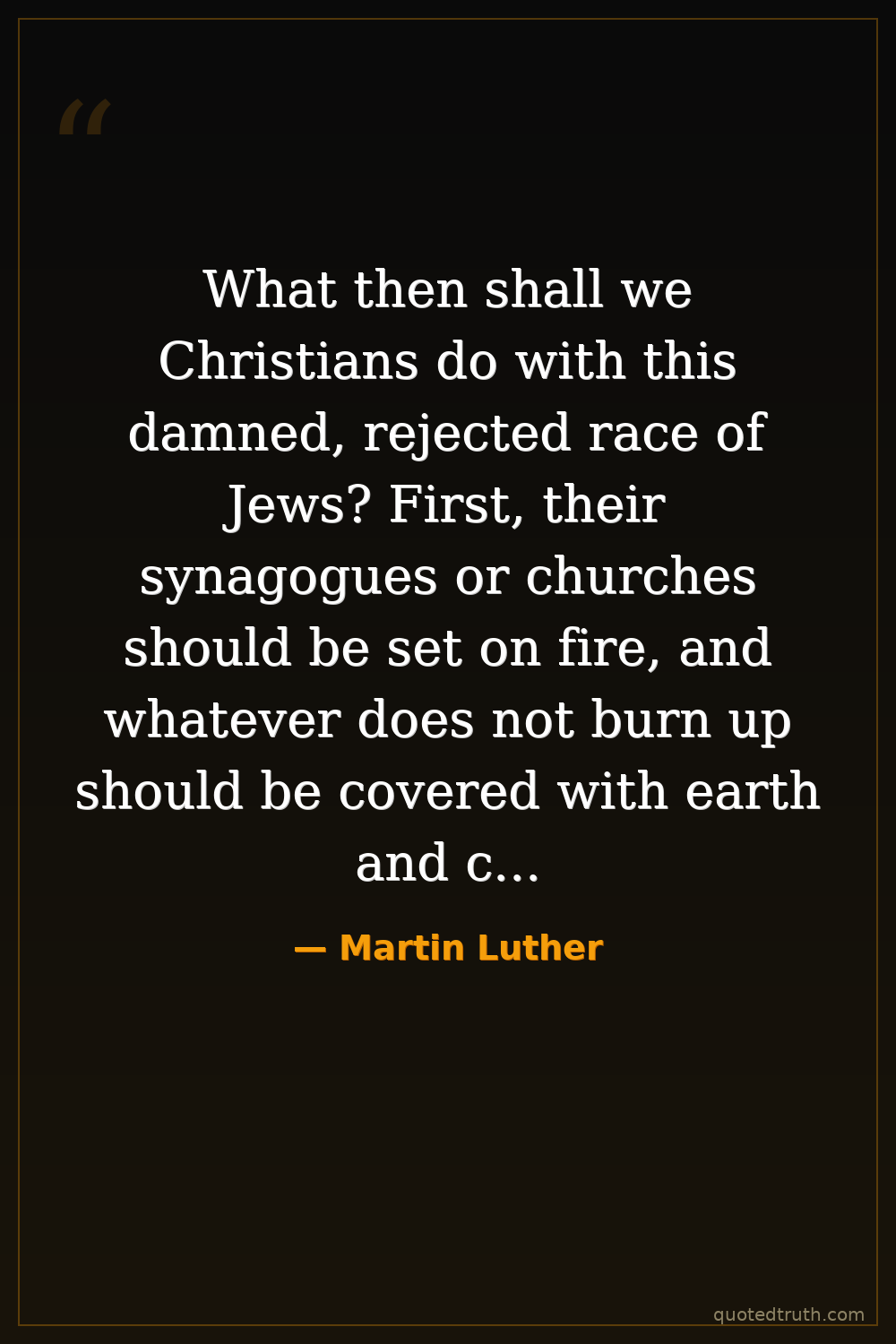
Luther calls for Christians to destroy Jewish places of worship by burning them down and burying the remains so thoroughly that no trace survives. He frames Jews as a cursed people deserving this violent erasure of their religious and communal life. The passage is an explicit incitement to arson, collective punishment, and the total obliteration of Jewish sacred spaces from Christian society.
Relevance to Martin Luther
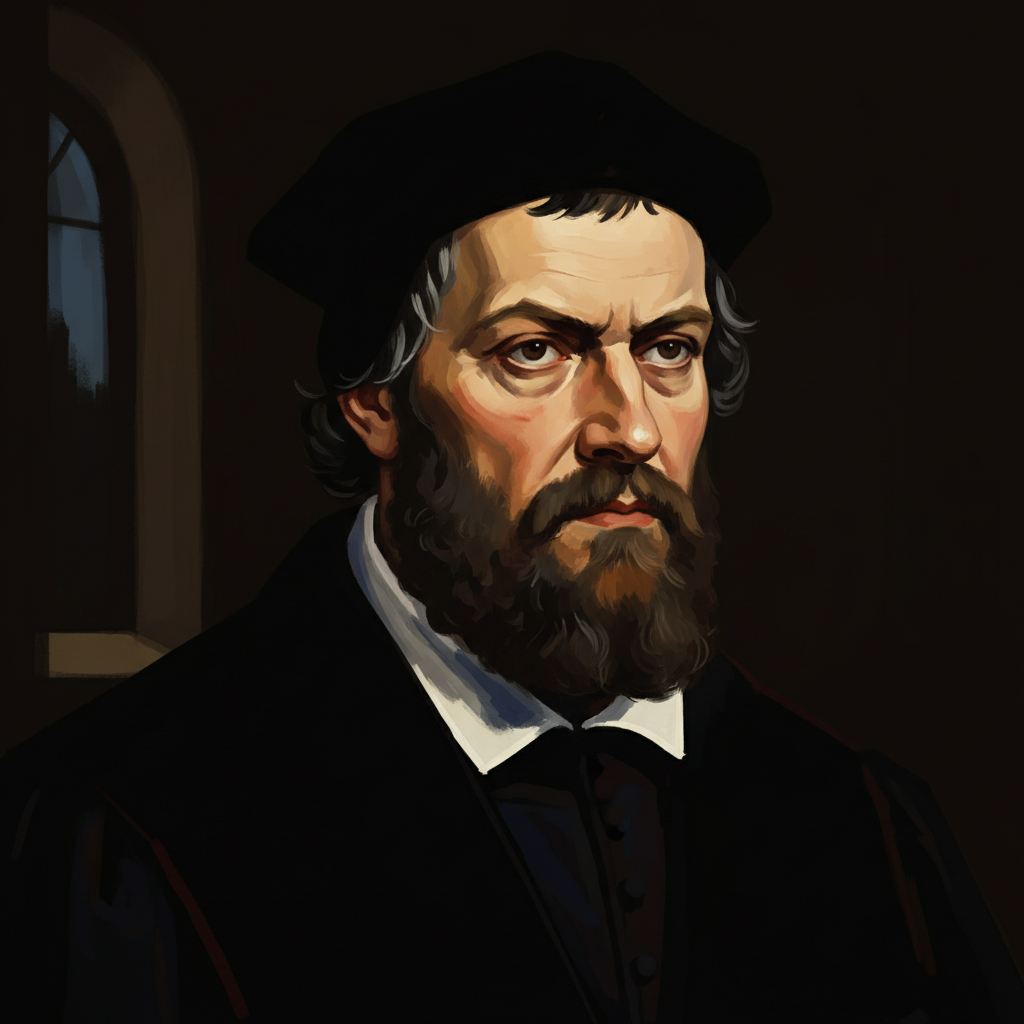
Luther, the monk who ignited the Protestant Reformation in 1517, wrote this in his 1543 tract On the Jews and Their Lies. Earlier he had hoped Jews would convert once freed from papal corruption; when they did not, his rhetoric turned savagely hostile. The same theological certainty that fueled his break with Rome hardened into scapegoating, and his prescriptions later supplied rhetorical ammunition to German antisemites, including the Nazi regime four centuries on.
The era
Early modern Germany seethed with religious upheaval: the Reformation had shattered Christendom, peasants had revolted, and apocalyptic anxiety ran high. Jews lived as a tolerated but despised minority, routinely blamed for plague, usury, and ritual murder, and expelled from city after city. Princes sought theological justification for restricting or banishing them. Luther's 1543 broadside gave that impulse the authority of Protestantism's founder, shaping Saxon policy and anti-Jewish sentiment across Lutheran territories for generations.
AI-generated insights based on extensive research and information for context. Factual errors? Email [email protected].