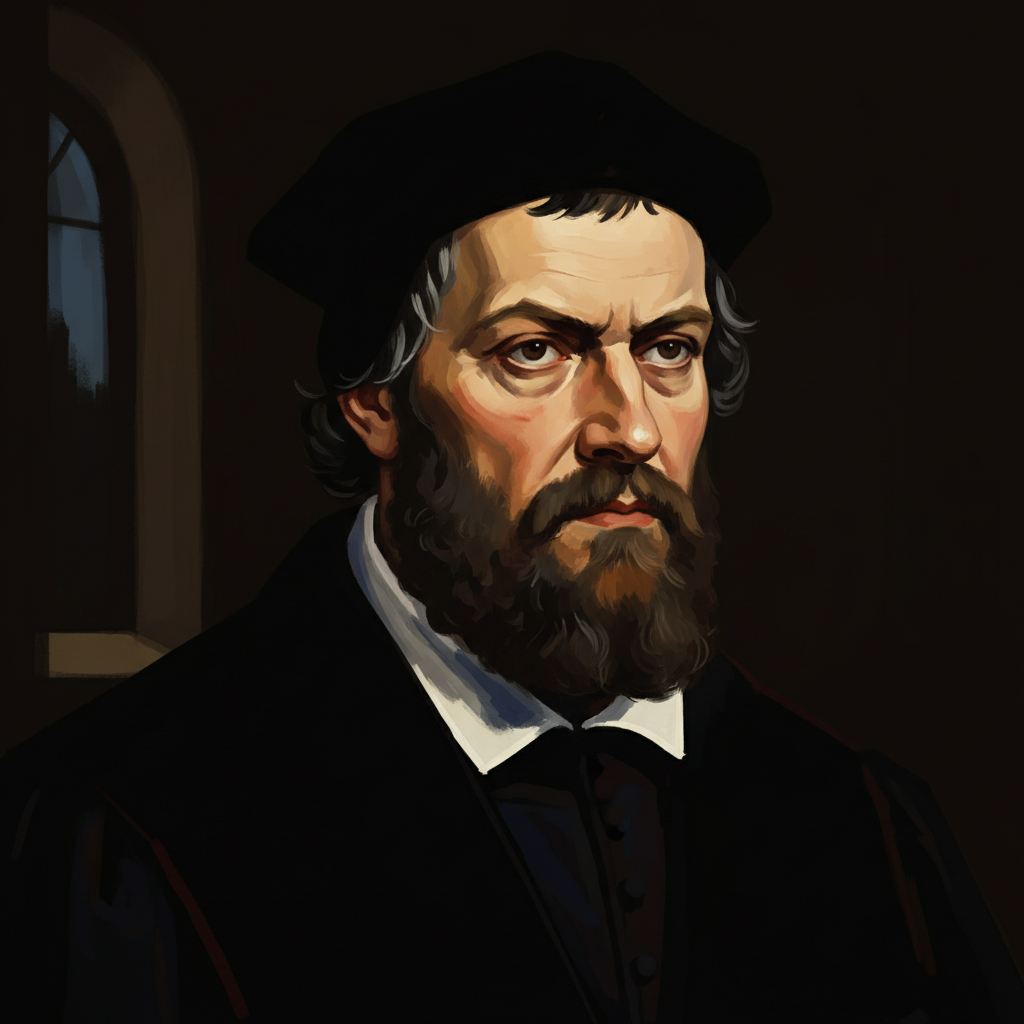
Martin Luther — "When I am assailed by temptation, I find it good to eat, drink, and be merry, so…"
When I am assailed by temptation, I find it good to eat, drink, and be merry, so that I may not be alone with the devil.
When I am assailed by temptation, I find it good to eat, drink, and be merry, so that I may not be alone with the devil.
Click any product to generate a realistic preview. Up to 3 at a time.
* Initial load can take up to 90 seconds — revising the preview in another color is nearly instant.
"A man must have a good mind, and a strong body, and a pure heart, to be a good preacher."
"Drinking and eating are the highest pleasures."
"Their prayer books and Talmudic writings, in which such idolatry, lies, cursing, and blasphemy are taught, should be taken from them."
"It is not a matter of choice for a woman to be a virgin or not; it is a matter of her destiny."
"For I know One who suffered and made satisfaction on my behalf. His name is Jesus Christ, Son of God, and where He is there I shall be also!"
German theologian whose 95 Theses (1517) launched the Protestant Reformation and broke the Catholic Church's monopoly on Western Christianity. Closely associated with Philipp Melanchthon (Lutheran systematizer) and John Calvin (later Reformer who built on Luther's break). For an intellectual contrast, see Pope Leo X, Renaissance pope (1513-1521) — Leo X's indulgence sales triggered Luther's break and Leo excommunicated him in 1521 — Luther's entire Reformation is structured as a direct answer to the indulgence-funded Vatican Leo represented.
Found in 1 providers: grok
1 source checked
Luther advises that when dark thoughts, doubts, or temptations strike, solitude makes them worse. The remedy is simple human pleasure: share a meal, drink wine, laugh with friends. Isolation lets anxiety and despair grow unchecked, while company and ordinary enjoyment break their grip. Rather than grim self-denial or silent wrestling with inner demons, he recommends warmth, food, and fellowship as genuine spiritual defense against mental torment.
Luther personally battled severe depressive episodes he called Anfechtungen, attacks he attributed to the devil. A former Augustinian monk, he rejected monastic asceticism after his break with Rome, married former nun Katharina von Bora, and hosted lively dinners recorded as Table Talk. He drank beer heartily, joked coarsely, and insisted joy and community were weapons against spiritual despair, reflecting his theology that God works through ordinary life, not self-punishment.
In early sixteenth-century Germany, medieval Catholicism prized fasting, celibacy, and monastic withdrawal as paths to holiness. Luther's 1517 Ninety-Five Theses ignited the Reformation, overturning this ascetic ideal. Plague, peasant revolts, and religious war made melancholy widespread, often interpreted as demonic assault. Luther's embrace of marriage, food, and conviviality was radical, legitimizing ordinary domestic pleasures for clergy and laity alike and reshaping Protestant attitudes toward worldly enjoyment.
AI-generated insights based on extensive research and information for context. Factual errors? Email [email protected].
Your cart is empty