John Wesley — "When I have money, I get rid of it quickly, lest it find a way into my heart."
When I have money, I get rid of it quickly, lest it find a way into my heart.
When I have money, I get rid of it quickly, lest it find a way into my heart.
Click any product to generate a realistic preview. Up to 3 at a time.
* Initial load can take up to 90 seconds — revising the preview in another color is nearly instant.
"I am not afraid of the devil himself."
"I am no more afraid of the devil than I am of a fly."
"I have not found one single man, among all those I have conversed with, who is able to give a rational account of the difference between an honest man and a rogue."
"I continue to dream and pray about a revival of holiness in our day that moves forth in power and reaches to the ends of the earth."
"Preach not doctrines, but Christ."
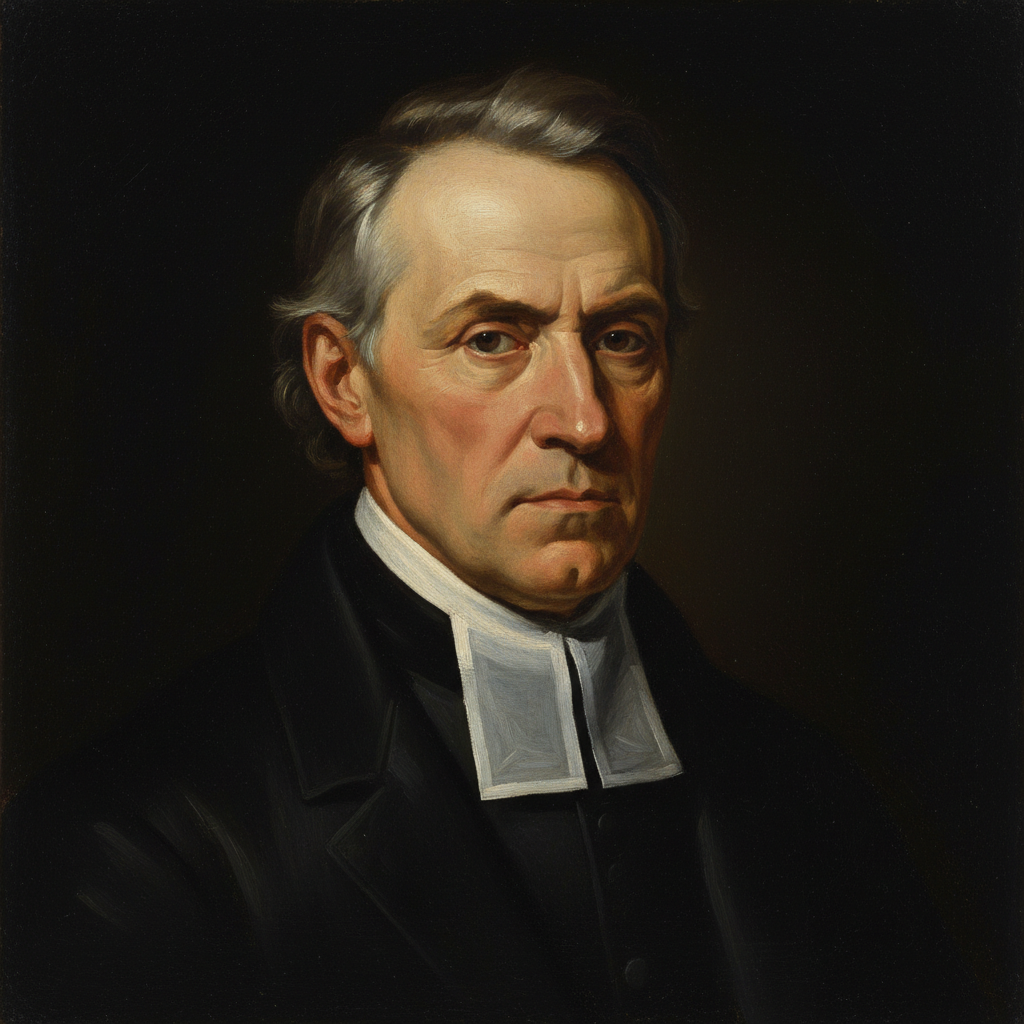
English Anglican cleric and founder of Methodism, whose open-air preaching and class-meeting structure created the largest 18th-century evangelical revival. Closely associated with Charles Wesley (his hymn-writing brother) and George Whitefield (early co-revivalist, later doctrinal opponent). For an intellectual contrast, see George Whitefield, Calvinist evangelical revivalist — Whitefield's predestinarian Calvinism vs Wesley's free-grace Arminian theology split the early Methodist movement permanently in the 1739-41 break. The founding evangelical Calvinist-Arminian schism — the two parallel evangelical traditions American Christianity descends from.
Found in 1 providers: deepseek
1 source checked
Money is dangerous because it quietly takes over your priorities if you hold onto it. The solution is to give it away fast before attachment forms. Wealth isn't inherently evil, but clinging to it corrupts values, shifts focus from people and purpose to accumulation, and slowly replaces what actually matters with a false sense of security and status.
Wesley practiced radical generosity throughout his life, reportedly giving away tens of thousands of pounds earned from book sales while living on a minimal fixed income. As Methodism's founder, he preached that Christians must serve the poor directly. His three-part financial rule — earn all you can, save all you can, give all you can — made wealth a tool for others, never personal comfort.
18th-century Britain was industrializing rapidly, creating new merchant wealth and stark urban poverty simultaneously. The Church of England was widely seen as aligned with landed gentry and indifferent to the poor. Wesley's open-air preaching to miners and factory workers directly challenged a culture where wealth signaled divine favor. His financial asceticism was a countercultural rebuke to rising consumer capitalism and class stratification.
AI-generated insights based on extensive research and information for context. Factual errors? Email [email protected].
Your cart is empty