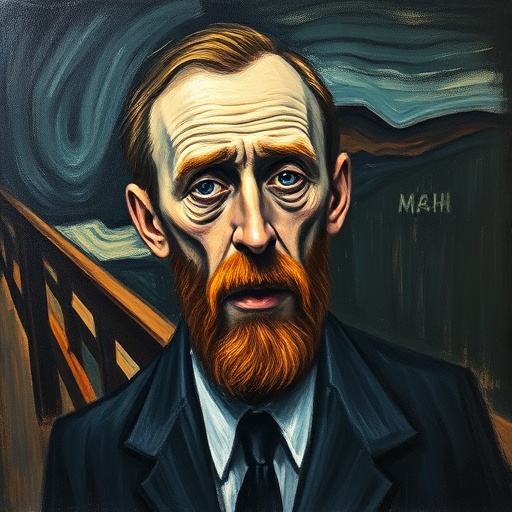
Edvard Munch — "When I painted, I was a master. I felt that I dominated him, who dominated me."
When I painted, I was a master. I felt that I dominated him, who dominated me.
When I painted, I was a master. I felt that I dominated him, who dominated me.
Click any product to generate a realistic preview. Up to 3 at a time.
* Initial load can take up to 90 seconds — revising the preview in another color is nearly instant.
"The human heart is a dark and mysterious place."
"Art comes from joy and pain, but mostly from pain."
"Just as Leonardo da Vinci studied human anatomy and dissected corpses, so I try to dissect souls."
"Painting picture by picture, I followed the impressions my eye took in at heightened moments. I painted only memories, adding nothing, no details that I did not see. Hence the simplicity of the painti…"
"I learned early about the misery and dangers of life, and about the afterlife, about the external punishment which awaited the children of sin in Hell."
Norwegian Expressionist painter whose The Scream (1893) became the iconic image of modern existential dread. Closely associated with James Ensor (Belgian Expressionist peer) and Egon Schiele (younger Expressionist heir). For an intellectual contrast, see Pierre-Auguste Renoir, French Impressionist (1841-1919) — Munch and Renoir were exact contemporaries painting the same Belle Époque from opposite emotional poles — Renoir's dappled-light bourgeois pleasure and Munch's anxiety-soaked bourgeois terror are the late-19th-century painting's two halves. The same world; the cleanest emotional inversion.
Describing the power dynamic and sense of control he felt while painting his doctor.
Date: Early 20th Century (likely during or after his sanitarium stay around 1908-1909)
Art & CreativityFound in 1 providers: gemini
1 source checked
Your cart is empty