What it means
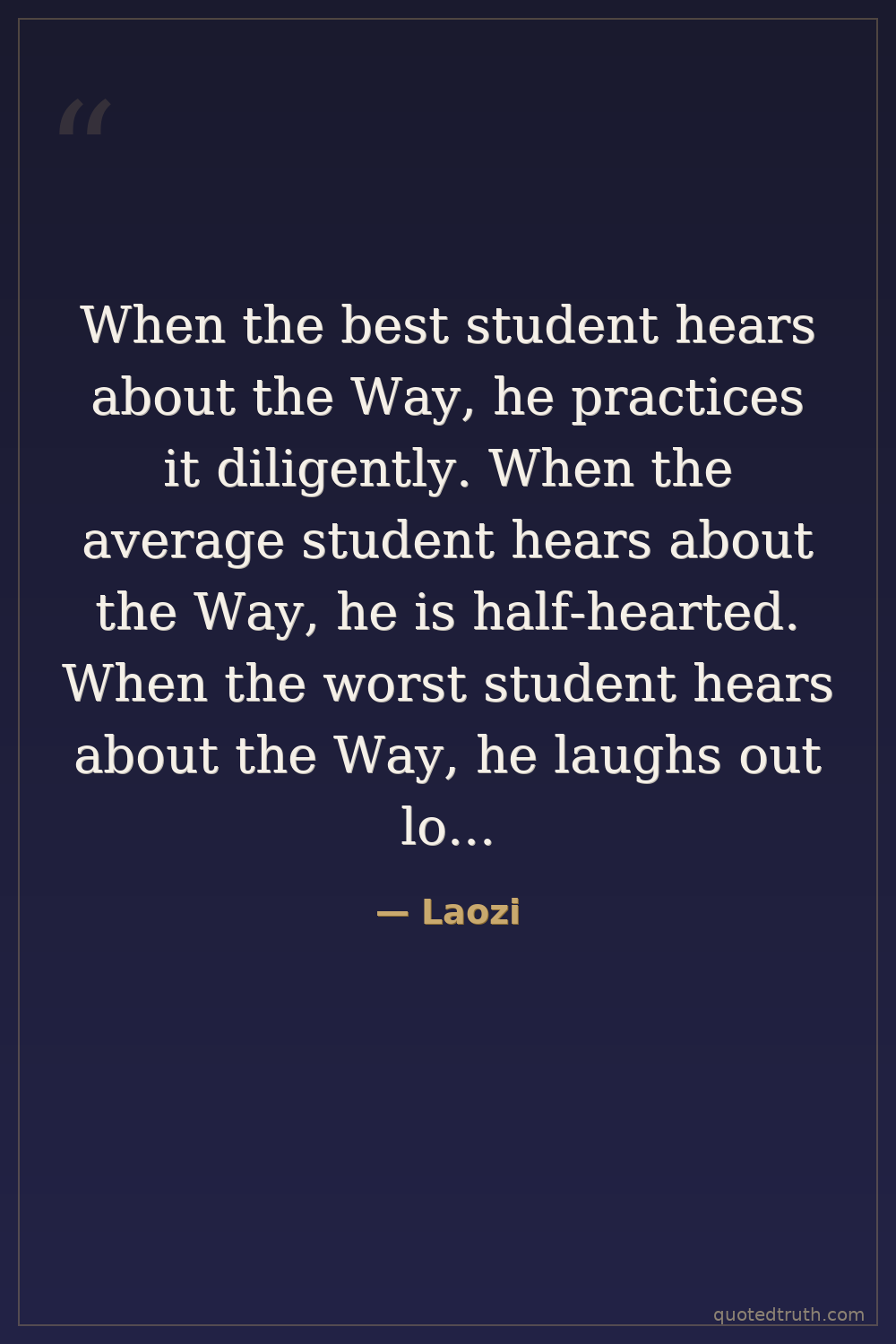
People respond to profound truth based on their own depth. Serious seekers immediately put wisdom into practice. Mediocre ones waver, taking it in without commitment. Shallow people mock what they cannot grasp, and their mockery is actually a sign the teaching is genuine. If everyone nodded along easily, the insight would be too ordinary to matter. Ridicule from the unready confirms the depth of the real thing.
Relevance to Laozi
Laozi supposedly served as an archivist in the Zhou royal court, watching officials chase status while ignoring deeper questions. Disillusioned, he left civilization behind, and legend says he wrote the Tao Te Ching only when a border guard begged him to. This saying reflects his lived experience: the genuine Way attracts few, repels many, and cannot be forced on those unwilling to see. His teaching favored quiet practice over public persuasion.
The era
Laozi lived during the late Zhou dynasty, roughly the 6th century BCE, as feudal order crumbled into the warring states. Competing schools, Confucians, Legalists, Mohists, fought loudly over how to rule and behave. Scholars traveled between courts peddling doctrines for power and pay. In that noisy marketplace of ideas, a quiet, paradoxical teaching about yielding and non-action sounded absurd to ambitious men, which is precisely why Laozi considered mockery evidence of authenticity.
AI-generated insights based on extensive research and information for context. Factual errors? Email [email protected].