Laozi — "Keep your mouth shut, guard your senses, and you will be free from trouble. Open…"
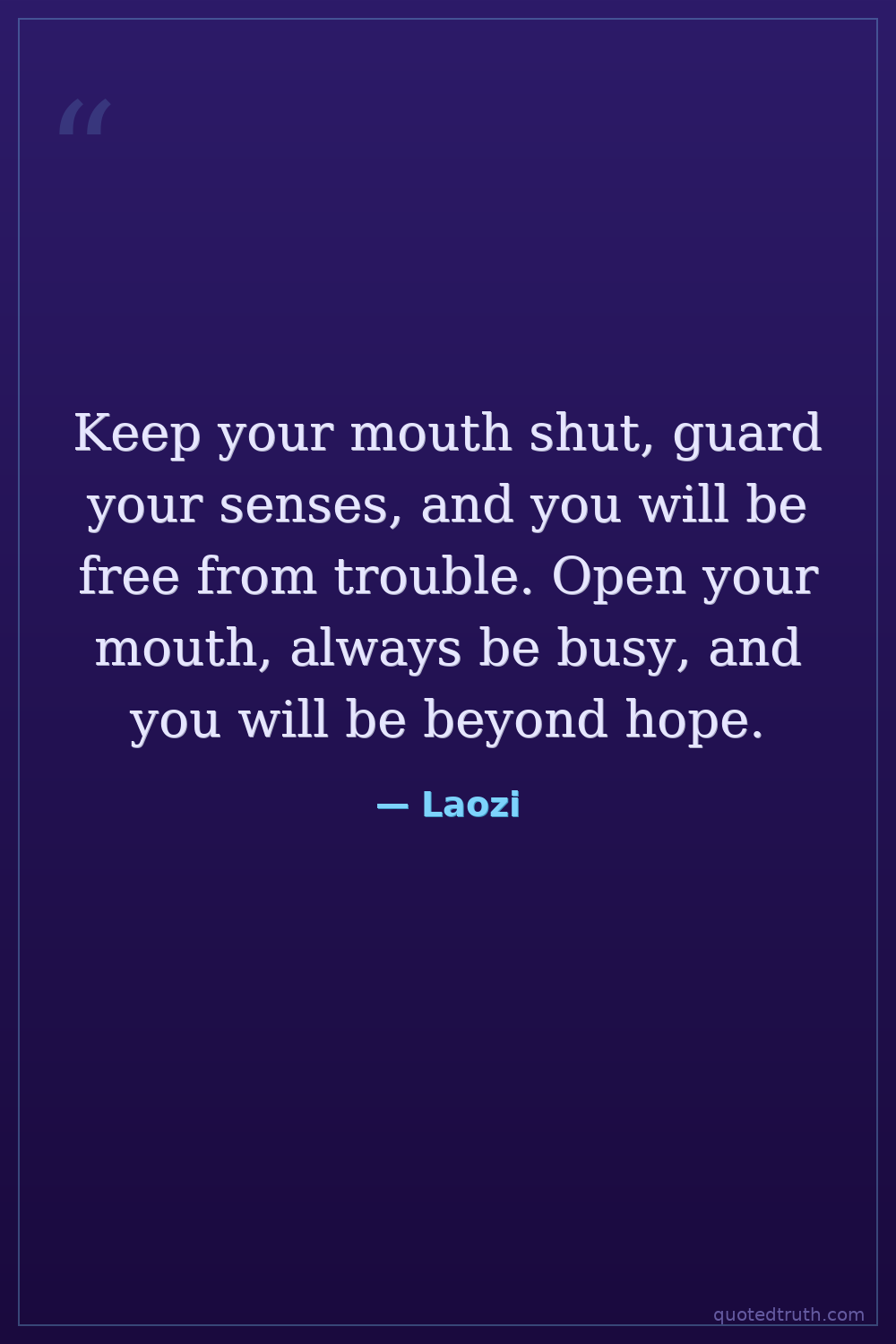
Keep your mouth shut, guard your senses, and you will be free from trouble. Open your mouth, always be busy, and you will be beyond hope.
Keep your mouth shut, guard your senses, and you will be free from trouble. Open your mouth, always be busy, and you will be beyond hope.
Click any product to generate a realistic preview. Up to 3 at a time.
* Initial load can take up to 90 seconds — revising the preview in another color is nearly instant.
"If you do not change direction, you may end up where you are heading."
"The greatest victory is that which requires no battle."
"When the great way falls into disuse, there are benevolence and rectitude."
"The wise man's food is that which nourishes, not that which pleases the eye."
"By letting it go it all gets done. The world is won by those who let it go. But when you try and try. The world is beyond the winning."
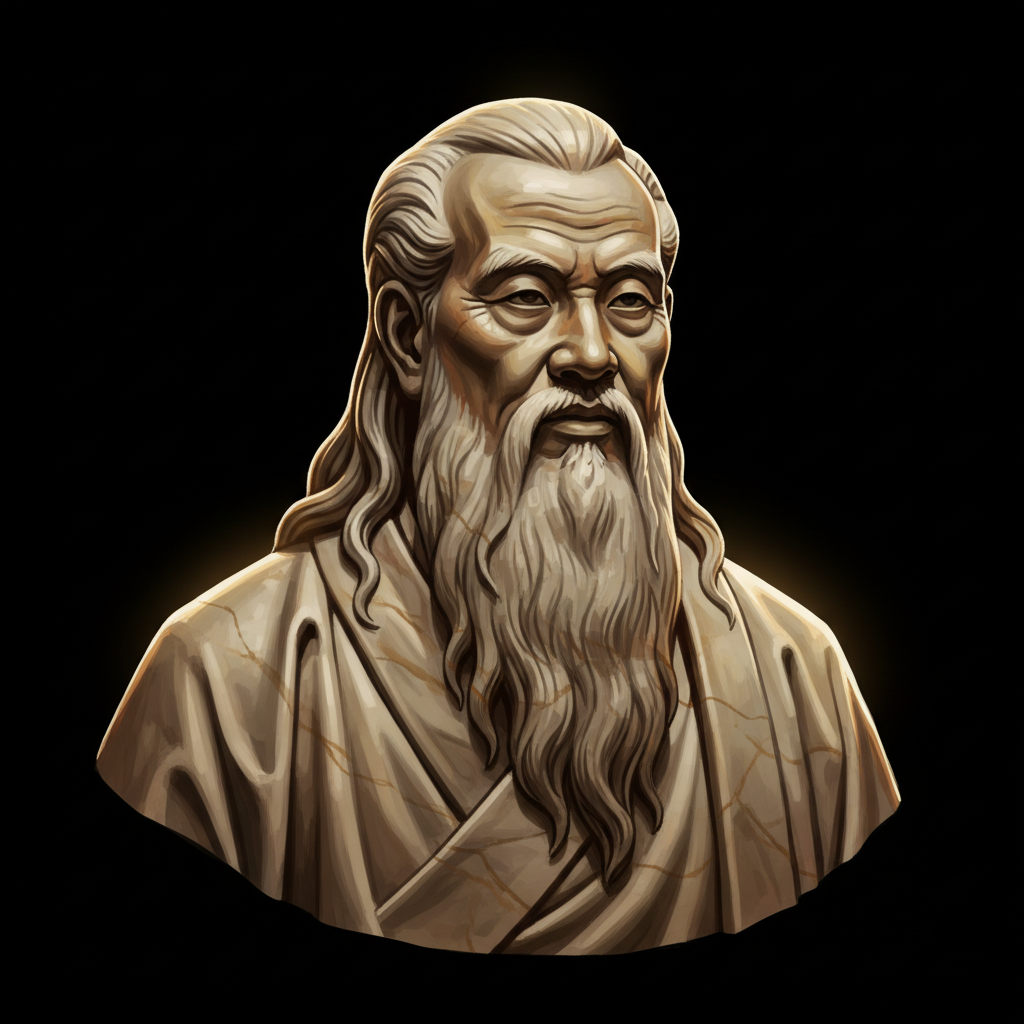
Reputed founder of Taoism and author of the Tao Te Ching, whose wu wei (effortless action) shaped East Asian philosophy. Closely associated with Zhuangzi (later Taoist who extended Laozi's framework). For an intellectual contrast, see Confucius, near-contemporary Chinese sage of social ritual and duty — Confucius systematized social order through ritual and hierarchy; Laozi argued that all such systems were the disease, not the cure — the two founding poles of Chinese moral philosophy.
Found in 1 providers: gemini
1 source checked
Staying quiet and controlling what you take in through your senses protects you from needless conflict and stress. Talking too much, chasing constant activity, and overstimulating yourself pulls you into endless problems you can't recover from. The advice is simple: restraint brings peace, while compulsive engagement with everything around you guarantees exhaustion and regret. Pick your words and your attention carefully.
Laozi, the legendary founder of Taoism, taught wu wei, or effortless non-action, and valued stillness, simplicity, and inner quiet over striving. Traditionally a reclusive archivist at the Zhou court, he reportedly left society in disgust at its noise and ambition, writing the Tao Te Ching before vanishing west. This saying directly expresses his preference for silence, sensory restraint, and withdrawal from worldly busyness.
Laozi lived during China's late Zhou dynasty, around the 6th century BCE, a chaotic period leading into the Warring States era. Rival kingdoms fought constantly, courtiers schemed, and traveling advisors sold clever strategies to ambitious rulers. Loose talk genuinely got people killed, and overexposure to political intrigue ruined lives. Against that backdrop of violence and verbal maneuvering, counseling people to shut their mouths and guard their senses was practical survival wisdom, not mere philosophy.
AI-generated insights based on extensive research and information for context. Factual errors? Email [email protected].
Your cart is empty