Guru Nanak — "When the corn is ripe, it is cut down; when the mortal becomes old, death dances…"
When the corn is ripe, it is cut down; when the mortal becomes old, death dances over his head.
When the corn is ripe, it is cut down; when the mortal becomes old, death dances over his head.
Click any product to generate a realistic preview. Up to 3 at a time.
* Initial load can take up to 90 seconds — revising the preview in another color is nearly instant.
"Through suffering, one learns to love God."
"Only fools argue whether to eat meat or not. They don't understand truth nor do they meditate on it."
"He who has no faith in himself can never have faith in God."
"For each and every person, our Lord and Master provides sustenance. Why are you so afraid, O mind? The flamingos fly hundreds of miles, leaving their young ones behind. Who feeds them, and who teaches…"
"The world is burning in the fire of desire, greed, attachment, and ego."
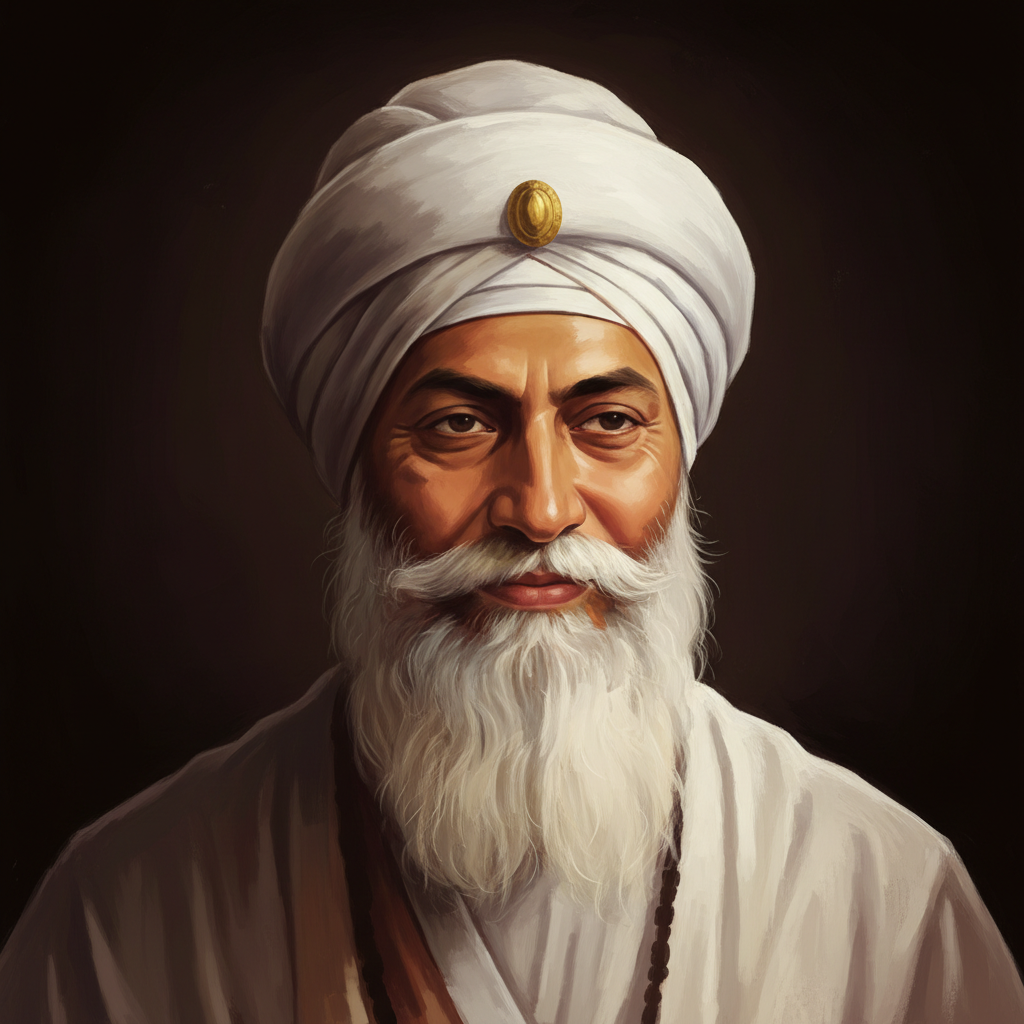
Founder of Sikhism and the first of the Ten Sikh Gurus, whose teachings of one universal God and rejection of caste shaped Punjab. Closely associated with Kabir (mystical poet whose verses appear in the Sikh Guru Granth Sahib). For an intellectual contrast, see Brahmanical orthodoxy, the Hindu caste-and-ritual establishment of his era — Sikhism was founded as a deliberate alternative to both Hindu ritual hierarchy and Islamic exclusivism — Nanak's universalism was a structural rejection of caste and priestly mediation.
Found in 1 providers: deepseek
1 source checked
Death comes to every person just as surely as a farmer harvests ripe grain. Aging is the natural signal that the end is approaching, and no one escapes it. The image is agricultural and blunt: life has a season, and when that season closes, mortality arrives without negotiation. The lesson is acceptance of impermanence and the urgency of living meaningfully before that harvest moment arrives for you.
Guru Nanak founded Sikhism around 1500 and taught that constant remembrance of death should dissolve ego and attachment to worldly status, wealth, and caste. As a traveling preacher who walked thousands of miles across South Asia and the Middle East, he repeatedly used farming imagery familiar to Punjab's agrarian villagers. His hymns in the Guru Granth Sahib insist that recognizing mortality pushes the soul toward Naam Simran, honest labor, and sharing with others.
Guru Nanak lived 1469–1539 in Punjab during the collapse of the Delhi Sultanate and Babur's 1526 Mughal invasion, which he witnessed firsthand and lamented in the Babarvani hymns. Plague, famine, and battlefield slaughter made death an everyday reality for peasants. Hindu-Muslim tensions, rigid caste hierarchies, and ritualism dominated religious life. Against that backdrop, reminding listeners that the rich, the warrior, and the farmer all fall like ripe grain was a radical equalizing message.
AI-generated insights based on extensive research and information for context. Factual errors? Email [email protected].
Your cart is empty