What it means
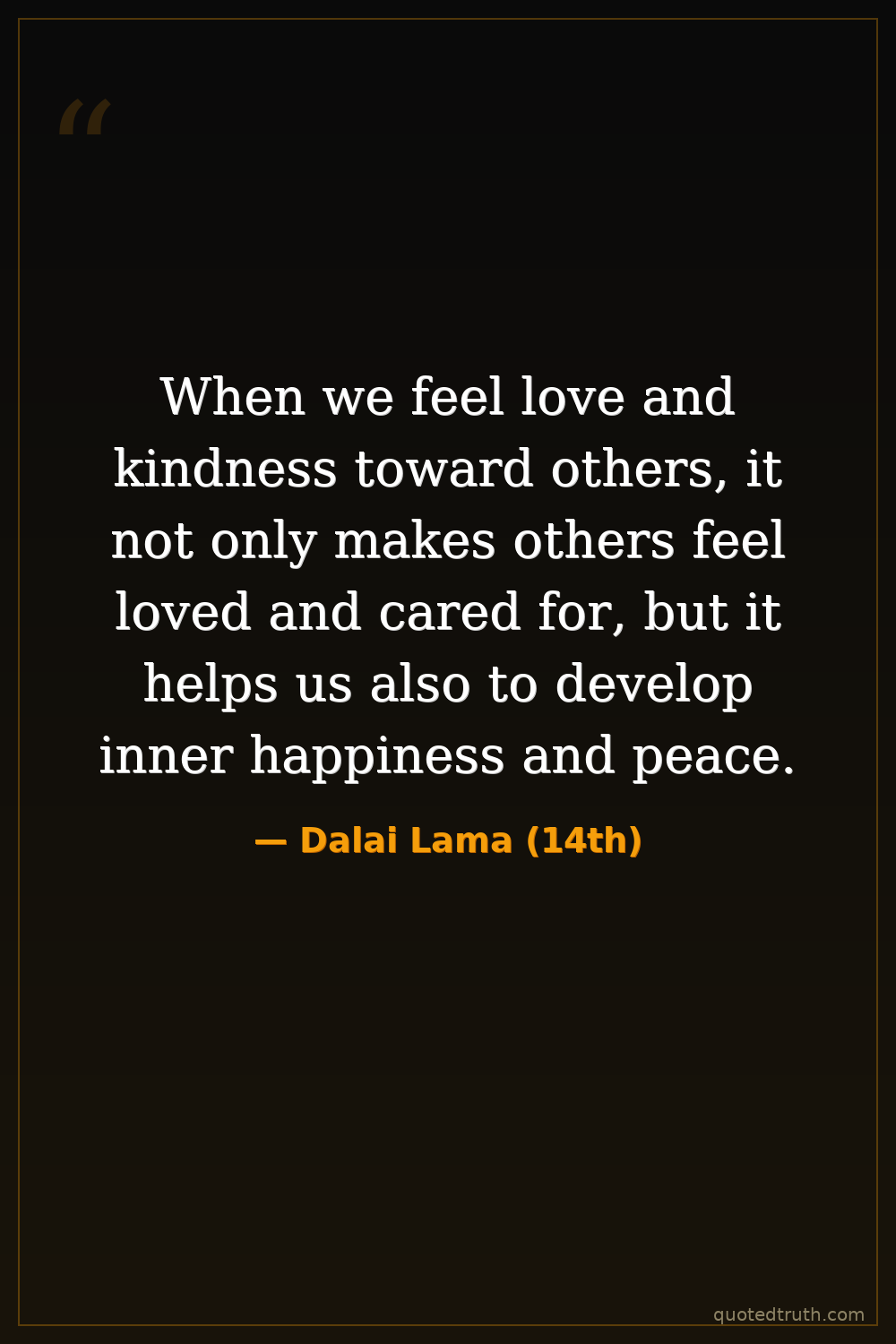
Compassion and kindness aren't just gifts to others — they're a mechanism for your own inner peace. When you genuinely care for someone, you shift focus away from self-centered worry and toward connection, and that shift creates calm. This argues happiness isn't found through self-focus but through outward care, making love and kindness simultaneously altruistic acts and personal practices that cultivate a stable, fulfilling mental state.
Relevance to Dalai Lama (14th)
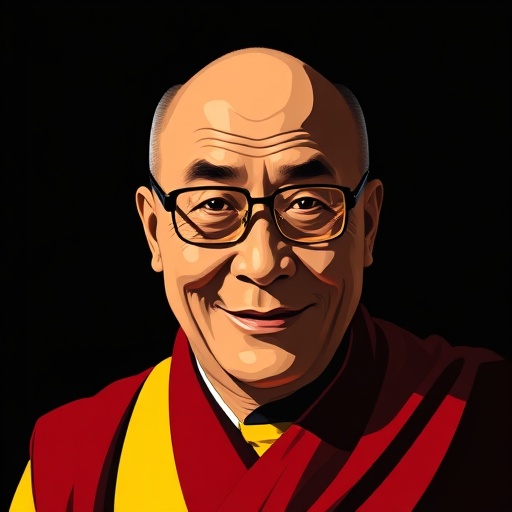
Tenzin Gyatso, born 1935, has lived this principle under extreme duress. Exiled from Tibet since 1959 after China's military occupation, he chose compassion over hatred in response — including toward the Chinese government responsible for millions' suffering. His entire ministry centers on karuna (compassion) as both spiritual path and practical peace strategy. This conviction, consistently embodied over decades, earned him the 1989 Nobel Peace Prize.
The era
The Dalai Lama emerged as a global voice during Cold War tensions and later navigated 21st-century political polarization and mental health crises. His message gained scientific credibility when 1990s–2000s neuroscience and positive psychology research confirmed that compassion practices measurably reduce stress and improve wellbeing. In an era of rising individualism and anxiety, his framing of kindness as a personal mental health strategy — not just religious duty — made ancient Buddhist ethics broadly accessible.
AI-generated insights based on extensive research and information for context. Factual errors? Email [email protected].