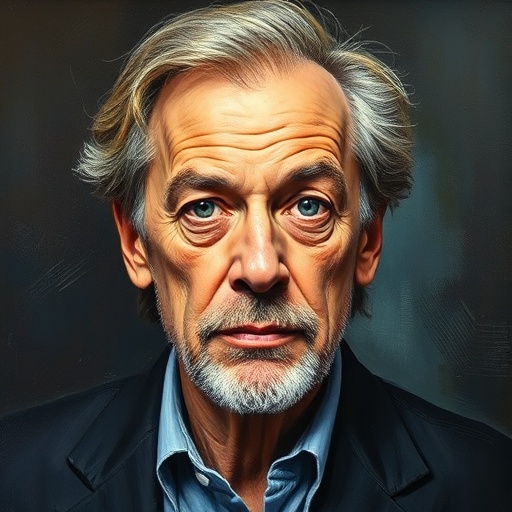
Richard Feynman — "When you are a scientist, you are a child. You are always asking 'Why?'"
When you are a scientist, you are a child. You are always asking 'Why?'
When you are a scientist, you are a child. You are always asking 'Why?'
Click any product to generate a realistic preview. Up to 3 at a time.
* Initial load can take up to 90 seconds — revising the preview in another color is nearly instant.
"What do you care what other people think?"
"I have a theory that the universe is a great big safe, and that there's a combination to open it. But the combination is locked up in the safe."
"Fall in love with some activity, and do it! Nobody ever figures out what life is all about, and it doesn't matter. Explore the world. Nearly everything is really interesting if you go into it deeply e…"
"I was in an intellectual fight with my father, and I kept saying, 'But the books say it!' And he said, 'The books are wrong!'"
"I found myself in a situation where I was giving an answer to a question that I didn't understand, and that alarmed me."
American theoretical physicist who shared the 1965 Nobel for QED, developed Feynman diagrams, and wrote the Feynman Lectures on Physics. Closely associated with Julian Schwinger (co-Nobelist for QED) and Murray Gell-Mann (Caltech rival and Eightfold-Way physicist). For an intellectual contrast, see Deepak Chopra, physician and quantum-mysticism author — Feynman's Caltech 'cargo cult science' commencement address is the precise template for what he saw as misuse of physics terminology — Chopra-style appropriation of quantum vocabulary for metaphysical claims is the canonical example of what Feynman called 'fooling yourself'.
Found in 1 providers: grok
1 source checked
A scientist approaches the world with genuine curiosity rather than assuming knowledge. The childlike 'Why?' strips away pretense and demands real understanding. It means refusing to accept things at face value, always digging deeper for the actual mechanism behind phenomena, and treating wonder as a professional virtue rather than something to outgrow.
Feynman was famous for his infectious, almost boyish enthusiasm for physics. He rejected empty formalism, insisting on truly understanding problems rather than just calculating them. His Caltech lectures, safe-cracking hobby, bongo drumming, and relentless questioning of NASA during the Challenger investigation all reflect someone who never stopped asking naive, essential questions that experts had stopped asking.
Feynman worked through the mid-20th century Cold War era, when science carried immense institutional prestige and pressure to produce militarily useful results. Post-Manhattan Project, physics risked becoming bureaucratic and rote. His attitude was a counter-cultural insistence that curiosity, not authority or application, must drive science, at a time when 'why' was being crowded out by 'how fast can we build it.'
AI-generated insights based on extensive research and information for context. Factual errors? Email [email protected].
Your cart is empty