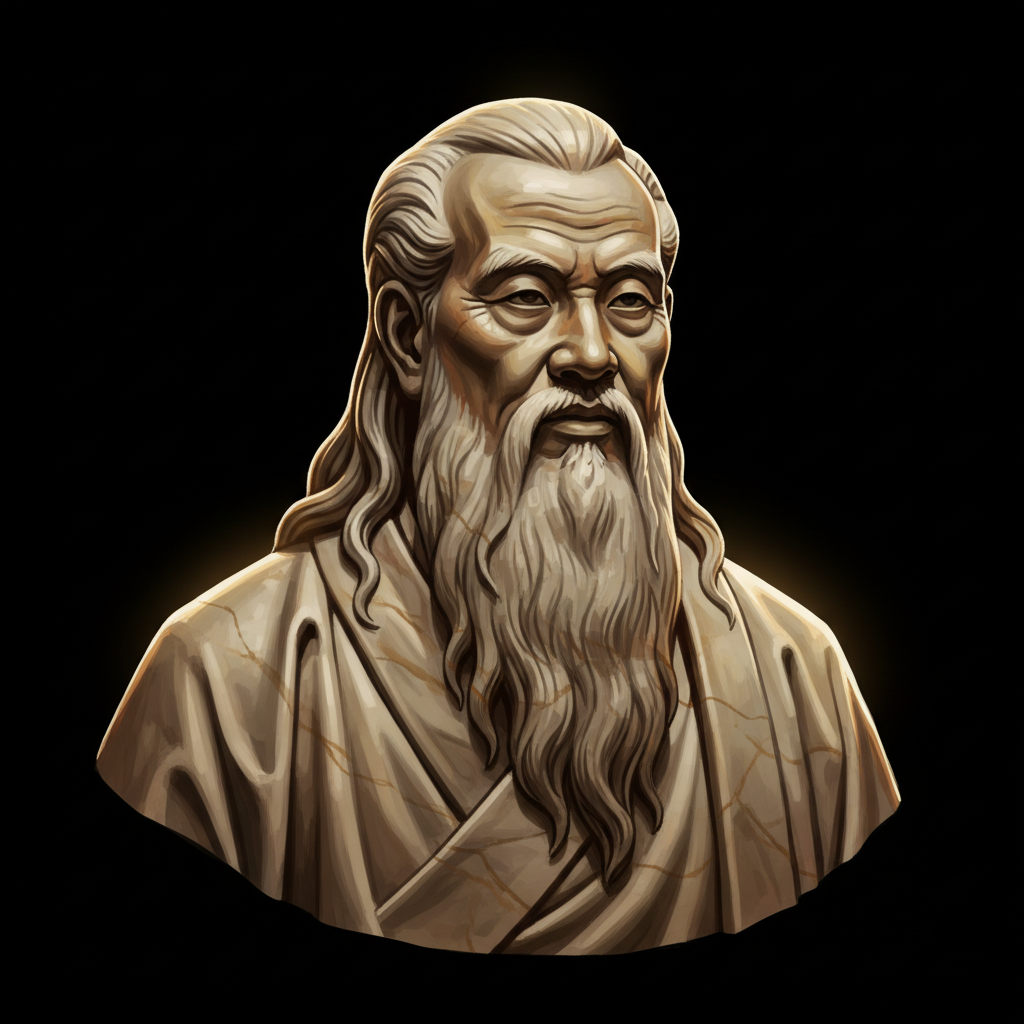
Laozi — "Make the small big and the few many; Do good to him who has done you an injury."
Make the small big and the few many; Do good to him who has done you an injury.
Make the small big and the few many; Do good to him who has done you an injury.
Click any product to generate a realistic preview. Up to 3 at a time.
* Initial load can take up to 90 seconds — revising the preview in another color is nearly instant.
"The difficult is done easily; the easy is done with difficulty."
"The best rulers are those the people barely know exist. The next best are those the people praise and acclaim. The next best are those the people fear. The worst are those the people despise."
"The universe is a sacred vase. It should not be tampered with."
"Truthful words are not always beautiful; beautiful words are not always truthful."
"Therefore the sage manages affairs without doing anything, and conveys his instructions without the use of speech."
Reputed founder of Taoism and author of the Tao Te Ching, whose wu wei (effortless action) shaped East Asian philosophy. Closely associated with Zhuangzi (later Taoist who extended Laozi's framework). For an intellectual contrast, see Confucius, near-contemporary Chinese sage of social ritual and duty — Confucius systematized social order through ritual and hierarchy; Laozi argued that all such systems were the disease, not the cure — the two founding poles of Chinese moral philosophy.
Found in 1 providers: gemini
1 source checked
Treat minor things as if they matter greatly and scarce things as if they were abundant, so nothing is dismissed or wasted. When someone wrongs you, respond with kindness rather than retaliation. The idea is that generosity and careful attention reverse the usual human instincts to ignore the small, chase the many, and strike back. By inverting those reflexes, you defuse conflict and cultivate a steadier, more grounded way of moving through life.
Laozi, the traditional founder of Taoism and reputed author of the Tao Te Ching, worked as an archivist in the Zhou royal court before withdrawing from public life. His teachings consistently favor softness over force, humility over ambition, and non-action (wu wei) over striving. Returning good for injury fits his conviction that yielding disarms aggression, while magnifying the small mirrors his view that great things grow from quiet, overlooked beginnings tended with care.
Laozi lived during the late Zhou dynasty, likely the 6th century BCE, as central authority fractured into the rivalries that produced the Warring States period. Feudal lords waged constant war, peasants suffered, and rival schools like Confucianism pushed ritual and hierarchy as remedies. Against this backdrop of vengeance cycles and escalating violence, counseling that one repay injury with kindness and honor the small was a radical rejection of the militarism and status-seeking consuming Chinese society.
AI-generated insights based on extensive research and information for context. Factual errors? Email [email protected].
Your cart is empty