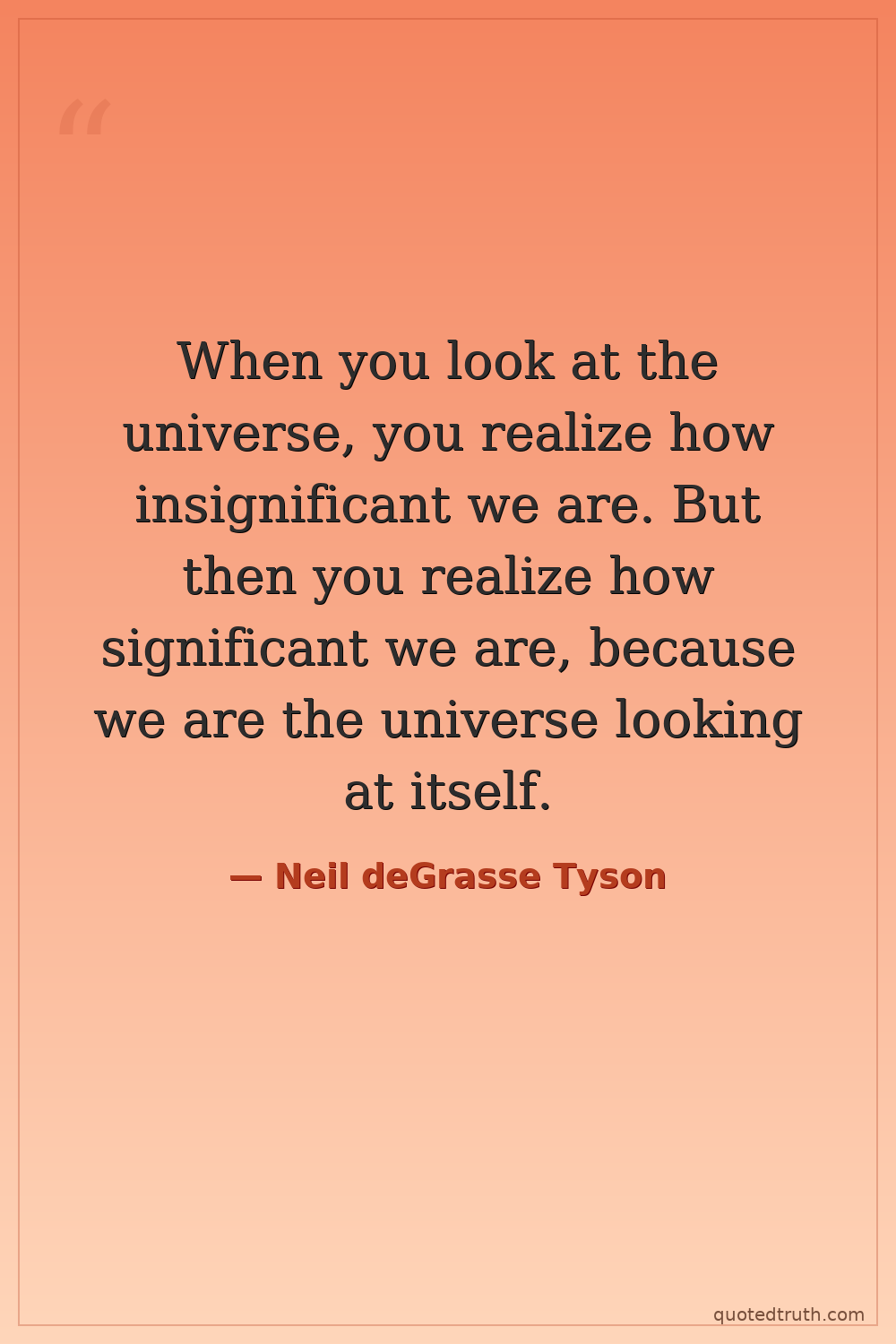
Neil deGrasse Tyson — "When you look at the universe, you realize how insignificant we are. But then yo…"

When you look at the universe, you realize how insignificant we are. But then you realize how significant we are, because we are the universe looking at itself.
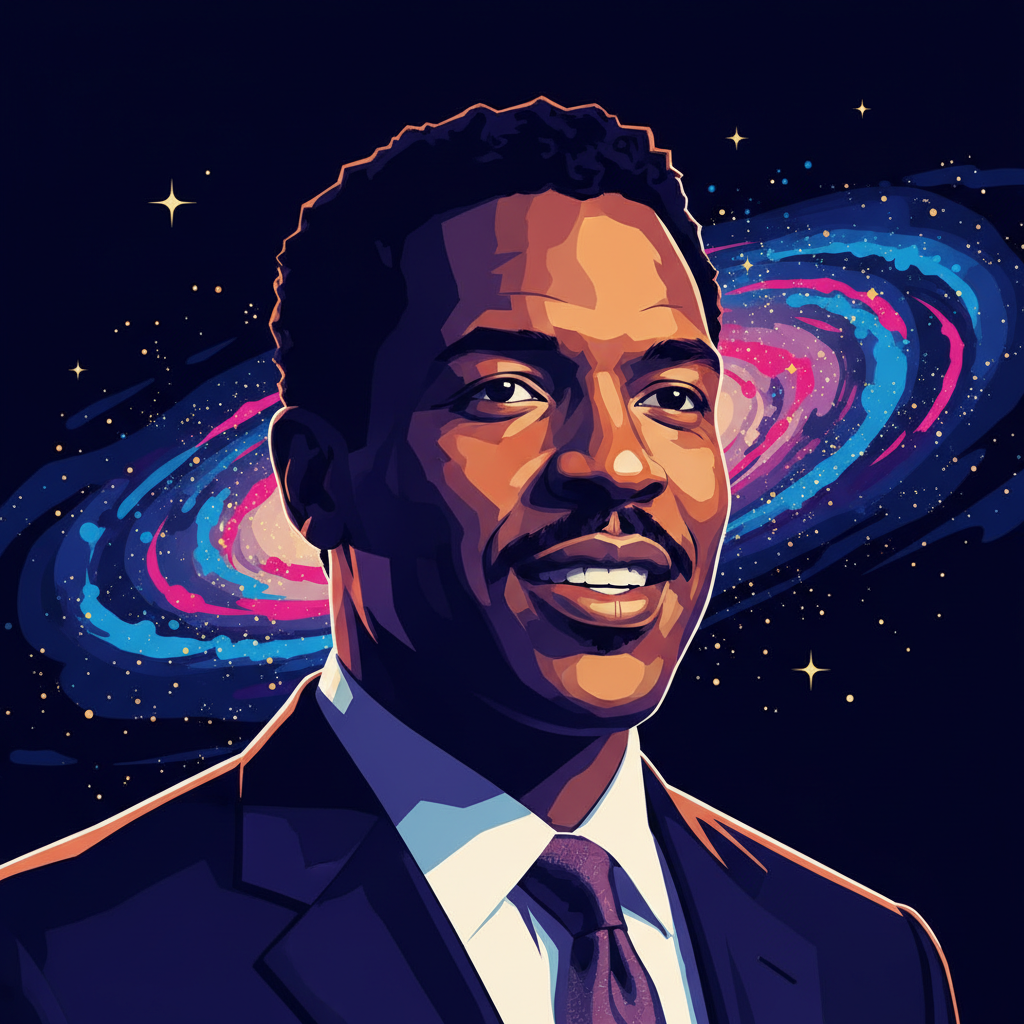
Neil deGrasse Tyson — Neil deGrasse Tyson Contemporary · Astrophysicist, science communicator

Get This Quote & Author's Image Illustrated On:

Click any product to generate a realistic preview. Up to 3 at a time.
* Initial load can take up to 90 seconds — revising the preview in another color is nearly instant.

Kitchen

Apparel

Other

About Neil deGrasse Tyson (born 1958)

American astrophysicist, Hayden Planetarium director, and Cosmos: A Spacetime Odyssey host who carries the Carl Sagan public-science mantle. Closely associated with Bill Nye (fellow science communicator) and Brian Greene (theoretical physicist and string-theory popularizer). For an intellectual contrast, see Ken Ham, founder of Answers in Genesis and the Creation Museum — Ham's career has been organized around defending biblical 6-day creationism — exactly the science-education position Tyson's mainstream-science communication is structured to refute.

Details

Interview on The Daily Show with Jon Stewart

Date: 2014

General

Verification

Unverifiable

Found in 1 providers: grok

1 source checked

Understanding this quote

What it means

Humans feel tiny against the vastness of space, but that smallness is deceptive. We are made of the same atoms as stars, galaxies, and nebulae. The fact that matter arranged itself into beings capable of contemplating the cosmos flips insignificance into profound importance. Our consciousness is the universe's way of examining and understanding its own existence.

Relevance to Neil deGrasse Tyson

Tyson has built his career on making astrophysics emotionally resonant, not just intellectually rigorous. As director of the Hayden Planetarium and host of Cosmos, he repeatedly emphasizes cosmic humility alongside human wonder. His own origin story—a Bronx kid captivated by the night sky—mirrors this duality: small beginnings, cosmic ambition.

The era

In an era of climate anxiety, political polarization, and existential risk debates, Tyson's framing offers grounding. The 2010s-2020s saw renewed public interest in space via SpaceX, James Webb Telescope images, and Mars missions, making the question of humanity's cosmic role newly urgent and culturally resonant.

AI-generated insights based on extensive research and information for context. Factual errors? Email [email protected].
Your Cart

Your cart is empty