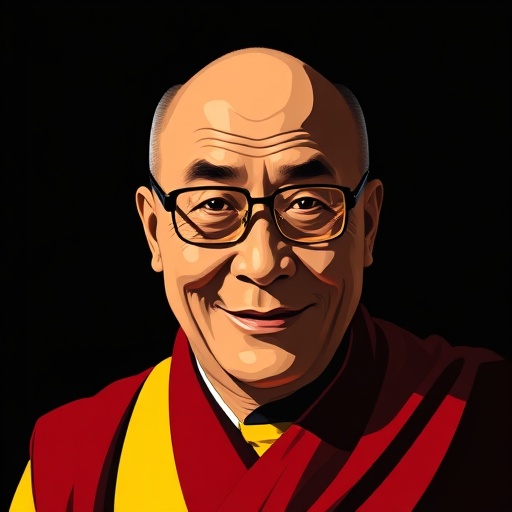
Dalai Lama (14th) — "When you practice gratefulness, there is a sense of respect toward others."
When you practice gratefulness, there is a sense of respect toward others.
When you practice gratefulness, there is a sense of respect toward others.
Click any product to generate a realistic preview. Up to 3 at a time.
* Initial load can take up to 90 seconds — revising the preview in another color is nearly instant.
"Genuine compassion is not with attachment."
"I think the modern world is too much focused on material things. We need to focus more on spiritual values."
"Sometimes I joke that if I come back as a woman, I want to be a beautiful woman."
"If scientific analysis were conclusively to demonstrate certain claims in Buddhism to be false, then we must accept the findings of science and abandon those claims."
"Choose to be optimistic, it feels better."
Found in 1 providers: grok
1 source checked
Gratitude is more than a feeling of thankfulness—it's a practice that changes how you see people. When you genuinely appreciate what others contribute to your life, you stop viewing them as obstacles or background noise. That shift naturally produces respect: recognizing others as beings who matter, who give, who deserve acknowledgment. Gratitude and respect aren't separate virtues but linked—one generates the other automatically through sustained attention to what others offer.
Tenzin Gyatso has lived in exile since China's 1959 occupation of Tibet, witnessing his people's displacement and suffering firsthand. Rather than responding with bitterness, he has spent decades teaching compassion and interdependence—the Buddhist recognition that existence depends on others. His 1989 Nobel Peace Prize honored this approach. For him, gratitude isn't passive sentiment; it underpins his advocacy for nonviolence and his refusal to dehumanize even Chinese authorities who expelled him.
The Dalai Lama speaks into an era defined by rising nationalism, social media outrage cycles, and profound mistrust between communities and institutions. China's ongoing suppression of Tibet makes respect across political lines both urgent and contested. Post-Cold War globalization, the 9/11 aftermath, and digital tribalism have steadily eroded civic regard for others. His framing of gratitude as the root of respect directly challenges the transactional, zero-sum thinking that now dominates geopolitics and everyday discourse.
AI-generated insights based on extensive research and information for context. Factual errors? Email [email protected].
Your cart is empty