What it means
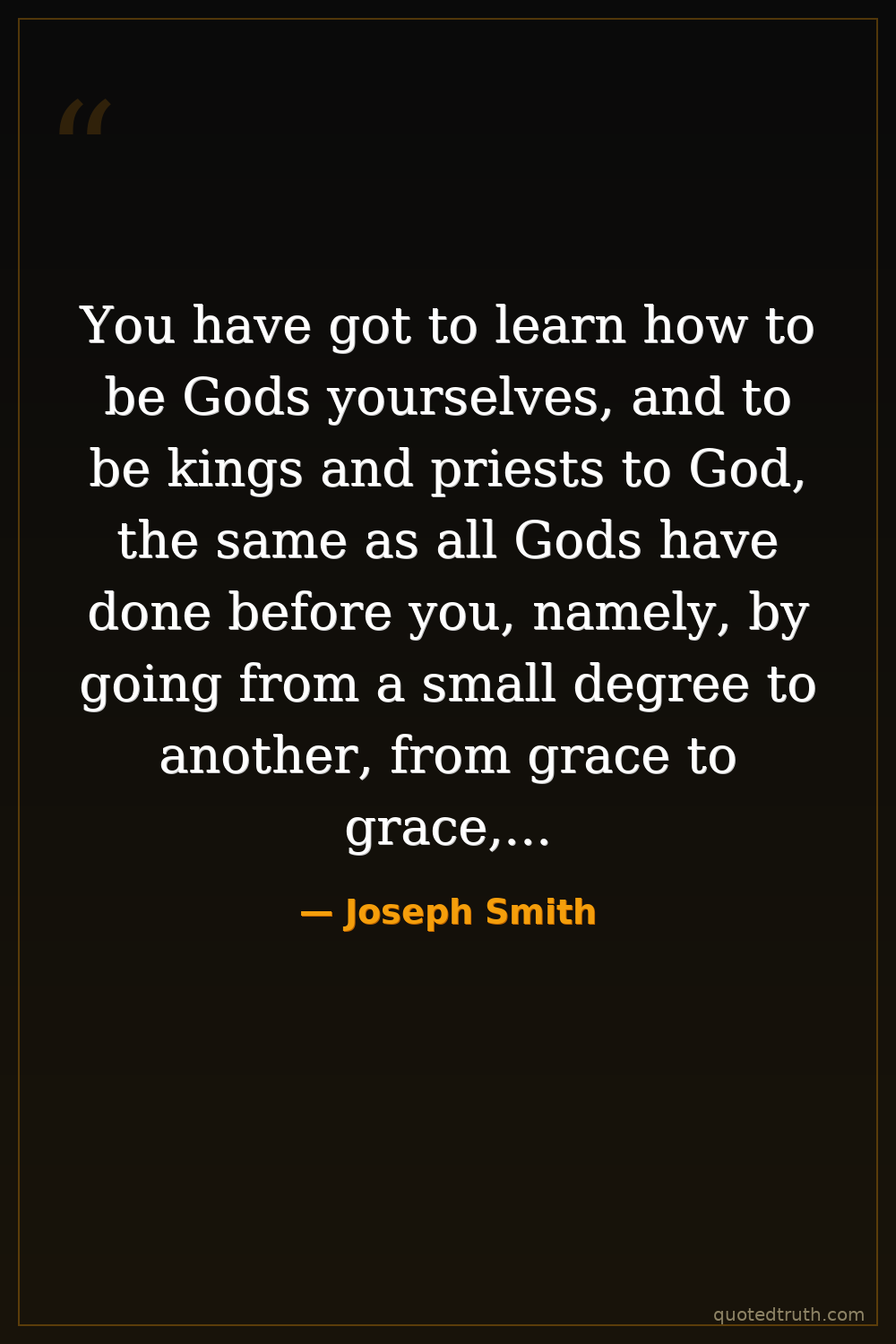
Humans are not permanently separated from God by an unbridgeable gap — they are capable of becoming divine themselves. Through incremental spiritual growth, advancing step by step in knowledge, righteousness, and power, a person can eventually reach the highest state of existence: resurrection, glory, and godhood. The journey is progressive and achievable, not fixed at birth.
Relevance to Joseph Smith
Smith's entire prophetic career centered on restoring what he saw as lost Christian truths, including radical human potential. This quote from his 1844 King Follett discourse — delivered weeks before his death — encapsulates his doctrine of eternal progression: God was once as man is; man may become as God is. It defined LDS theology's most distinctive and controversial departure from mainstream Christianity.
The era
Delivered in spring 1844 amid the Second Great Awakening, when dozens of new American religious movements competed for converts. Frontier theology was fluid and experimental. Smith's deification doctrine shocked Protestant orthodoxy, which taught an absolute Creator-creature divide. His murder two months later made this sermon his theological testament, cementing eternal progression as Mormonism's cornerstone belief.
AI-generated insights based on extensive research and information for context. Factual errors? Email [email protected].