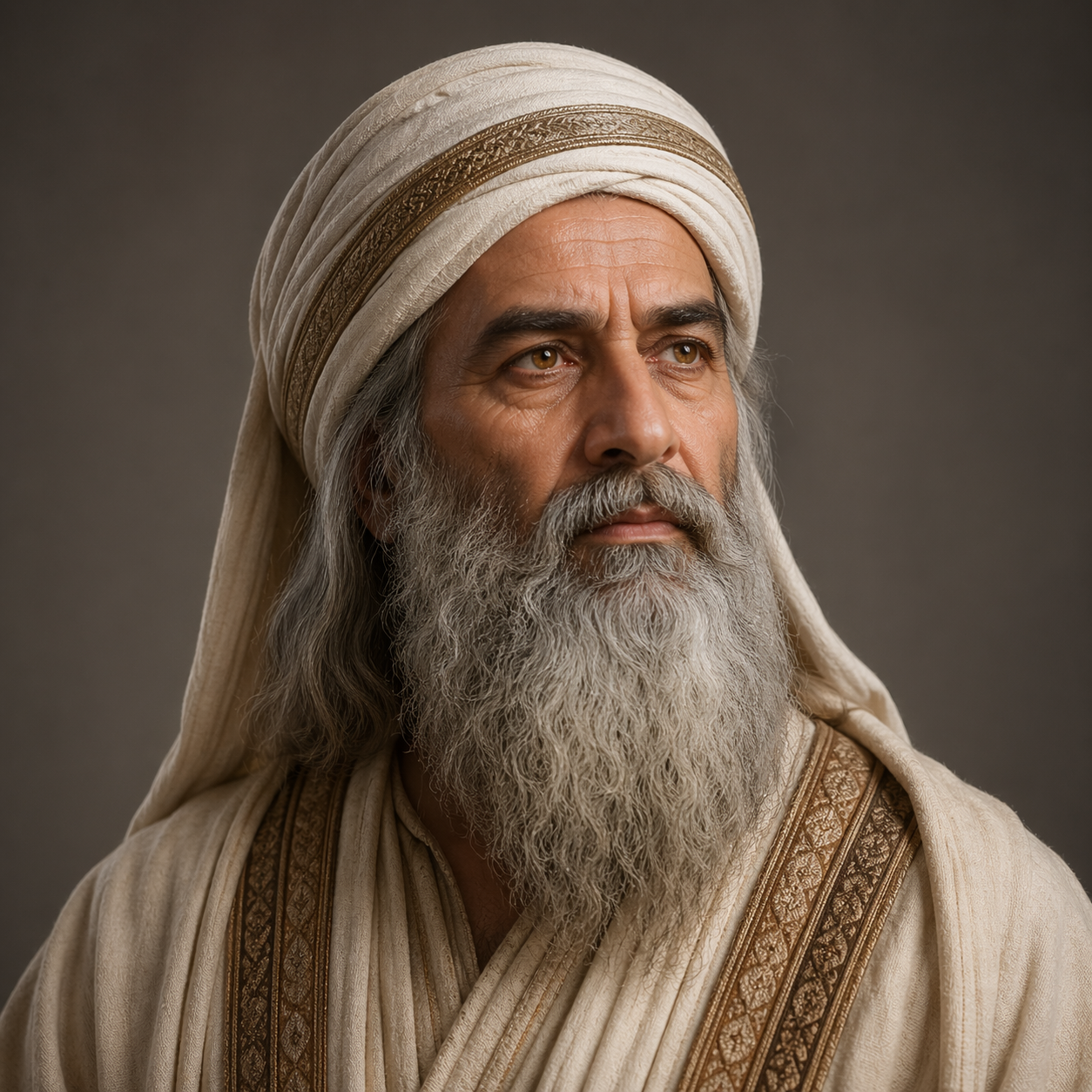
Zoroaster — "He who strives for good, him Ahura Mazda will reward."
He who strives for good, him Ahura Mazda will reward.
He who strives for good, him Ahura Mazda will reward.
Click any product to generate a realistic preview. Up to 3 at a time.
* Initial load can take up to 90 seconds — revising the preview in another color is nearly instant.
"Do not to others what ye do not wish Done to yourself; and wish for others too. What ye desire and long for, for yourself. This is the whole of righteousness, heed it well."
"I will sing praises to You, O Ahura Mazda, with good thoughts and truthful words."
"Happiness is a choice. And sometimes, that choice involves a really good piece of fruit."
"Excessive liberty and excessive servitude are equally dangerous, and produce nearly the same effect."
"May good thoughts, good words, good deeds lead to Paradise."
Iranian prophet who founded Zoroastrianism, the first major religion of cosmic dualism between good (Ahura Mazda) and evil (Angra Mainyu). Closely associated with The Buddha (near-contemporary Eastern moral-cosmological revolutionary). For an intellectual contrast, see Friedrich Nietzsche, German philosopher of 'beyond good and evil' — Nietzsche appropriated Zarathustra's name for Thus Spoke Zarathustra (1883) precisely to invert the original's moral cosmology — the historical Zoroaster founded the good-versus-evil framework Nietzsche's character announces the end of.
Found in 1 providers: grok
1 source checked
Effort directed toward goodness does not go unnoticed or unrewarded. When a person actively works to do what is right, help others, and live ethically, a higher moral order recognizes that effort. Good actions carry consequences that eventually return to the doer in the form of blessing, favor, or fulfillment. The emphasis sits on striving itself, not perfection, meaning sincere effort toward virtue is what matters most.
Zoroaster built his entire religious system around the moral choice between good and evil, teaching that Ahura Mazda, the wise lord, oversees and rewards righteous conduct. His doctrine of Good Thoughts, Good Words, Good Deeds places active striving at the center of faith. As a prophet who reformed ancient Iranian religion by emphasizing personal ethical responsibility, he consistently framed divine favor as something earned through conscious, effortful alignment with truth and order.
During Zoroaster's time in ancient Persia, roughly the second millennium BCE, religion centered on ritual sacrifice, polytheism, and appeasing capricious gods rather than moral behavior. Zoroaster's teaching that a single wise deity rewarded ethical striving was revolutionary, shifting focus from transactional offerings to personal virtue. His ideas later influenced Judaism, Christianity, and Islam regarding heaven, hell, judgment, and the cosmic struggle between good and evil forces.
AI-generated insights based on extensive research and information for context. Factual errors? Email [email protected].
Your cart is empty