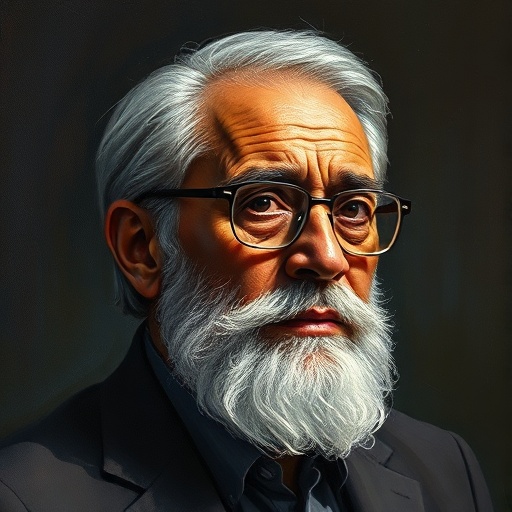
Paulo Freire
Pedagogy of the Oppressed
Sayings by Paulo Freire
Washing one's hands of the conflict between the powerful and the powerless means to side with the powerful, not to be neutral.
The educator has the duty of not being neutral.
Looking at the past must be a means of understanding more clearly what and who we are so that we can more wisely build the future.
Attempting to liberate the oppressed without their reflective participation in the act of liberation is to treat them as objects which must be saved from a burning building - it is to make them the pathology of the oppressors.
The object of the banking concept of education is to turn them into automatons—the minimization of their creative power.
The more students work at storing the deposits entrusted to them, the less they develop the critical consciousness which would result from their intervention in the world as transformers of that world.
Liberation is a praxis: the action and reflection of men and women upon their world in order to transform it.
To be human is to engage in a constant dialogue with the world.
For the oppressed, the present is so overwhelming that the future is often unthinkable.
One of the gravest obstacles to the achievement of liberation is the fact that oppressive reality absorbs those within it and thereby acts to submerge human beings' consciousness.
The oppressed, having internalized the image of the oppressor and adopted his guidelines, are fearful of freedom.
The teacher is of course an artist, but being an artist does not mean that he or she can make the profile, can design the profile. What the educator does in teaching is to make it possible for the student to become himself or herself.
The more accurately men grasp true causality, the more critical their understanding becomes.
The oppressor is not able to understand that the oppressed, far from being purely 'emotional,' are, as the oppressed, involved in a concrete situation of oppression, and that their 'emotionality' is not a pathological state but the result of the historical and sociological conditions in which they are immersed.
Dialogue is the encounter between men, mediated by the world, in order to name the world.
The capacity to love is a condition of our humanity.
The oppressed must be their own example in the struggle for their redemption.
The pedagogy of the oppressed, animated by authentic, humanist (not humanitarian) generosity, presents itself as a pedagogy of man.
Dialogue is a horizontal relationship of which mutual trust is a natural consequence.
Problem-posing education, as a humanistic and liberating praxis, posits as fundamental that men subjected to domination must fight for their emancipation.