What it means
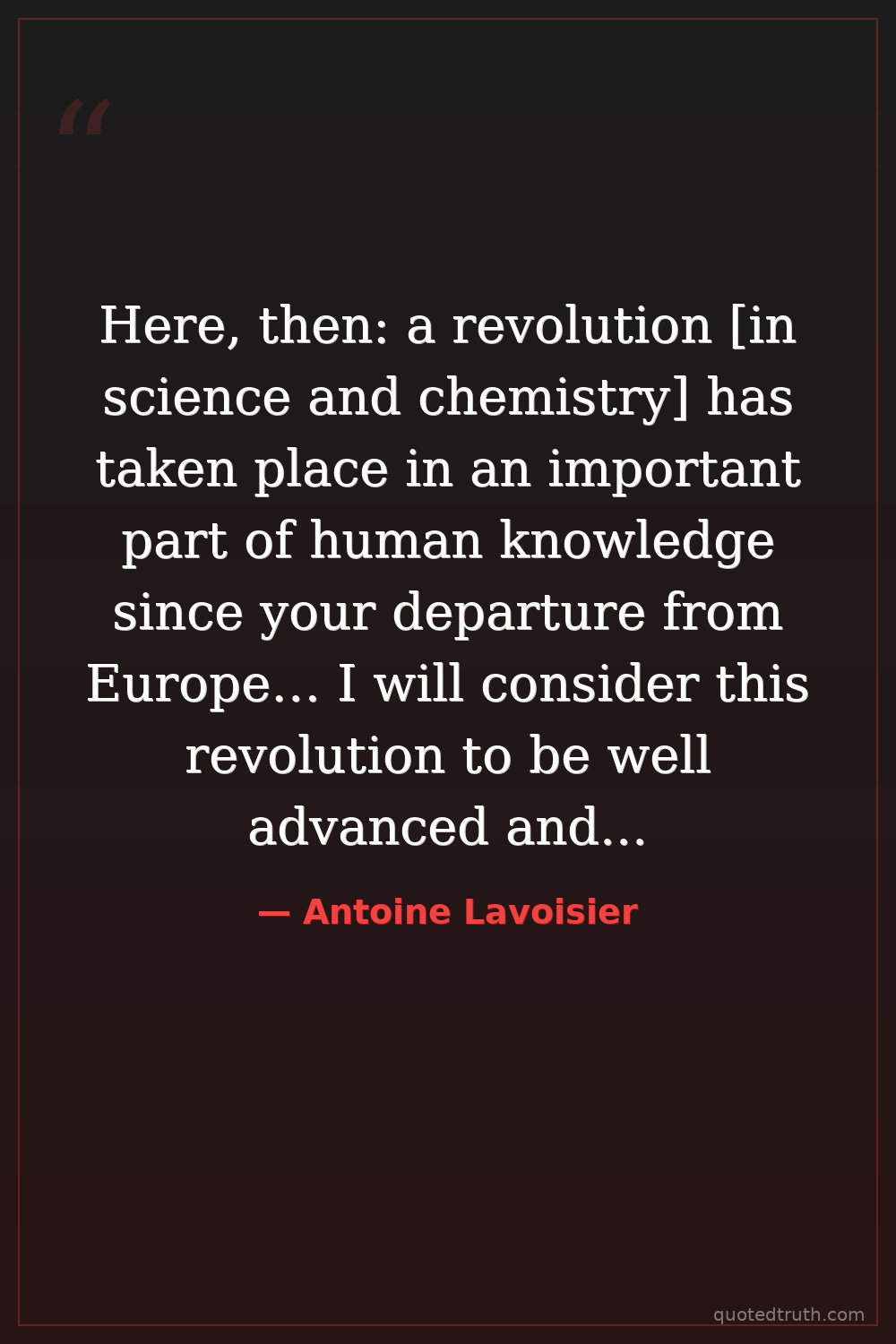
Lavoisier writes to a colleague abroad, announcing that science and chemistry have been fundamentally transformed during their absence. He frames the new chemistry as so convincing that acceptance is the final step to completing it. He then pivots to politics, declaring France's revolution equally irreversible. Both upheavals, he insists, have overturned the old order permanently, and there is no going back to previous ways of thinking or governing.
Relevance to Antoine Lavoisier
Lavoisier personally led the chemical revolution he describes, overturning phlogiston theory, naming oxygen, and publishing the 1789 Traité élémentaire de chimie that reorganized the field around mass conservation. He also served the French state as a tax collector and commissioner, tying his scientific and political lives together. The letter's dual confidence captures his identity: a reformer who believed rational systems, whether chemical nomenclature or republican government, would replace inherited error.
The era
Lavoisier wrote during the late 1780s and early 1790s, when the French Revolution was dismantling the monarchy alongside a parallel Enlightenment overhaul of natural philosophy. His new chemical nomenclature (1787) and textbook (1789) appeared just as the Bastille fell. Europeans debated whether reason could permanently replace tradition. Ironically, the same revolutionary government he endorsed would guillotine him in 1794 as a former tax farmer, cutting short the scientific project he declared unstoppable.
AI-generated insights based on extensive research and information for context. Factual errors? Email [email protected].