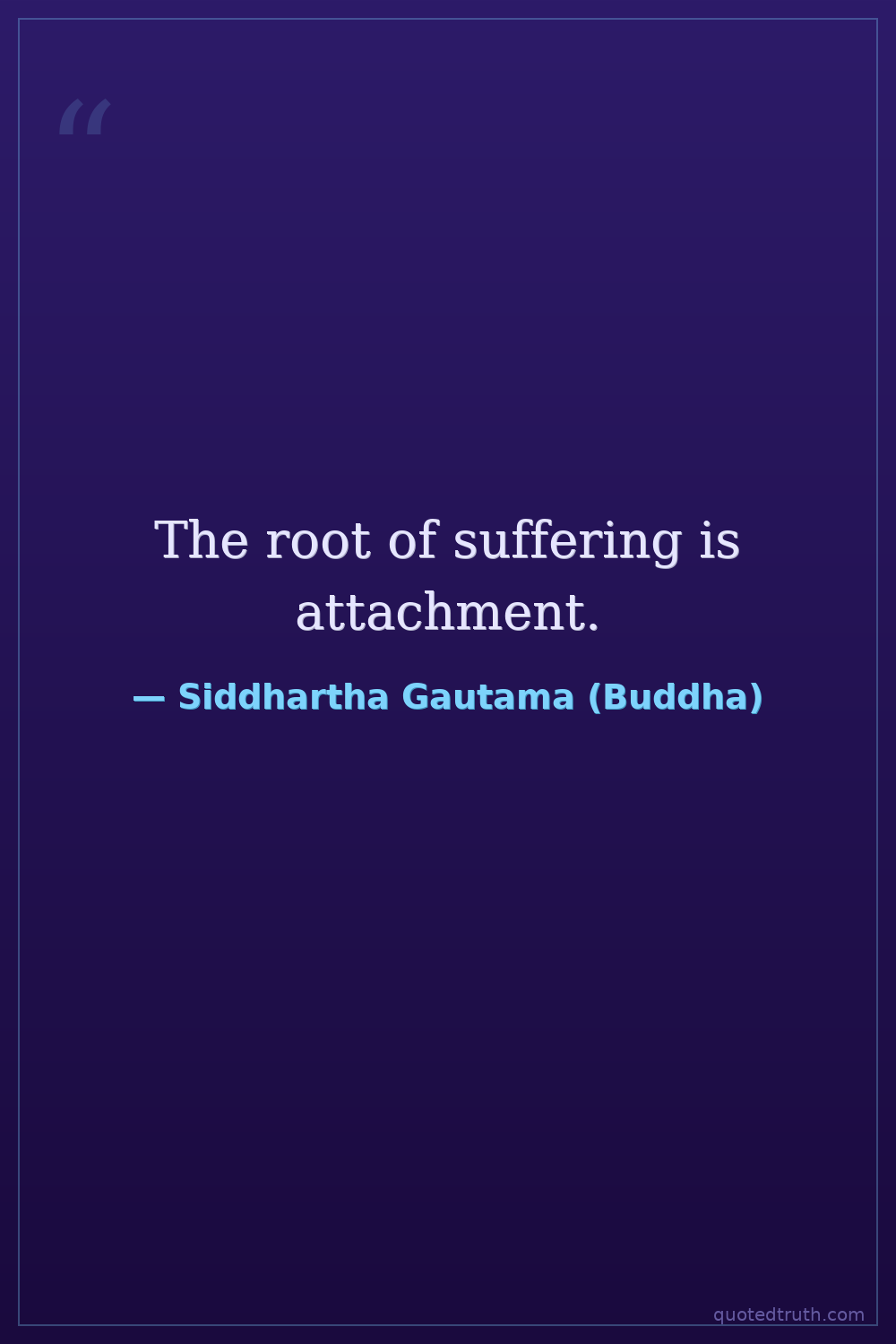
Siddhartha Gautama (Buddha) — "The root of suffering is attachment."
The root of suffering is attachment.
The root of suffering is attachment.
Click any product to generate a realistic preview. Up to 3 at a time.
* Initial load can take up to 90 seconds — revising the preview in another color is nearly instant.
"The body, monks, is not self. If the body were the self, this body would not lend itself to dis-ease."
"No one saves us but ourselves. No one can and no one may. We ourselves must walk the path."
"The wise ones who are intent on meditation, who delight in the peace of renunciation, such mindful ones, perfect in right understanding, cast off the net of Māra."
"The greatest wealth is health."
"The fragrance of holiness travels even against the wind."
Found in 2 providers: grok,gemini
2 sources checked
Pain in life comes from clinging to things, people, outcomes, and ideas we want to hold onto or avoid losing. When we grip tightly to what we desire or resist what we dislike, we create ongoing dissatisfaction. Loosen the grip and the suffering eases. It is not that wanting is wrong, but that demanding reality match our cravings guarantees disappointment, because everything changes and nothing stays.
This is the Second Noble Truth, the core diagnosis at the heart of the teaching Siddhartha delivered after his awakening under the Bodhi tree. Born a sheltered prince in the Shakya clan, he abandoned palace luxury, family, and future kingship after seeing sickness, old age, and death. His own life became a controlled experiment in releasing attachment, and this insight is the conclusion he spent forty-five years teaching across northern India.
In roughly the 5th century BCE, northern India was dominated by Vedic Brahmanism, rigid caste hierarchy, and elaborate ritual sacrifice controlled by priests. A wave of wandering ascetics, the shramanas, broke from this system to pursue liberation directly. Siddhartha emerged from that counterculture, offering a psychological rather than ritual path, open to all castes. Naming craving itself as the cause of suffering reframed salvation as inner work, not priestly transaction.
AI-generated insights based on extensive research and information for context. Factual errors? Email [email protected].
Your cart is empty