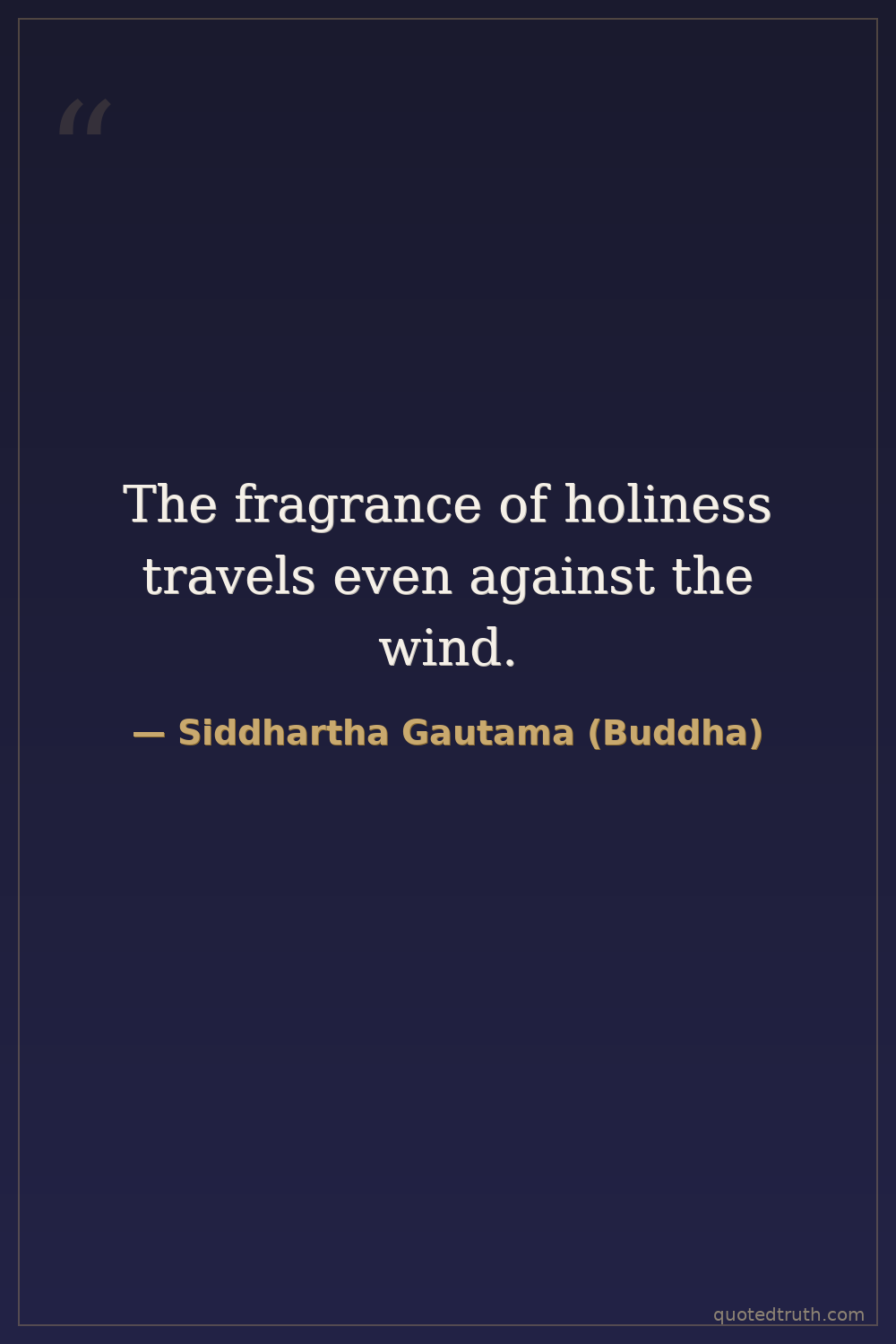
Siddhartha Gautama (Buddha) — "The fragrance of holiness travels even against the wind."
The fragrance of holiness travels even against the wind.
The fragrance of holiness travels even against the wind.
Click any product to generate a realistic preview. Up to 3 at a time.
* Initial load can take up to 90 seconds — revising the preview in another color is nearly instant.
"All that we are is the result of what we have thought: it is founded on our thoughts, it is made up of our thoughts. If a man speaks or acts with an evil thought, pain follows him, as the wheel follow…"
"Conquer anger with non-anger. Conquer badness with goodness. Conquer meanness with generosity. Conquer dishonesty with truth."
"One who acts on truth is happy in this world and beyond."
"To keep the body in good health is a duty... otherwise we shall not be able to keep our mind strong and clear."
"He who has renounced all violence towards all living beings, weak or strong, who neither kills nor causes others to kill — him I call a holy man."
From the Dhammapada, a teaching on the pervasive nature of virtue
Date: c. 5th-6th Century BCE
PhilosophicalFound in 1 providers: gemini
1 source checked
Good character and moral integrity make themselves known everywhere, regardless of obstacles trying to suppress them. While physical scents only drift downwind, the reputation of a genuinely virtuous person spreads in every direction, reaching people far away and overcoming resistance. You cannot hide goodness, and you cannot stop word of it from reaching others. Authentic virtue advertises itself through its own quiet power, without needing promotion.
Siddhartha abandoned a royal palace, wealth, and family to seek liberation from suffering, eventually attaining enlightenment under the Bodhi tree. He spent forty-five years walking across northern India teaching the Dharma. His reputation as the Awakened One spread organically through villages and kingdoms long before mass communication existed, drawing kings, merchants, and outcasts alike. This saying reflects his lived demonstration that ethical conduct, one limb of his Eightfold Path, naturally radiates influence without self-promotion.
In sixth-century BCE India, the Ganges plain was undergoing the Second Urbanization, with new cities, trade routes, and a restless merchant class questioning rigid Vedic ritualism and Brahmin authority. Wandering ascetics called shramanas competed for followers using debate, austerities, and reputation. News traveled by foot along caravan paths, so a teacher's moral standing genuinely determined whether disciples sought him out. The Buddha's saying speaks directly to this oral, reputation-driven spiritual marketplace.
AI-generated insights based on extensive research and information for context. Factual errors? Email [email protected].
Your cart is empty