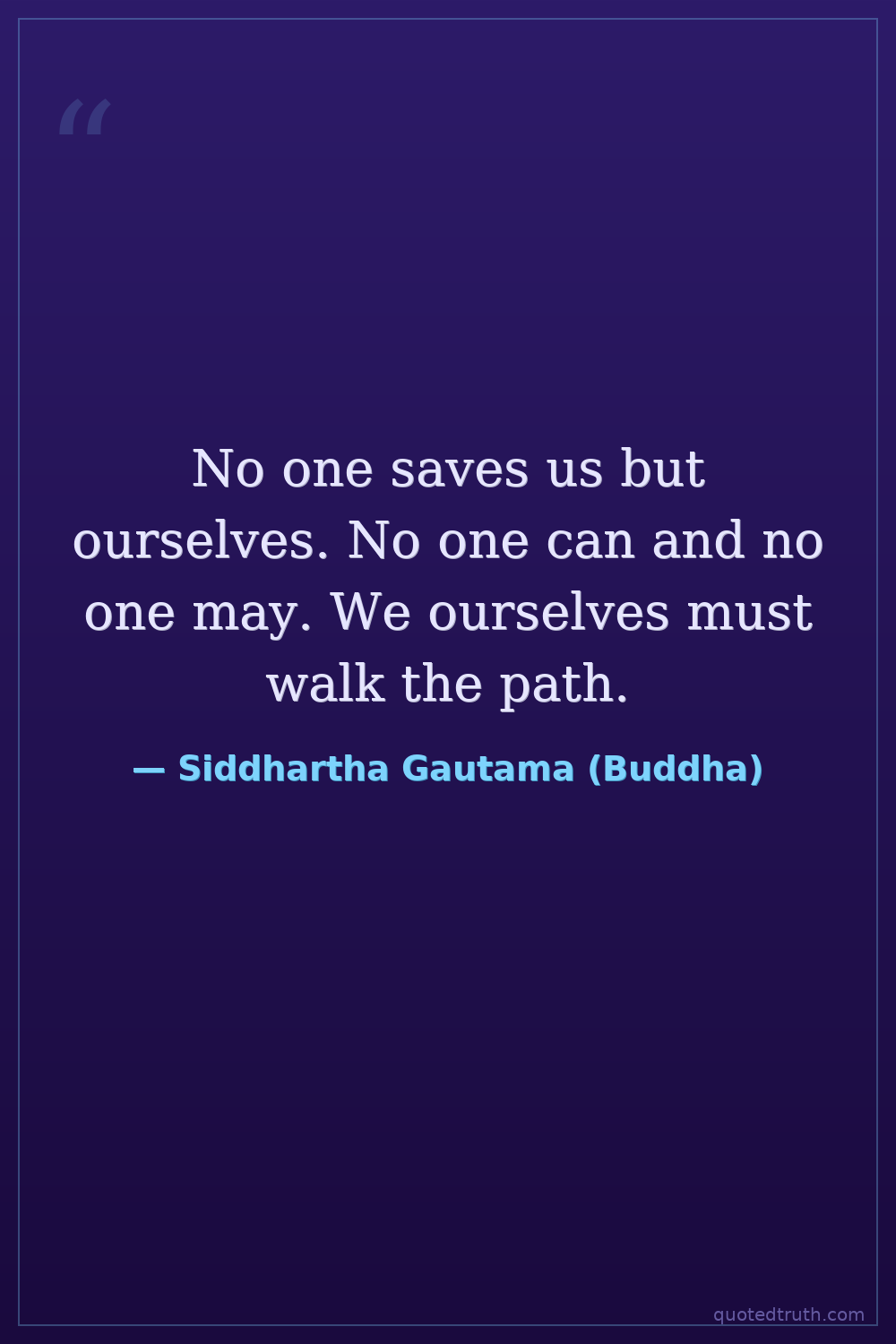
Siddhartha Gautama (Buddha) — "No one saves us but ourselves. No one can and no one may. We ourselves must walk…"
No one saves us but ourselves. No one can and no one may. We ourselves must walk the path.
No one saves us but ourselves. No one can and no one may. We ourselves must walk the path.
Click any product to generate a realistic preview. Up to 3 at a time.
* Initial load can take up to 90 seconds — revising the preview in another color is nearly instant.
"Do not pursue the past. Do not lose yourself in the future. The past no longer is. The future has not yet come. Looking deeply at life as it is in the very here and now, the practitioner dwells in sta…"
"I do not believe in a fate that falls on men however they act; but I do believe in a fate that falls on them unless they act."
"Beware of your thoughts; they become words. Beware of your words; they become actions. Beware of your actions; they become habits. Beware of your habits; they become character. Beware of your characte…"
"To keep the body in good health is a duty... otherwise we shall not be able to keep our mind strong and clear."
"Do not dwell in the past, do not dream of the future, concentrate the mind on the present moment."
Found in 1 providers: grok
1 source checked
Personal liberation and growth are your own responsibility. No teacher, god, or savior can do the inner work for you; they can only point the way. Freedom from suffering comes from your own effort, practice, and understanding. Others may guide or encourage, but the steps must be taken by you alone. Waiting for rescue keeps you stuck, while taking ownership of your mind and actions is what actually moves you forward.
The Buddha abandoned his palace, family, and royal future to seek an end to suffering, trying extreme asceticism under multiple teachers before rejecting them all. He reached awakening alone under the Bodhi tree through his own disciplined inquiry. His final recorded teaching urged followers to be lamps unto themselves. Refusing the role of savior, he presented himself as a physician who diagnoses and prescribes, leaving each person to take the medicine of practice themselves.
In 5th-century BCE northern India, spiritual life was dominated by Brahmin priests who mediated salvation through rituals, sacrifices, and caste-bound duties. Competing Sramana movements, including Jains and Ajivikas, questioned this priestly monopoly and debated fate, free will, and liberation. The Buddha's insistence on self-reliant practice challenged both ritual dependence and fatalistic determinism, offering a path open to anyone regardless of caste, gender, or priestly access, during a time of urbanization and intense philosophical ferment.
AI-generated insights based on extensive research and information for context. Factual errors? Email [email protected].
Your cart is empty