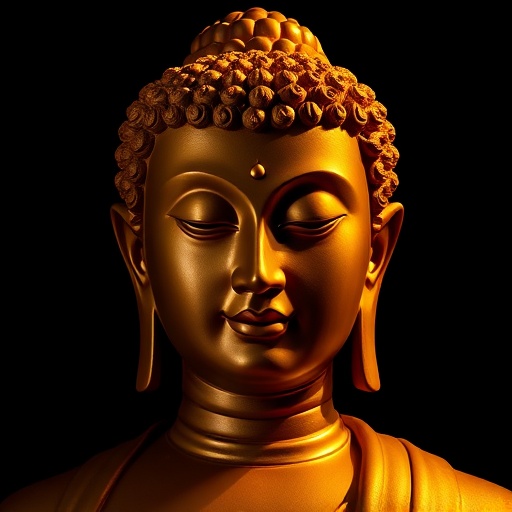
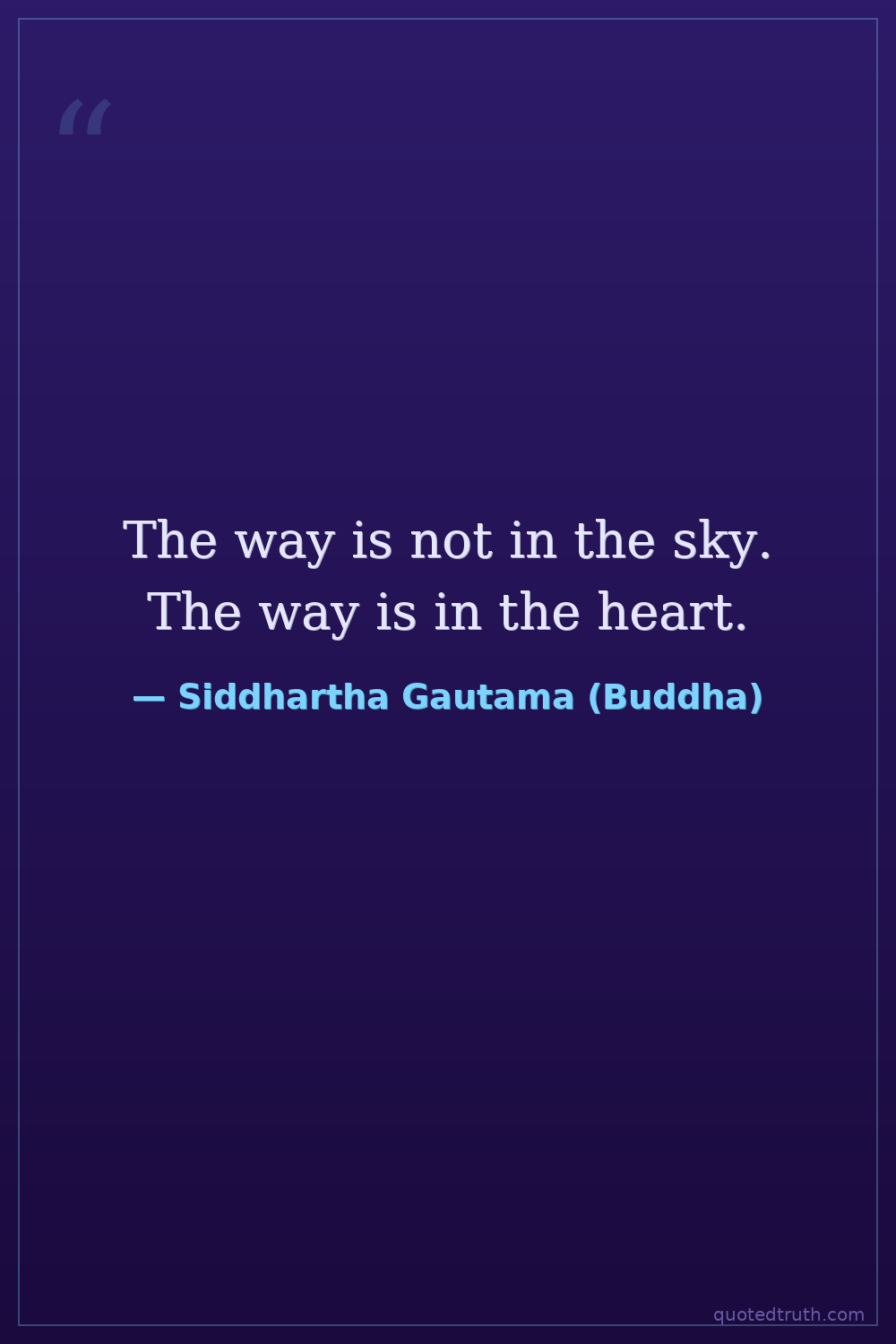
Siddhartha Gautama (Buddha) — "The way is not in the sky. The way is in the heart."
The way is not in the sky. The way is in the heart.
The way is not in the sky. The way is in the heart.
Click any product to generate a realistic preview. Up to 3 at a time.
* Initial load can take up to 90 seconds — revising the preview in another color is nearly instant.
"Should you find a wise critic to point out your faults, follow him as you would a guide to hidden treasure."
"'As I am, so are they; as they are, so am I.' Comparing others with oneself, do not kill nor cause others to kill."
"Believe nothing, no matter where you read it, or who said it, no matter if I have said it, unless it agrees with your own reason and your own common sense."
"Do not pursue the past. Do not lose yourself in the future. The past no longer is. The future has not yet come. Looking deeply at life as it is in the very here and now, the practitioner dwells in sta…"
"Just as a tree, though cut down, sprouts up again if its roots are undamaged and strong, in the same way, if the root of craving is not wholly uprooted, suffering springs up again and again."
Found in 2 providers: grok,gemini
2 sources checked
Liberation and truth are not found in some distant heaven, external deity, or supernatural realm above us. Instead, awakening happens inward, through examining your own mind, cultivating awareness, and transforming how you respond to craving and suffering. Stop searching outside yourself for salvation or cosmic answers. The work of becoming free is psychological and ethical, accomplished in daily attention to thoughts, feelings, and intentions rather than through rituals aimed at the heavens.
Siddhartha abandoned palace luxury, then tried extreme asceticism and Vedic ritual under forest teachers, finding neither path led to liberation. He discovered awakening only through meditation under the Bodhi tree, examining his own mind. His teaching rejected Brahmin sacrifice, caste-based salvation, and speculation about gods or cosmology as irrelevant to ending suffering. The Four Noble Truths and Eightfold Path are entirely internal disciplines, locating nirvana in mental transformation rather than divine intervention from above.
In 5th-century BCE northern India, Brahmin priests monopolized salvation through elaborate Vedic fire sacrifices, mantras directed at sky-gods like Indra, and a rigid caste system determining spiritual access. Competing shramana movements were questioning this ritual orthodoxy. The Buddha emerged within this ferment, alongside Mahavira and the Upanishadic sages, offering a radical democratization: anyone, regardless of caste or priestly mediation, could awaken through inner discipline, bypassing the expensive sky-directed ceremonies that sustained Brahmin authority.
AI-generated insights based on extensive research and information for context. Factual errors? Email [email protected].
Your cart is empty