What it means
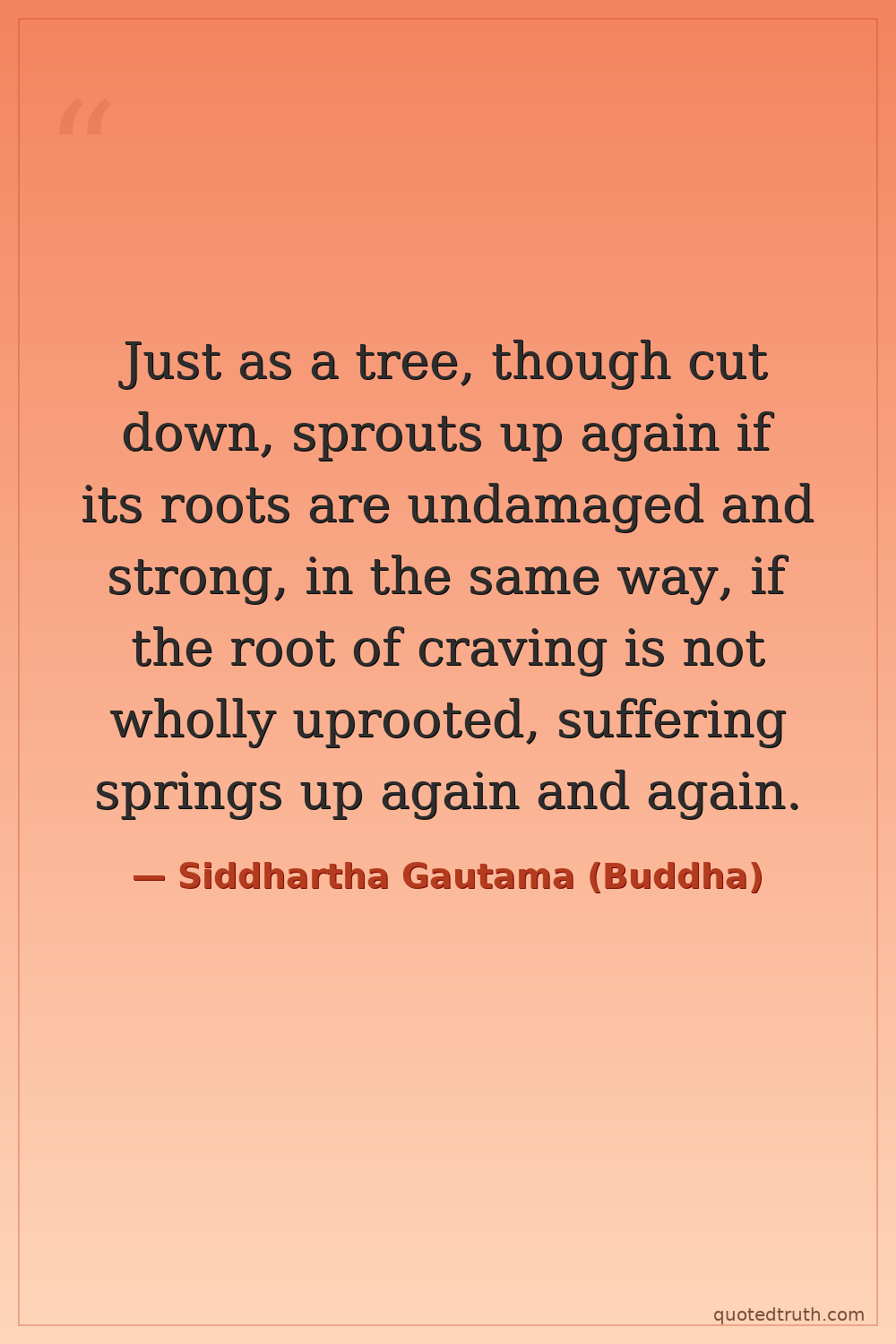
Cutting back a problem without addressing its source only delays its return. The quote uses a tree that regrows from intact roots as a metaphor for how desire and attachment regenerate pain whenever their underlying cause remains alive. Managing symptoms, distractions, or temporary relief will not end recurring dissatisfaction. Lasting freedom from suffering requires going beneath surface behaviors and pulling out the deep hunger that keeps producing new disappointments, losses, and anxieties in a person's life.
Relevance to Siddhartha Gautama (Buddha)
This reflects the Buddha's Four Noble Truths, which identify craving (tanha) as the origin of suffering and its cessation as the path to liberation. After leaving his princely life in Kapilavastu and experimenting with extreme asceticism, Siddhartha concluded under the Bodhi tree that uprooting desire, not denying the body, ends rebirth and pain. The tree imagery fits a teacher who awakened beneath one, and who framed enlightenment as thorough severing rather than temporary suppression of attachment.
The era
In 5th-century BCE northern India, Vedic ritual sacrifice dominated religious life while a wave of shramana movements, including Jains and Ajivikas, questioned priestly authority and debated karma, rebirth, and liberation. Urbanizing kingdoms like Magadha and Kosala created wealth, inequality, and existential unease that made teachings on suffering widely resonant. The Buddha's agricultural metaphor of roots and regrowth spoke directly to listeners in a farming society, and his emphasis on inner uprooting offered an alternative to external ritual purification.
AI-generated insights based on extensive research and information for context. Factual errors? Email [email protected].