What it means
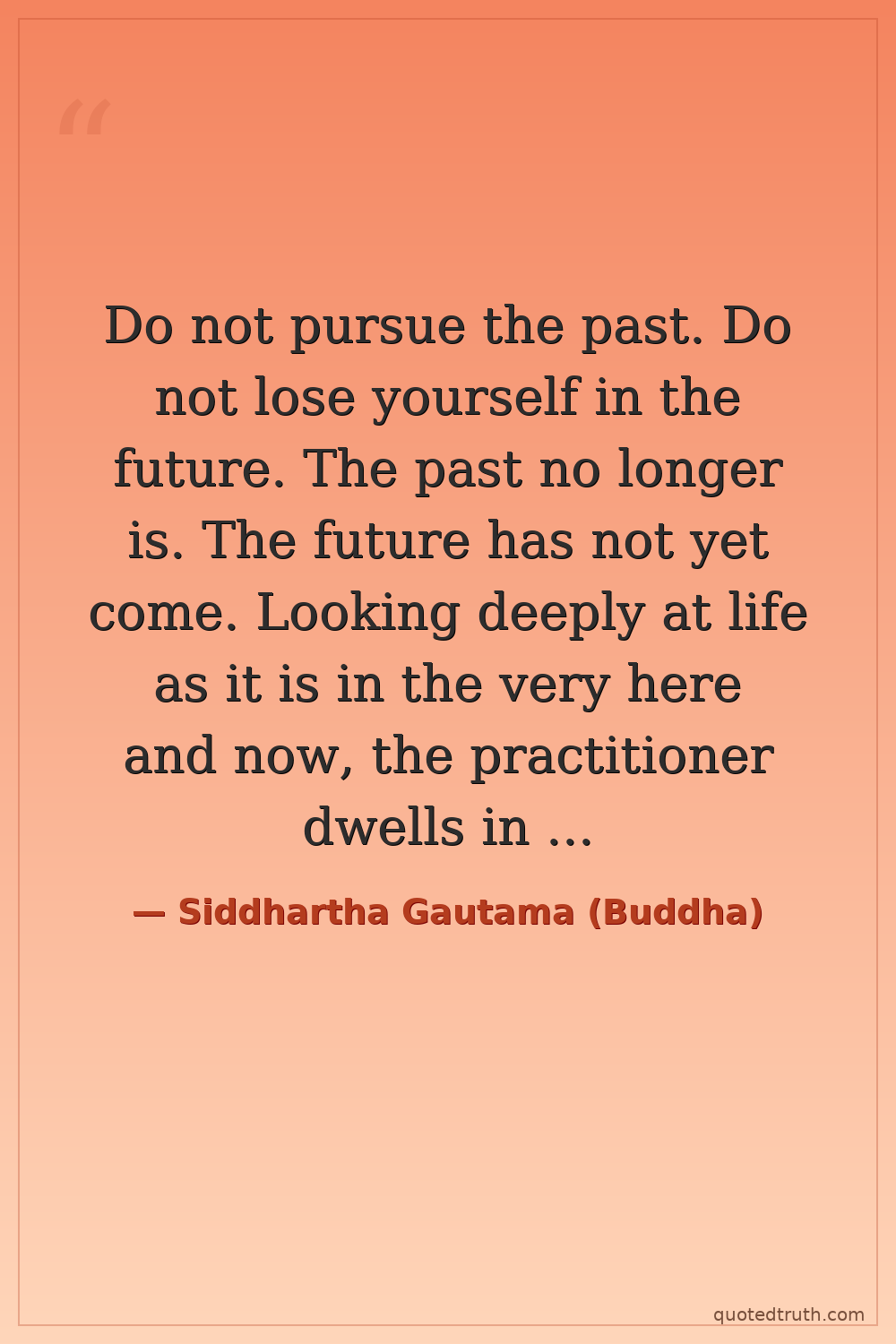
Stop replaying old memories and stop rehearsing imagined futures. What happened is gone, and what might happen does not yet exist, so clinging to either pulls you out of the only moment you can actually experience. When you pay close, honest attention to what is happening right now, you stop being jerked around by regret and anxiety, and you find a grounded calm that does not depend on circumstances shifting in your favor.
Relevance to Siddhartha Gautama (Buddha)
Siddhartha abandoned a sheltered palace life after seeing old age, sickness, and death, spending years in ascetic practice before awakening under the Bodhi tree. His core teaching, mindfulness of the present breath and body, became the backbone of Buddhist meditation. This saying distills that realization: suffering arises from craving past pleasures and fearing future losses, and liberation comes through direct, nonjudgmental attention to the present moment, exactly the practice he taught his first disciples at Sarnath.
The era
In 5th-century BCE northern India, the Vedic ritual system and rigid caste order dominated spiritual life, while competing sramana movements, Jains, Ajivikas, and wandering ascetics, challenged them with extreme renunciation and fatalism. Siddhartha taught during this ferment along the Ganges plain, offering a middle path between palace indulgence and self-torture. Preaching in everyday Magadhi rather than priestly Sanskrit, he made present-moment awareness accessible to farmers, merchants, and outcasts who had been locked out of Brahminical salvation.
AI-generated insights based on extensive research and information for context. Factual errors? Email [email protected].