Laozi — "The greatest paradox of life is that death is the ultimate goal."
The greatest paradox of life is that death is the ultimate goal.
The greatest paradox of life is that death is the ultimate goal.
Click any product to generate a realistic preview. Up to 3 at a time.
* Initial load can take up to 90 seconds — revising the preview in another color is nearly instant.
"Deal with it before it happens. Set things in order before there is confusion."
"The highest virtue does nothing. Yet, nothing needs to be done. The lowest virtue does everything. Yet, much remains to be done."
"Governing a large country is like cooking a small fish. You spoil it with too much poking."
"The value of teaching without words and accomplishing without action is understood by few in the world."
"One who is too insistent on his own views finds few who agree with him."
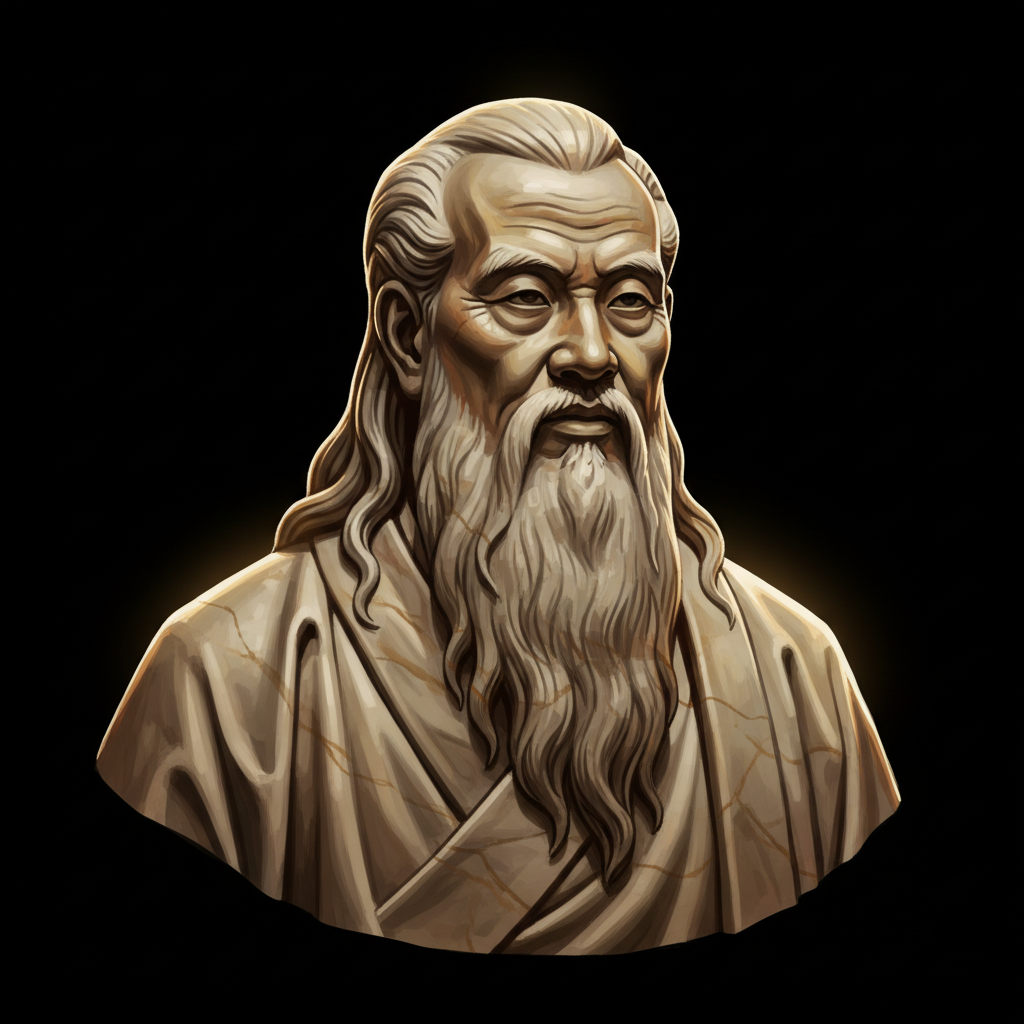
Reputed founder of Taoism and author of the Tao Te Ching, whose wu wei (effortless action) shaped East Asian philosophy. Closely associated with Zhuangzi (later Taoist who extended Laozi's framework). For an intellectual contrast, see Confucius, near-contemporary Chinese sage of social ritual and duty — Confucius systematized social order through ritual and hierarchy; Laozi argued that all such systems were the disease, not the cure — the two founding poles of Chinese moral philosophy.
Found in 1 providers: grok
1 source checked
Life's deepest contradiction is that everything living moves steadily toward ending. We spend our days building, striving, and accumulating, yet the destination for every breath is its final one. Rather than treating this as tragic, the saying frames death as the natural completion of life's arc. Recognizing this reframes how we value our time, possessions, and ambitions, since none outlast the journey they seem to serve.
Laozi taught wu wei, effortless alignment with the Dao, the natural order that produces and reclaims all things. Legend says he left society in old age, riding west on an ox, accepting dissolution rather than clinging to status or legacy. His Dao De Jing repeatedly frames returning to the source as completion, not loss. This paradox fits a sage who saw opposites as inseparable and treated death as the pattern's closing movement.
Laozi lived during the late Zhou dynasty's unraveling, an age of collapsing feudal order that bled into the Warring States period. Constant warfare, political treachery, and shortened lifespans pressed thinkers to explain suffering and mortality. Confucians answered with ritual and social duty, while Laozi and early Daoists turned inward and toward nature, accepting cycles of rise and fall. In that violent context, naming death the ultimate goal challenged rulers chasing power and immortality alike.
AI-generated insights based on extensive research and information for context. Factual errors? Email [email protected].
Your cart is empty