Laozi — "The value of teaching without words and accomplishing without action is understo…"
The value of teaching without words and accomplishing without action is understood by few in the world.
The value of teaching without words and accomplishing without action is understood by few in the world.
Click any product to generate a realistic preview. Up to 3 at a time.
* Initial load can take up to 90 seconds — revising the preview in another color is nearly instant.
"Deal with the small as with the large."
"He who knows others is wise; he who knows himself is enlightened. He who conquers others is strong; he who conquers himself is mighty. He who is content is rich. He who acts with vigor has a will. He …"
"Under heaven all can see beauty as beauty only because there is ugliness. All can know good as good only because there is evil."
"Life is a series of natural and spontaneous changes. Don't resist them; that only creates sorrow. Let reality be reality. Let things flow naturally forward in whatever way they like."
"The sage attends to the inner and not to the outer."
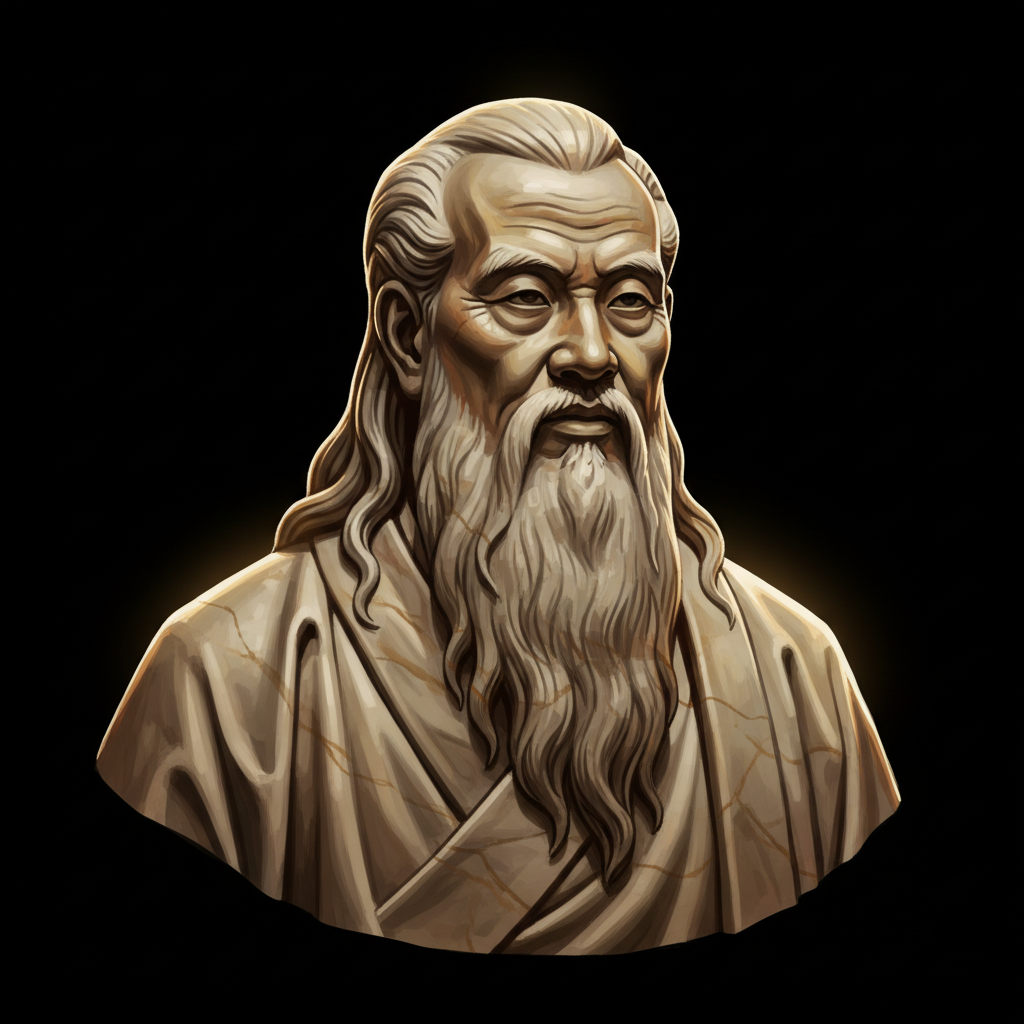
Reputed founder of Taoism and author of the Tao Te Ching, whose wu wei (effortless action) shaped East Asian philosophy. Closely associated with Zhuangzi (later Taoist who extended Laozi's framework). For an intellectual contrast, see Confucius, near-contemporary Chinese sage of social ritual and duty — Confucius systematized social order through ritual and hierarchy; Laozi argued that all such systems were the disease, not the cure — the two founding poles of Chinese moral philosophy.
Found in 1 providers: gemini
1 source checked
Real influence often comes from how you live rather than what you say or force. Demonstrating a principle through your conduct teaches more deeply than lectures, and letting situations unfold naturally often produces better outcomes than aggressive intervention. Most people chase results by talking more and pushing harder, but quiet example and patient restraint can shape others and finish tasks more effectively. Few grasp this because it looks like doing nothing.
Laozi, the legendary founder of Taoism and reputed author of the Tao Te Ching, championed wu wei, effortless action aligned with the natural flow of things. Tradition holds he worked as a keeper of royal archives, a quiet observer of court ambition and decay. Disillusioned, he is said to have ridden west on an ox, leaving his teachings behind. This saying distills his conviction that sages lead through presence and simplicity rather than decree.
Laozi lived during the turbulent late Zhou dynasty, around the 6th century BCE, as China slid toward the Warring States period. Rulers competed through elaborate rituals, legal codes, moralistic Confucian instruction, and constant warfare, believing louder commands and bigger armies secured order. Against that noise, Taoism offered a radical counterpoint: quiet rulers, minimal interference, and harmony with the Dao. Praising silent teaching and non-action was a direct rebuke of the era's obsession with speeches, edicts, and force.
AI-generated insights based on extensive research and information for context. Factual errors? Email [email protected].
Your cart is empty