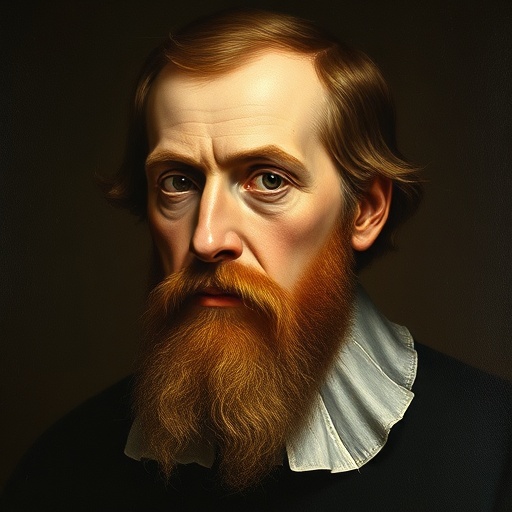
John Calvin — "God's love is the fountain of all our blessings."
God's love is the fountain of all our blessings.
God's love is the fountain of all our blessings.
Click any product to generate a realistic preview. Up to 3 at a time.
* Initial load can take up to 90 seconds — revising the preview in another color is nearly instant.
"For the mind of man is so entirely alienated from the righteousness of God that it can neither conceive, desire, nor design anything but what is vicious, perverted, impure, and iniquitous."
"We frankly confess that God has ordained to death those whom he has not deemed worthy of life."
"For we must not think that it is an arbitrary will in God that is the cause of election, but that he wills justly and without fault."
"When God wants to punish a nation, he sends them bad preachers."
"The proper knowledge of God is when we know him to be our Father."
French theologian whose Institutes of the Christian Religion (1536) systematized Protestant Reformed doctrine, including predestination. Closely associated with Martin Luther (Reformation founder, Calvin's predecessor). For an intellectual contrast, see Jacobus Arminius, Dutch Reformed theologian (1560-1609) — Arminius's rejection of strict double-predestination founded Arminianism — the theological tradition modern Methodism, most evangelicalism, and Pentecostalism descend from. The Calvinist-Arminian debate has divided Protestantism for 400 years.
Found in 1 providers: grok
1 source checked
Every good thing humans experience originates from God's love, not from human merit or effort. This statement positions divine love as the ultimate source — a wellspring from which health, community, provision, and life itself flow outward. It rejects the idea that blessings are earned or random. In modern terms: nothing good in your life is self-generated; it all traces back to a loving God who gives freely and without condition.
Calvin's entire theological system centered on God's sovereign grace. His landmark work, Institutes of the Christian Religion, argues that salvation — and all good — flows from God's unconditional election, not human effort. Exiled from Catholic France for his Protestant convictions, Calvin spent decades in Geneva constructing a church grounded in divine sovereignty. The fountain metaphor mirrors his doctrine precisely: God's love precedes and produces every blessing, making human merit irrelevant.
The Reformation era (1500s) was defined by fierce debate over whether humans could earn God's favor through works, indulgences, or sacraments administered by the Catholic Church. Luther's revolt had shattered Christian Europe's unity. Calvin's declaration that God's love — not church ritual or purchased forgiveness — is the source of all blessing was theologically explosive, directly challenging Rome's authority and the entire medieval system of merit-based salvation that had governed European spiritual life for centuries.
AI-generated insights based on extensive research and information for context. Factual errors? Email [email protected].
Your cart is empty