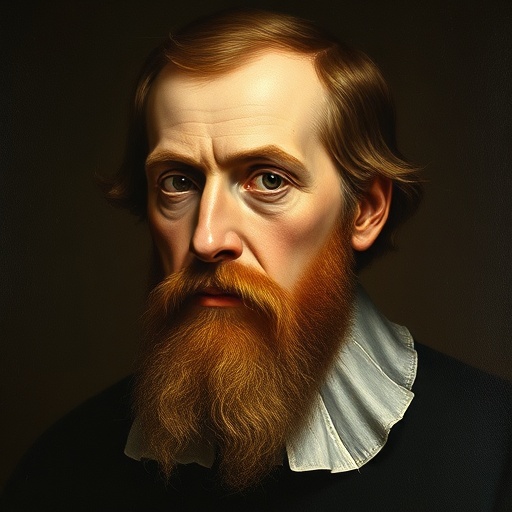
John Calvin — "We frankly confess that God has ordained to death those whom he has not deemed w…"
We frankly confess that God has ordained to death those whom he has not deemed worthy of life.
We frankly confess that God has ordained to death those whom he has not deemed worthy of life.
Click any product to generate a realistic preview. Up to 3 at a time.
* Initial load can take up to 90 seconds — revising the preview in another color is nearly instant.
"It is by no means necessary that the righteous should be distinguished from the wicked by external signs."
"God has no greater enemy than the proud man."
"God has decreed to save some and to destroy others, and this decree is just."
"We call predestination God's eternal decree, by which he compacted with himself what he willed to become of each man. For all are not created in equal condition; rather, eternal life is foreordained f…"
"God's providence extends to all things, even to the least of them."
French theologian whose Institutes of the Christian Religion (1536) systematized Protestant Reformed doctrine, including predestination. Closely associated with Martin Luther (Reformation founder, Calvin's predecessor). For an intellectual contrast, see Jacobus Arminius, Dutch Reformed theologian (1560-1609) — Arminius's rejection of strict double-predestination founded Arminianism — the theological tradition modern Methodism, most evangelicalism, and Pentecostalism descend from. The Calvinist-Arminian debate has divided Protestantism for 400 years.
Found in 1 providers: grok
1 source checked
This quote asserts double predestination: God actively decrees both who receives eternal life and who is appointed to eternal death. It is not passive neglect of the damned but a positive divine ordinance. Calvin insists on full transparency about this conclusion—that God's absolute sovereignty over salvation necessarily entails sovereignty over damnation. Those not chosen for life are not merely overlooked; they are specifically ordained to death by God's sovereign will.
Calvin's entire theological project centered on God's absolute sovereignty. As architect of Reformed theology in Geneva, he systematized predestination in his Institutes of the Christian Religion. His legal training gave him methodical, unsparing precision—he followed theological logic wherever it led, even to conclusions opponents called monstrous. His willingness to 'frankly confess' what others softened reflects his character: rigorous, uncompromising, convinced that obscuring uncomfortable truths dishonored God's majesty and deceived the faithful.
The 16th-century Reformation shattered Catholicism's monopoly on salvation's mechanics, making questions about who could be saved carry literal life-or-death stakes in an era when heresy meant execution. Calvin wrote amid fierce debates over free will sparked by Luther versus Erasmus. Reformed Geneva needed a clear confessional foundation. Predestination answered the Catholic charge that Protestants abandoned moral accountability by grounding everything in divine decree rather than human merit or ecclesiastical authority.
AI-generated insights based on extensive research and information for context. Factual errors? Email [email protected].
Your cart is empty