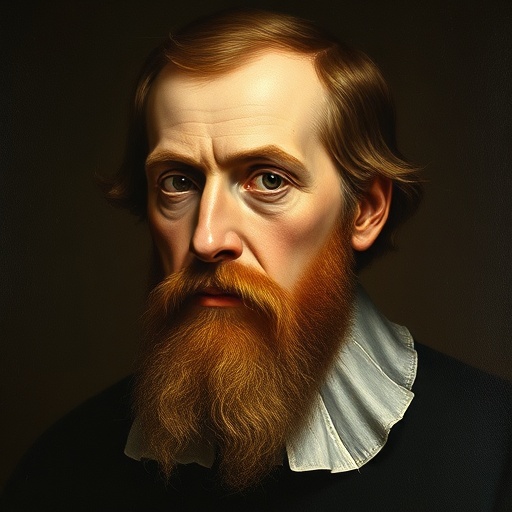
John Calvin — "When God wants to punish a nation, he sends them bad preachers."
When God wants to punish a nation, he sends them bad preachers.
When God wants to punish a nation, he sends them bad preachers.
Click any product to generate a realistic preview. Up to 3 at a time.
* Initial load can take up to 90 seconds — revising the preview in another color is nearly instant.
"God has a secret counsel, by which he chooses whom he will, and rejects whom he will."
"The human heart is an idol factory."
"Many people have accused me of such ferocious cruelty that I would like to kill again the man I have destroyed. Not only am I indifferent to their comments, but I rejoice in the fact that they spit in…"
"The grace of God is the only foundation of our salvation."
"It is not in our power to believe or not to believe."
French theologian whose Institutes of the Christian Religion (1536) systematized Protestant Reformed doctrine, including predestination. Closely associated with Martin Luther (Reformation founder, Calvin's predecessor). For an intellectual contrast, see Jacobus Arminius, Dutch Reformed theologian (1560-1609) — Arminius's rejection of strict double-predestination founded Arminianism — the theological tradition modern Methodism, most evangelicalism, and Pentecostalism descend from. The Calvinist-Arminian debate has divided Protestantism for 400 years.
Found in 1 providers: grok
1 source checked
This quote asserts that corrupt or incompetent clergy are themselves a form of divine judgment. A morally healthy nation deserves sound, truthful preaching; when preachers distort doctrine, flatter the powerful, or mislead congregations, people suffer spiritually and cannot discern truth. The punishment isn't external catastrophe but internal rot — a population fed false teaching grows morally blind. Bad preaching, in this view, is not merely an inconvenience but the cruelest punishment God can inflict.
Calvin spent his life building rigorous, doctrinally sound preaching in Geneva, training pastors through the Geneva Academy he founded in 1559. He delivered thousands of sermons and wrote extensive biblical commentaries, treating the pulpit as the primary vehicle of God's Word. Having fled Catholic France, he witnessed firsthand how corrupt clergy — selling indulgences, living decadently, preaching ignorance — had spiritually deformed Christendom. For Calvin, bad preaching wasn't incompetence; it was civilizational catastrophe.
The 16th-century Reformation erupted partly because Catholic clergy were widely seen as corrupt and ignorant — priests who couldn't read Latin, bishops who purchased their offices, popes who waged wars for political gain. Calvin preached in Geneva from 1536, navigating competition from Catholic clergy and radical Anabaptists alike. The Council of Trent (1545–1563) was itself a Catholic response to clerical failure. Who held legitimate preaching authority became a question that literally triggered wars across Europe.
AI-generated insights based on extensive research and information for context. Factual errors? Email [email protected].
Your cart is empty