What it means
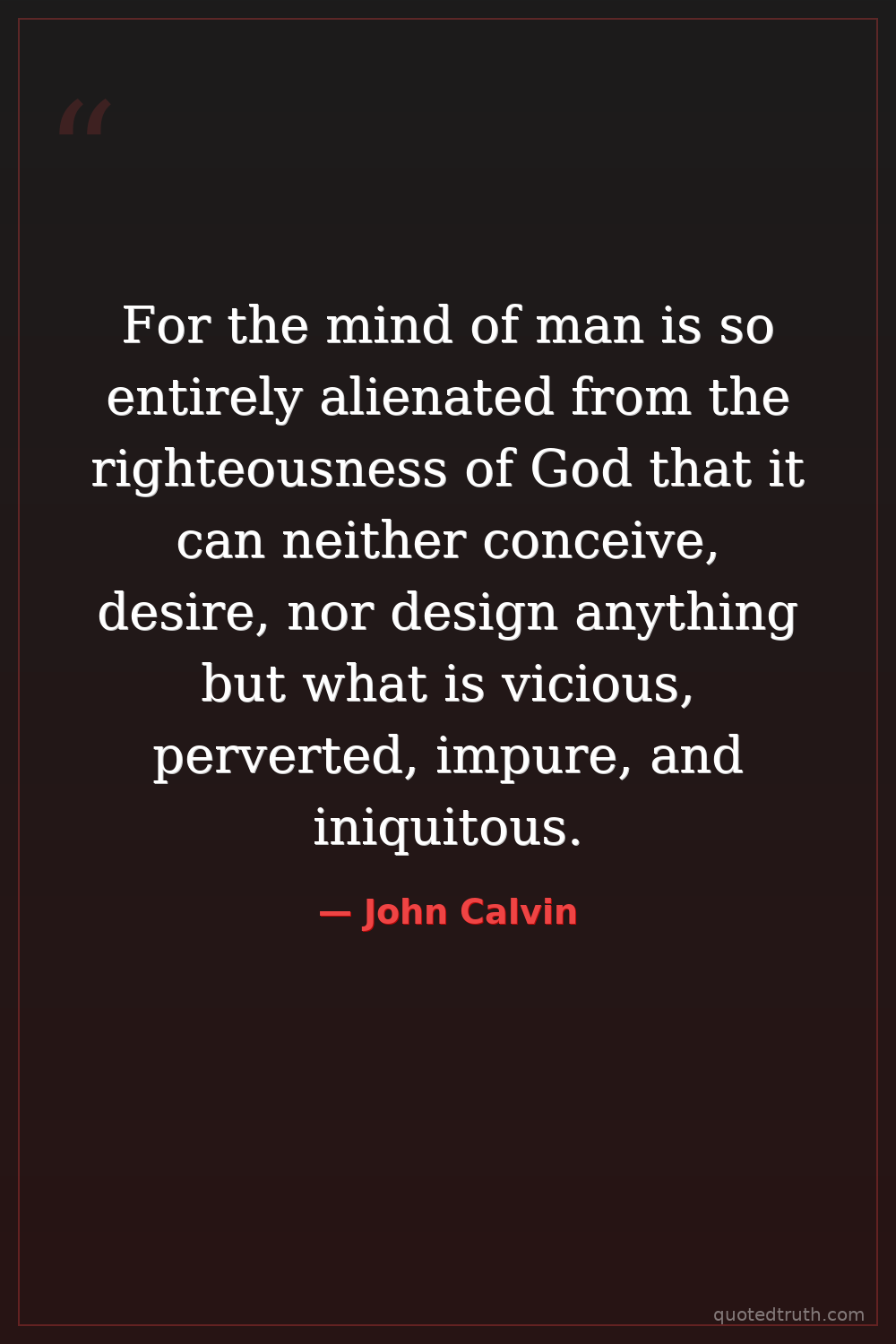
The human mind, Calvin argues, is so thoroughly corrupted by sin that it cannot independently conceive, desire, or plan anything truly righteous or pure. Every natural faculty—imagination, will, intention—is bent toward wickedness. This is total depravity: not that humans commit the worst acts constantly, but that no part of the mind escapes corruption, making genuine moral goodness impossible without divine intervention and grace from outside oneself.
Relevance to John Calvin
Calvin made total depravity the cornerstone of his Institutes of the Christian Religion (1536), arguing from Scripture with the precision of his legal training. As Geneva's de facto moral authority, he enforced strict ecclesiastical discipline—directly consistent with his belief that unchecked human nature inevitably corrupts. This doctrine sharply distinguished Reformed theology from both Lutheranism and Catholicism, which retained greater optimism about humanity's residual moral capacity after the Fall.
The era
Calvin wrote during the Reformation's most volatile decades, when human nature directly determined theories of salvation and church authority. Catholics taught that humans retained natural moral capacity requiring sacramental grace to supplement it. Calvin's total depravity made salvation entirely God's initiative. Amid Europe's wars of religion and Christendom's fracturing, this stark anthropology gave Reformed communities a theologically consistent foundation for rejecting Rome's mediating role and insisting on grace alone.
AI-generated insights based on extensive research and information for context. Factual errors? Email [email protected].