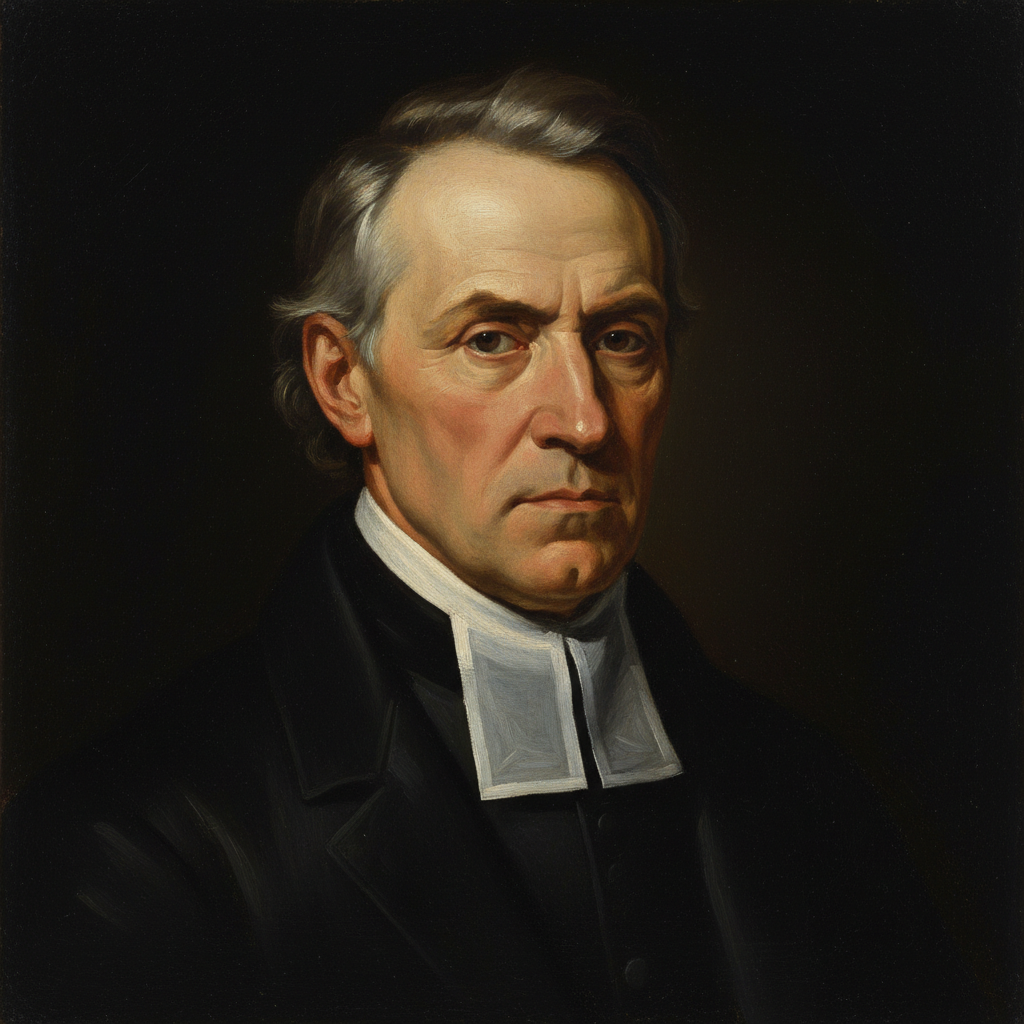
John Wesley — "I have been writing a sermon on the use of money. Oh, what a flat, unprofitable …"
I have been writing a sermon on the use of money. Oh, what a flat, unprofitable subject it is!
I have been writing a sermon on the use of money. Oh, what a flat, unprofitable subject it is!
Click any product to generate a realistic preview. Up to 3 at a time.
* Initial load can take up to 90 seconds — revising the preview in another color is nearly instant.
"I am as much a High-Churchman as ever I was. And I hope to live and die so."
"By Methodists, I mean such as profess to pursue a Christian life by Scriptural rules and methods."
"I desire to have but one thing in view, to please God."
"I have often thought, that if I were to choose a carriage to ride in, it should be a plain one."
"As to my own comfort, I know not that I ever felt any, from the time I was born."
English Anglican cleric and founder of Methodism, whose open-air preaching and class-meeting structure created the largest 18th-century evangelical revival. Closely associated with Charles Wesley (his hymn-writing brother) and George Whitefield (early co-revivalist, later doctrinal opponent). For an intellectual contrast, see George Whitefield, Calvinist evangelical revivalist — Whitefield's predestinarian Calvinism vs Wesley's free-grace Arminian theology split the early Methodist movement permanently in the 1739-41 break. The founding evangelical Calvinist-Arminian schism — the two parallel evangelical traditions American Christianity descends from.
Found in 1 providers: grok
1 source checked
Wesley expresses frustrated irony about preaching on money management — a topic he finds tedious and unrewarding to write about, even while recognizing its practical necessity for his congregation. The self-deprecating complaint reveals a pastor wrestling with mundane pastoral duties, aware that financial instruction lacks the spiritual electricity of grace, salvation, or holiness sermons yet remains unavoidable for guiding ordinary believers through daily life.
Wesley famously developed three financial principles: earn all you can, save all you can, give all you can. He lived austerely, giving away most of his substantial publishing income. His discomfort writing this sermon reflects genuine tension — money matters conflicted with his passionate focus on sanctification and revival. Yet his 1744 sermon 'The Use of Money' became one of Methodism's most influential practical teachings, shaping generations of Methodist economic ethics.
Wesley preached during Britain's early Industrial Revolution when wealth disparities were exploding, working-class Methodists faced new commercial temptations, and established Anglican clergy were often seen as complicit with wealthy elites. Evangelical movements were reclaiming Christianity for the poor. Addressing money directly was both pastorally urgent and culturally risky — too much emphasis invited accusations of materialism, too little left congregants spiritually unarmed against capitalism's emerging moral pitfalls.
AI-generated insights based on extensive research and information for context. Factual errors? Email [email protected].
Your cart is empty