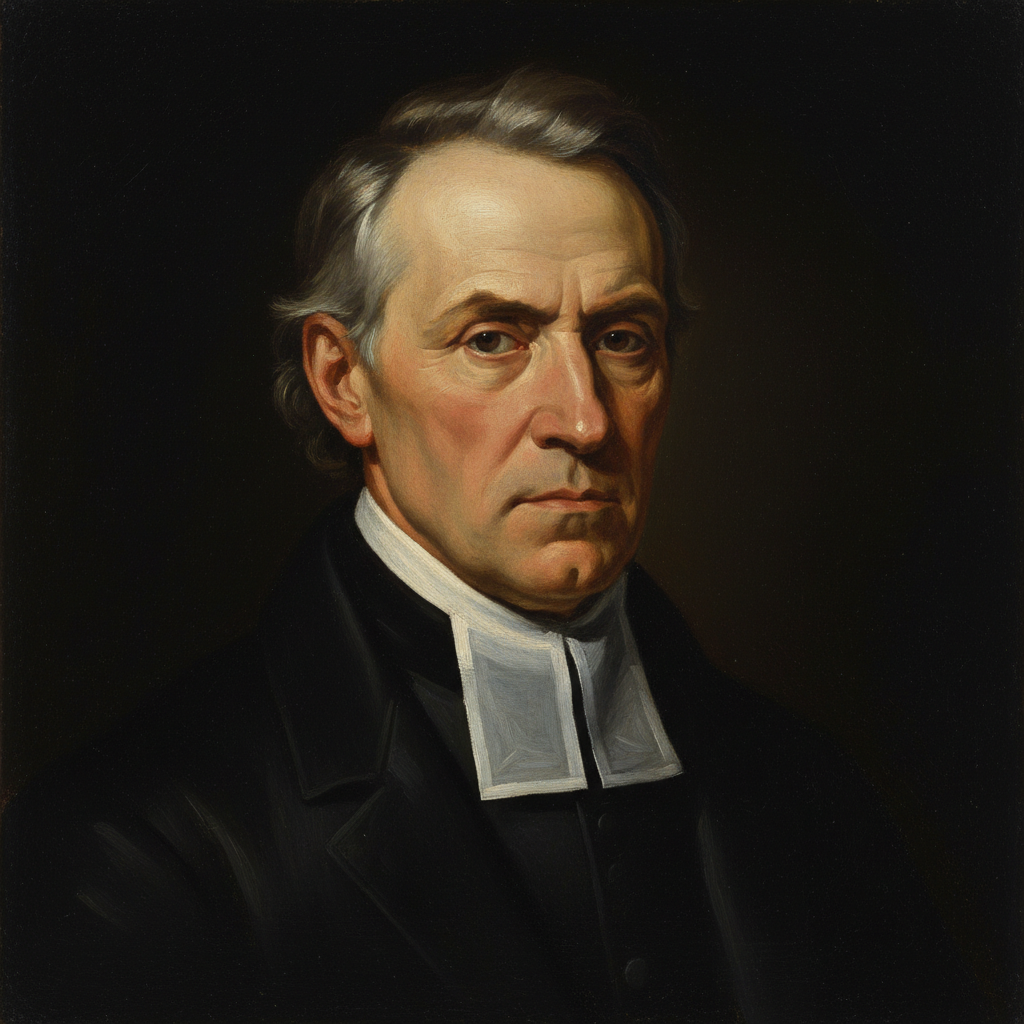
John Wesley — "I am as much a High-Churchman as ever I was. And I hope to live and die so."
I am as much a High-Churchman as ever I was. And I hope to live and die so.
I am as much a High-Churchman as ever I was. And I hope to live and die so.
Click any product to generate a realistic preview. Up to 3 at a time.
* Initial load can take up to 90 seconds — revising the preview in another color is nearly instant.
"The Methodists do not desire to be distinguished from other men, but by the Spirit which they breathe."
"By Methodists, I mean such as profess to pursue a Christian life by Scriptural rules and methods."
"I have often wondered that any man, who has tasted of the pleasures of retirement, can ever be prevailed upon to quit them."
"Though I am always in haste, I am never in a hurry."
"Preach faith till you have it; and then, because you have it, you will preach faith."
English Anglican cleric and founder of Methodism, whose open-air preaching and class-meeting structure created the largest 18th-century evangelical revival. Closely associated with Charles Wesley (his hymn-writing brother) and George Whitefield (early co-revivalist, later doctrinal opponent). For an intellectual contrast, see George Whitefield, Calvinist evangelical revivalist — Whitefield's predestinarian Calvinism vs Wesley's free-grace Arminian theology split the early Methodist movement permanently in the 1739-41 break. The founding evangelical Calvinist-Arminian schism — the two parallel evangelical traditions American Christianity descends from.
Found in 1 providers: grok
1 source checked
Wesley declares unwavering loyalty to the High Church tradition of the Church of England—its sacramental theology, episcopal authority, and liturgical order. He's defending himself against charges that Methodism represents a break from Anglicanism. His point: the Methodist revival is a renewal movement within the established church, not a competing denomination. He sees no contradiction between leading a revival and remaining a faithful Anglican churchman.
Wesley maintained lifelong formal membership in the Church of England, using the Book of Common Prayer and insisting his Methodist societies supplemented rather than replaced parish worship. His Oxford Holy Club practiced intense High Church disciplines. He resisted formal separation until his death in 1791. This statement reflects his persistent self-identity as an Anglican priest reforming the church from within, not a Nonconformist founding a rival institution.
Eighteenth-century England saw intense tension between the established Church of England and growing Nonconformist movements—Baptists, Quakers, and dissenters who had formally separated. High Church meant deep loyalty to Anglican authority, sacraments, and apostolic tradition. Wesley's outdoor preaching and lay preachers alarmed church authorities who saw Methodism as dangerous dissent. This claim was a direct, politically loaded defense against accusations of schism during a volatile era of religious realignment.
AI-generated insights based on extensive research and information for context. Factual errors? Email [email protected].
Your cart is empty