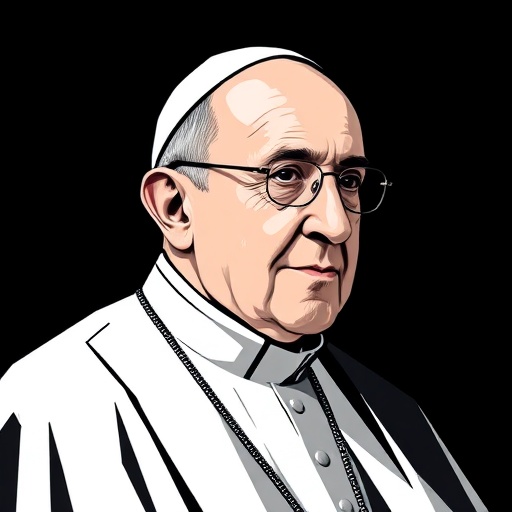
Pope Francis — "A good Catholic doesn't interfere in politics, but a good Christian does."
A good Catholic doesn't interfere in politics, but a good Christian does.
A good Catholic doesn't interfere in politics, but a good Christian does.
Click any product to generate a realistic preview. Up to 3 at a time.
* Initial load can take up to 90 seconds — revising the preview in another color is nearly instant.
"A shepherd must smell of his sheep."
"The globalization of indifference has taken from us the ability to weep."
"The Lord does not abandon us. He is always there, even when we make mistakes."
"The only way to fight against hunger is to fight against the poverty that causes it."
"The Holy Spirit is a troublemaker."
First Latin American and Jesuit pope (2013-), who has steered the Catholic Church toward pastoral inclusion on LGBTQ pastoral care, divorced Catholics, and climate. Closely associated with Pope John XXIII (the Vatican II reformer pope) and Cardinal Walter Kasper (his theological ally on pastoral reform). For an intellectual contrast, see Cardinal Raymond Burke, American traditionalist cardinal, former head of the Vatican Apostolic Signatura — Burke is the public face of Catholic traditionalism that views Francis's pastoral approach as doctrinally dangerous — he has formally challenged Amoris Laetitia and other Francis reforms.
Found in 1 providers: grok
1 source checked
The quote draws a sharp distinction: institutional religious identity can become rule-following without social engagement, but authentic Christian faith demands active involvement in justice. It argues that caring about poverty, inequality, and human dignity is not optional political interference — it is a Gospel obligation. Francis separates nominal belonging to a Church from the transformative, world-engaged life the Gospels actually require of believers.
Jorge Mario Bergoglio lived through Argentina's military dictatorship and built his ministry among Buenos Aires slum dwellers. As Pope since 2013, he wrote Laudato Si demanding political action on climate, condemned trickle-down economics as a 'new tyranny,' and challenged wealthy nations over immigration policy. His entire papacy embodies this conviction: Christianity is not institutional loyalty but active solidarity with the marginalized, which inevitably enters political territory.
Francis became Pope amid surging global populism, nationalist movements coopting Christian identity, and a Church internally divided over social engagement. Conservative Catholics challenged his stances on climate, refugees, and capitalism, arguing the Church should stay apolitical. Simultaneously, democratic backsliding and extreme wealth concentration demanded moral voices. His statement directly confronted those using 'religious neutrality' as cover for ignoring injustice while also rebuking partisan exploitation of Catholic identity.
AI-generated insights based on extensive research and information for context. Factual errors? Email [email protected].
Your cart is empty