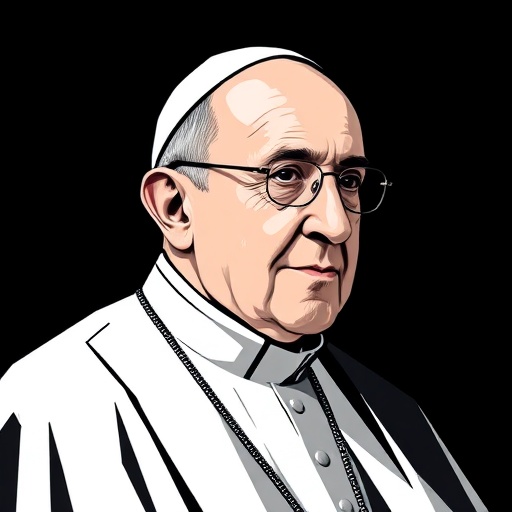
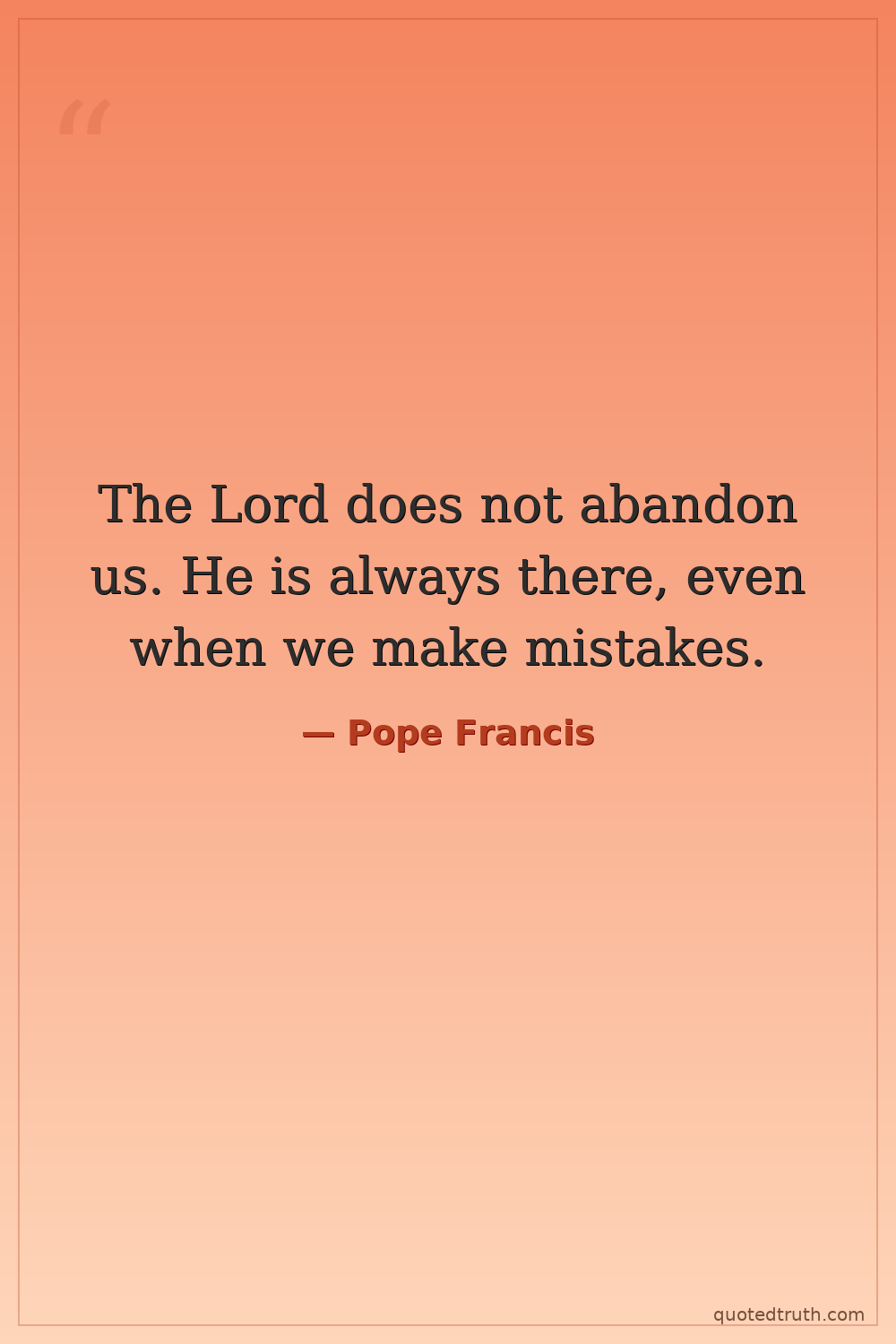
Pope Francis — "The Lord does not abandon us. He is always there, even when we make mistakes."
The Lord does not abandon us. He is always there, even when we make mistakes.
The Lord does not abandon us. He is always there, even when we make mistakes.
Click any product to generate a realistic preview. Up to 3 at a time.
* Initial load can take up to 90 seconds — revising the preview in another color is nearly instant.
"It is not true that the poor are a burden. The poor are a resource."
"The only way to fight against hunger is to fight against the poverty that causes it."
"What are we doing with our children? We are making them into little monsters."
"The Lord always forgives. We men forgive sometimes. Nature never forgives."
"The true power is service. The Pope must be a servant of servants."
First Latin American and Jesuit pope (2013-), who has steered the Catholic Church toward pastoral inclusion on LGBTQ pastoral care, divorced Catholics, and climate. Closely associated with Pope John XXIII (the Vatican II reformer pope) and Cardinal Walter Kasper (his theological ally on pastoral reform). For an intellectual contrast, see Cardinal Raymond Burke, American traditionalist cardinal, former head of the Vatican Apostolic Signatura — Burke is the public face of Catholic traditionalism that views Francis's pastoral approach as doctrinally dangerous — he has formally challenged Amoris Laetitia and other Francis reforms.
Found in 1 providers: grok
1 source checked
This quote affirms that divine love is unconditional and persistent — God remains present even through human failure and wrongdoing. It reframes religion as a relationship grounded in mercy rather than performance or worthiness. The message counters shame-based spirituality: you cannot sin your way out of God's care. It offers psychological reassurance that mistakes don't result in abandonment, repositioning God as a steady companion rather than a distant judge.
Francis built his papacy on the theology of mercy, declaring the 2015–2016 Extraordinary Jubilee of Mercy and titling a key book 'The Name of God Is Mercy.' Born in Buenos Aires, he worked among the poor as Archbishop and later acknowledged his own failures during Argentina's Dirty War. As the first Jesuit pope, his spirituality centers on finding God in all circumstances — including brokenness — making this quote deeply autobiographical.
Francis became pope in 2013 as the Catholic Church reeled from clergy sex abuse scandals that shattered institutional trust worldwide. Western church attendance was plummeting, and many former Catholics cited judgment and exclusion as reasons for leaving. Rising mental health crises, economic anxiety, and political polarization left many feeling abandoned. His insistence on God's persistent presence directly addressed a generation questioning whether any institution — divine or human — could be relied upon.
AI-generated insights based on extensive research and information for context. Factual errors? Email [email protected].
Your cart is empty