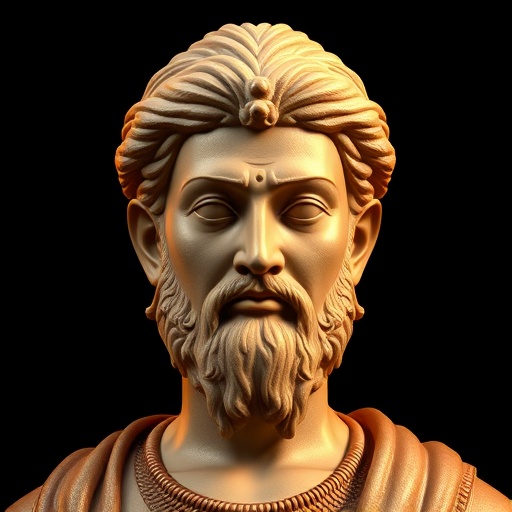
Mahavira — "The greatest mistake of a soul is non-recognition of its real self and can only …"
The greatest mistake of a soul is non-recognition of its real self and can only be corrected by recognizing the real self.
The greatest mistake of a soul is non-recognition of its real self and can only be corrected by recognizing the real self.
Click any product to generate a realistic preview. Up to 3 at a time.
* Initial load can take up to 90 seconds — revising the preview in another color is nearly instant.
"All things are impermanent, and the soul is eternal."
"Do not be led by the senses, but lead the senses."
"A man who is averse from harming even the wind knows the sorrow of all things living."
"One who neglects or disregards the existence of earth, air, fire, water, and vegetation disregards his own existence which is entwined with them."
"He who knows one’s own soul knows the souls of all beings."
24th and last Tirthankara of Jainism, whose teachings of strict ahimsa (non-violence), aparigraha (non-attachment), and karma reshaped ancient Indian religion. Closely associated with The Buddha (near-contemporary moral revolutionary, also reacting against Vedic ritualism). For an intellectual contrast, see Vedic Brahmanical ritual sacrifice, the animal-sacrifice-centered Vedic religion of his era — Mahavira's ahimsa demanded total non-violence, including not eating root vegetables that kill the plant — a maximum-distance ethical move from the Vedic priestly tradition that ritually sacrificed cattle and horses. The two cleanest poles of ancient Indian religious ethics.
Found in 1 providers: grok
1 source checked
The worst error a person makes is not knowing who they truly are — their real, inner self, the soul. All suffering, bad choices, and moral failures stem from this ignorance. The solution isn't external: no ritual, teacher, or rule fixes it. Only direct personal recognition of your own true nature corrects the mistake. Self-awareness isn't optional self-improvement; it's the fundamental prerequisite for any genuine spiritual or ethical progress.
Mahavira abandoned royal privilege at 30, spending 12 years in severe ascetic meditation before achieving kevala jnana — complete omniscience through radical self-realization. Jainism's core doctrine holds every soul (jīva) is inherently pure but obscured by karma born from ignorance. His entire path was a living demonstration of this quote: recognizing the jīva's true unbounded nature was the singular act that broke the cycle of rebirth and achieved liberation.
Mahavira lived circa 599–527 BCE during India's Shramana movement, when wandering ascetics challenged Vedic Brahminism, which placed salvation in priestly ritual, sacrifice, and external gods. Contemporaneous with the Buddha, it was a philosophical revolution questioning inherited religious authority. Declaring that self-recognition alone liberates the soul — bypassing priests, gods, and ritual entirely — was radical. It democratized spiritual liberation, placing full responsibility and power squarely with the individual.
AI-generated insights based on extensive research and information for context. Factual errors? Email [email protected].
Your cart is empty